Charleston Airport Guide: Where Dreamliners Meet the C-17
Charleston Airport shares its runways with an Air Force base and Boeing's 787 plant. Terminals, routes, transport and spotting in South Carolina.
 By The Aviation Hub
6 min read
Updated October 20, 2026
Charleston Airport, formally Charleston International Airport, is the busiest passenger airport in South Carolina and one of the more unusual fields in the American south. It sits in North Charleston, about 12 miles (19 km) northwest of the historic downtown. The runways belong to Joint Base Charleston, home of a large Boeing C-17 Globemaster III fleet. Boeing builds every 787 Dreamliner alongside them. Passenger numbers have roughly doubled since 2010 to more than 6.3 million in 2025.
Charleston Airport at a Glance
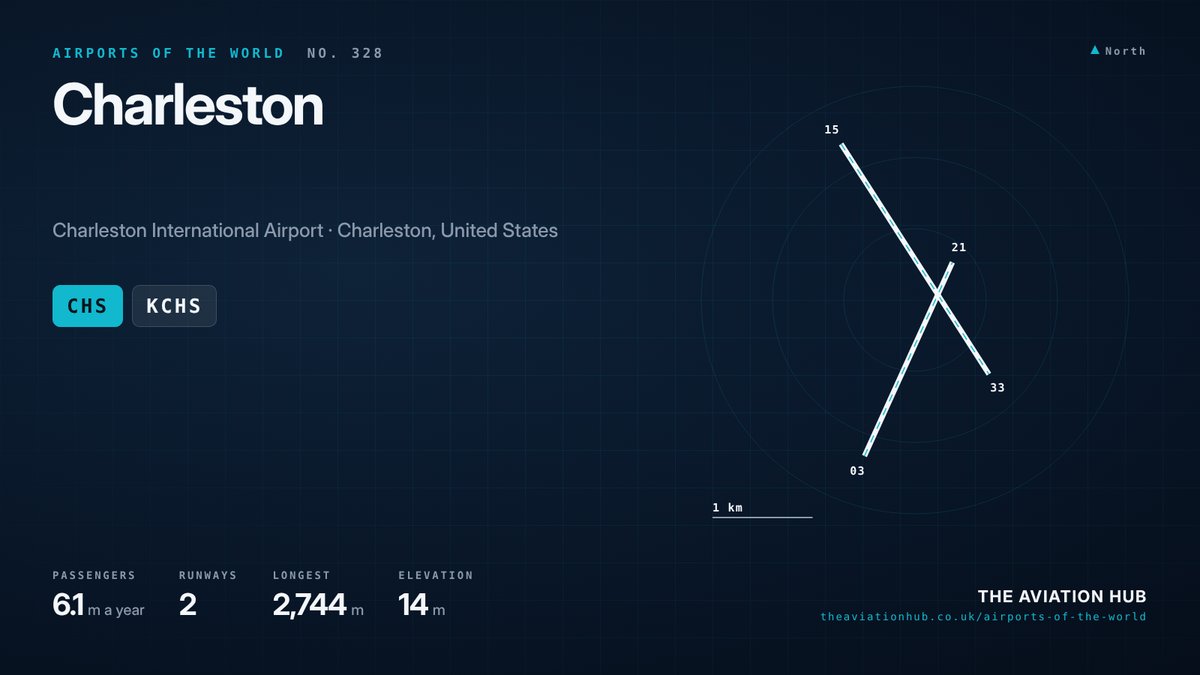
The airport carries the IATA code CHS and the ICAO code KCHS. The elevation is 14 m (46 ft) in the flat Lowcountry, beside the junction of Interstate 26 and Interstate 526. Two runways serve the field, and a single terminal with Concourse A and Concourse B handles airline passengers. The combined civil and military site covers about 2,060 acres (830 ha).
Charleston Airport handled 6,341,145 passengers in 2025, up 0.7 per cent on 2024. American, Delta, Southwest, Breeze and United are the largest airlines. The Charleston County Aviation Authority runs the civil side, while the US Air Force owns and operates the runways under a joint use agreement. Parking, flights and security information are listed on the airport’s official website.
How Charleston’s Airport Came to Be
The story starts in 1928, when the Charleston Airport Corporation bought around 700 acres (280 ha) of former mining land north of the city. The city issued bonds in 1931 to acquire part of the site for passenger service. Within a decade three runways had been paved and lit for night flying. The Second World War brought the US Army, and after a brief civilian spell the military returned during the Korean War.
A new passenger terminal opened in 1949. In 1952 the Air Force reached agreement on control of the base and runways, the start of the joint use arrangement that survives today. Civil operations passed to the Charleston County Aviation Authority in 1979, and the current terminal was built in the 1980s. A $200 million redevelopment completed in 2016 added five gates and a fresh look.
The biggest turning point came in October 2009, when Boeing chose North Charleston for a second 787 final assembly site. Limited operations began in July 2011 and the first completed aircraft rolled out in April 2012. Boeing has since consolidated all 787 assembly here. British Airways briefly linked the city with London Heathrow from 2019 until the pandemic halted the route.
Runways at Charleston Airport
Two runways serve Charleston Airport. Runway 15/33 is the main strip, 2,744 m (9,001 ft) long with a concrete surface. Runway 03/21 is 2,134 m (7,000 ft) long and 46 m wide. The two are set at an angle to each other, giving controllers an option when the sea breeze swings across the Lowcountry.
Runway 15/33 takes most heavy traffic. That includes C-17s, the Boeing 747 Dreamlifter that carries 787 sections, and new Dreamliners on test and delivery flights. The shorter runway handles a share of airline and military movements, especially in crosswinds. Because the Air Force controls the airfield, military training mixes with airline arrivals. Pilots should expect busy, mixed traffic and the occasional C-17 formation departure.
Terminals and Airlines
A single terminal building at Charleston Airport feeds two concourses through a consolidated security checkpoint opened in 2015. Concourse A has eight gates and is the home of Delta and Delta Connection. Concourse B has ten gates for the other airlines and contains the international arrivals facility. The building is compact, bright and easy to navigate, with local food outlets reflecting the Lowcountry setting.
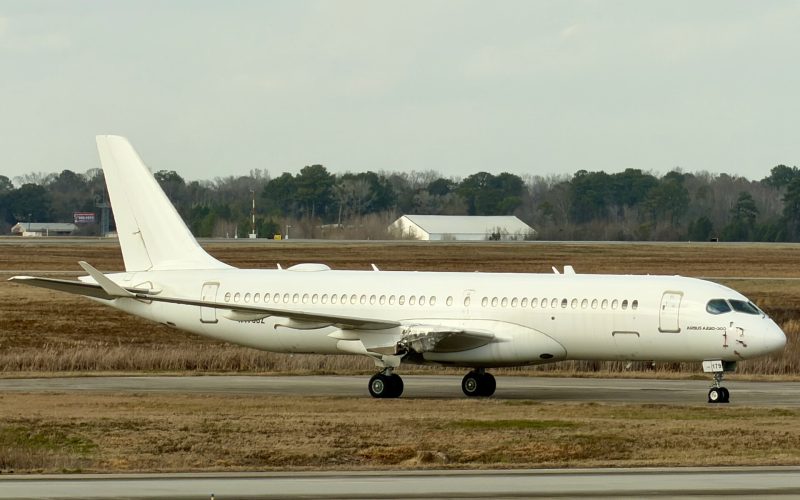
American Airlines is the largest carrier with a share of around 19 per cent, feeding its hubs at Charlotte, Dallas Fort Worth, Chicago and elsewhere. Delta follows closely, built around Atlanta. Southwest runs a strong point to point network. Breeze Airways has made the city a focus base, flying an all Airbus A220-300 fleet on routes along the east coast. United, JetBlue, Frontier and Air Canada complete the core line up.
Routes and Destinations
Atlanta is the busiest route by a distance, with almost 450,000 passengers in the twelve months to January 2026, all on Delta. Charlotte follows at about 270,000 on American. Dallas Fort Worth, Newark and Chicago O’Hare each carry around 150,000. New York, Boston, Washington and Philadelphia add strong business and leisure flows from the Northeast.
Charleston Airport is a leisure magnet, and Breeze has built much of its network on that demand. New routes in 2026 include Fort Lauderdale from 2 July and Trenton from 20 September. Demand peaks with the city’s spring and summer tourist season. Scheduled international service centres on Air Canada’s daily Toronto link, which returned in March 2024. Airline cargo is modest, but the 787 programme brings regular Dreamlifter flights.
Getting to and from Charleston Airport
Most people arrive by road. The terminal sits next to the junction of Interstate 26 and Interstate 526, with exits at International Boulevard and Montague Avenue. Downtown Charleston is around 20 to 25 minutes by car outside the rush, and longer when traffic backs up on Interstate 26. A consolidated rental car pavilion opened beside the terminal in 2014.
The cheapest sensible option is CARTA Route 11, which runs seven days a week between Charleston Airport and downtown in about 50 to 55 minutes. Taxis and app based rides wait at the kerb, with fares to the historic district typically around $30 to $40. Surface and multi storey car parks cover short and long stays, and a free cell phone lot helps with pickups. There is no rail link.
Spotting and Photography
Charleston Airport offers a rare chance to see airliners, military transports and brand new 787s on one field. Boeing’s flight line often holds Dreamliners in customer colours awaiting test or delivery. C-17s fly circuits through much of the week, and the Dreamlifter turns up regularly. The terminal windows and multi storey car park give glimpses of the apron and runways.
Public roads around the perimeter offer views of arrivals, but this is an active Air Force base and security is tight. Stay on public land, never stop on highway shoulders and leave at once if asked by base security or police. Approaches to runway 15 or 33 change with the wind, and the flat terrain gives clean backgrounds. Early morning and late afternoon light avoids the worst of the summer heat haze.
What Comes Next
A 20 year master plan, announced in 2022, calls for a new concourse with up to 11 gates, more aircraft stands and expanded parking. Those projects respond to a decade in which passenger numbers doubled. Breeze’s growth and new routes from the big network carriers point to further gains. The joint use arrangement leaves runway decisions with the Air Force, so most new capacity will come on the terminal side.
Boeing’s plans matter too. The company has announced investment to raise 787 output in North Charleston, and higher production means more test flights, delivery flights and Dreamlifter visits. Charleston Airport looks set for steady growth as both a leisure gateway and an aerospace centre. Compare it with other southern airports on the Airports of the World map.
Continue to follow The Aviation Hub for more analysis and insight.
Advertise with us Your brand, in front of an aviation audience Home page and in-article placements, sold directly, one advertiser per slot. From £250 a year. See the rates