Digital Air Traffic Control in Canada: Why Sceptics Are Pushing Back
Canada's first digital aerodrome tower has launched in Kingston, Ontario, drawing sharp criticism over safety, AI reliability, and staffing shortfalls.
 By The Aviation Hub
4 min read
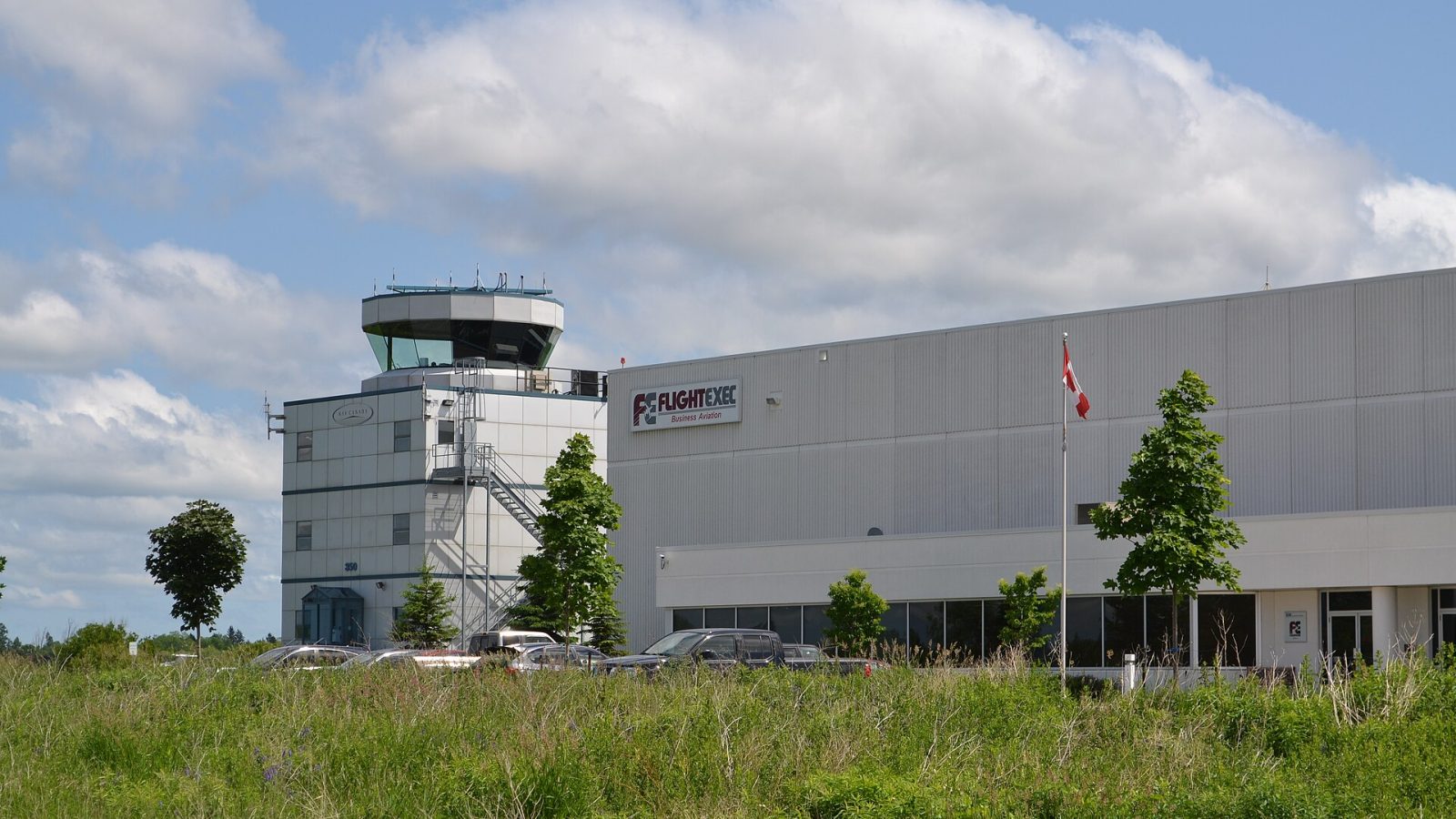
Canada has launched its first digital air traffic control facility, and the debate over whether digital air traffic control belongs in a life-and-death operational environment has already begun in earnest.

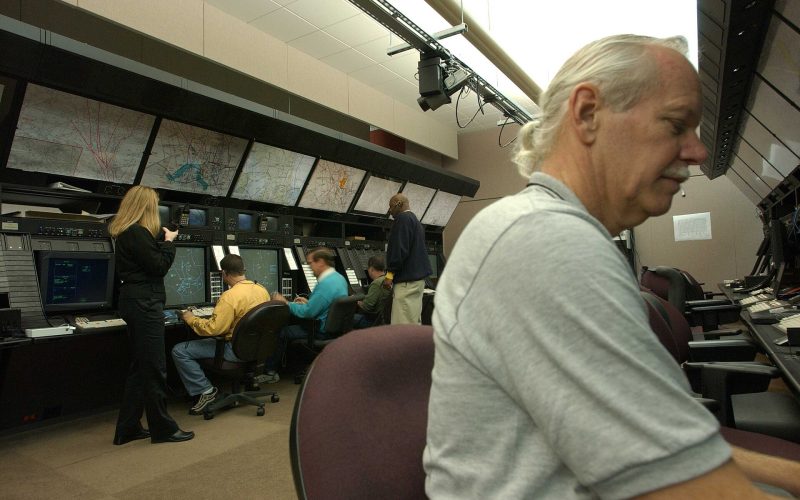
The Kingston Digital Facility (KDF), operated by Nav Canada, the non-profit private company that marks its 30th anniversary of overseeing Canadian civil air navigation this year, replaces the traditional line-of-sight control tower with a centralised control room. Controllers watch inbound and outbound aircraft through multiple cameras on video screens rather than looking directly at the runway. Writing in The Globe and Mail, Vancouver-based travel journalist Lucas Aykroyd argues the launch is "concerning and premature at best."
What the Kingston Digital Facility Actually Does
Under the KDF model, air traffic controllers are not physically present in a tower overlooking the airfield. Instead, they operate from a remote control room fed by camera systems, infrared technology, and AI-powered sensors. On-screen highlighting is used to improve detection of objects that could interfere with aircraft.
Nav Canada has said Kingston could eventually serve as a digital hub providing remote air traffic control services to up to 20 airports across Canada. The facility was developed in partnership with Kongsberg Geospatial, an Ottawa-based technology company.
The Safety Case Against Digital Air Traffic Control
The core of the criticism rests on a statistical reality. Transportation Safety Board of Canada figures from 2015 to 2025 show that the largest number of aeroplane accidents involve events during the landing and takeoff phases of flight. Those are precisely the moments when a controller's direct visual contact with a runway is most valuable.
Critics argue that video screens and AI sensors are an imperfect substitute. The obvious failure point is a full system outage during a peak period: if screens go dark, off-site controllers lose situational awareness immediately. Remote systems also carry cybersecurity risk, and AI systems can produce incorrect outputs based on misinterpreted or fabricated data.
The Staffing Problem Nav Canada Has Not Solved
There are approximately 2,000 air traffic controllers across Canada. Nav Canada has acknowledged it could use around 200 more. A combination of overwork, understaffing, and a wave of retirements has made the shortfall a persistent problem.
Licensed tower controllers earn upward of $104,000 under the current collective agreement with the Canadian Air Traffic Control Association (CATCA). Aykroyd argues that rather than investing in technology to work around the shortage, Nav Canada should increase pay to attract more high-calibre candidates and grow the workforce directly.
Cognitive Offloading and the Human Factor
One concern raised in the debate is cognitive offloading: the documented tendency for people to become less mentally active when automation handles complex tasks. In a low-stakes setting, that may be a minor problem. In air traffic control, where a momentary lapse can contribute to a runway incursion or collision, the consequences are potentially catastrophic.
The argument is not that technology cannot assist controllers, but that over-reliance on AI systems could erode the core competencies that make human controllers effective in the first place.
What Norway and Britain Have Already Done
Aykroyd acknowledges that digital air traffic control facilities have already been implemented in Norway and Britain, and that Nav Canada is following an established international path rather than pioneering one. His position is that following suit is not sufficient justification on its own, particularly without meaningful AI regulation at the federal or international level.
The broader commercial logic of the KDF is not difficult to read. Remote facilities require less physical infrastructure, and a centralised hub serving many smaller airports could reduce operating costs significantly. Technology firms supplying the systems also stand to benefit from the model's expansion.
The Boeing 737 MAX Parallel
To illustrate the danger of automation overriding human judgement, Aykroyd points to the 2019 crash of Ethiopian Airlines Flight 302, which killed 157 people shortly after departing Addis Ababa. A faulty sensor caused the Boeing 737 MAX 8's automated MCAS system to repeatedly push the nose down, overriding manual inputs from the flight crew.
The parallel he draws is specific: automated systems acting on bad data can produce catastrophic outcomes, and the same principle applies to AI managing an aerodrome environment. You can use our Aircraft Search to explore the history and specifications of the Boeing 737 MAX 8 and other types involved in notable events.
The Bottom Line
Digital air traffic control is not going away. The technology is already operational in other countries, and Nav Canada's ambition to extend the Kingston model to up to 20 airports signals a clear long-term direction.
The questions being raised are legitimate ones: what happens when the system fails, who is liable when AI produces a dangerous output, and whether the primary driver is safety or cost reduction. The Globe and Mail opinion piece stops short of calling for the KDF to be closed, but makes a case for federal and international AI regulation before the model is extended further. Those are arguments the Canadian aviation regulator and Nav Canada will need to answer publicly as the Kingston facility moves from pilot project to template.
Continue to follow The Aviation Hub for more analysis and insight.
Advertise with us Your brand, in front of an aviation audience Home page and in-article placements, sold directly, one advertiser per slot. From £250 a year. See the rates