Flight Delay Compensation UK 2026: How Much You Can Claim
 By The Aviation Hub
6 min read
Updated October 11, 2026
By The Aviation Hub
6 min read
Updated October 11, 2026 
UK law gives passengers £220, £350 or up to £520 each in compensation when a covered flight has a delay of more than three hours late for a reason within the airline’s control, and claiming directly avoids a claims company’s fee.
Flight delay compensation in the UK is fixed by distance, not by ticket price. The Civil Aviation Authority lists £220 for flights under 1,500km and £350 for flights of 1,500km to 3,500km. On longer flights it is £260 for an arrival three to four hours late and £520 beyond four hours.
The sums are per person. They apply only when you reach your destination more than three hours late and the airline cannot point to extraordinary circumstances. These details were checked in October 2026, and this guide is general information, not legal advice.
Which Flights Are Covered
The CAA says UK law covers three groups of flights: any flight departing a UK airport on any airline, any flight arriving at a UK airport on a UK or EU airline, and any flight arriving at an EU airport on a UK airline.
A flight into the UK on an airline from outside the UK and EU is not on that list. The regulator’s route table also excludes a flight from a country outside the UK and EU into the EU on an EU airline, and suggests checking the consumer law of the countries you flew to and from.
Article 3 of the regulation adds conditions. You need a confirmed reservation and must check in on time, which means no later than 45 minutes before departure if the airline gives no deadline. Free tickets and reduced fares not available to the public are excluded, while frequent flyer reward tickets are covered.
Flight Delay Compensation UK 2026: The Amounts
The clock that matters is arrival, not departure when it comes to flight delay compensation. The CAA says more than three hours, while Article 6 of the regulation gives the right for a delay of three hours or more in reaching the final destination. On a single booking with connections, the CAA measures the delay at the last airport and the distance between the first and last.
Cancellations use the same table when the airline gives less than 14 days’ notice. Article 5 removes the payment if, with 7 to 14 days’ notice, the new flight leaves no more than two hours early and arrives less than four hours late. Inside seven days the window narrows to one hour and two hours.
Article 7 lets an airline halve the sum when a rerouted passenger arrives within two, three or four hours of the original time, depending on distance. It also requires payment in cash, by bank transfer or by cheque. Vouchers are valid only with your signed agreement.
Flight Delay Compensation: What Counts as Extraordinary Circumstances
An airline escapes compensation only if it proves the delay was caused by extraordinary circumstances that could not have been avoided even if all reasonable measures had been taken, under Article 6. Its duty to provide meals, hotels and rerouting continues whatever the cause.
The CAA’s examples of likely extraordinary circumstances are weather incompatible with safe operation, strikes unrelated to the airline such as those by air traffic control or airport staff, terrorism or sabotage, security risks, political or civil unrest, and hidden manufacturing defects that ground a fleet.
Routine technical faults do not qualify. The CAA cites Jet2 v Huzar, decided by the Court of Appeal in June 2014, and KLM v van der Lans from September 2015. After the air traffic control failure of 8 September 2026 the regulator said compensation was unlikely, though passengers who disagree can still go to court.
How to Claim Flight Delay Compensation Without a Claims Company
Start with the airline. The CAA’s claims guidance says a standard claim form is often available, and suggests email where there is no set procedure because it leaves a record. Not every airline will deal with a claims management company, and some require passengers to contact them directly first.
The regulator’s tips on complaining list what to send: contact details, every passenger’s name, the booking reference, travel dates, flight number, airports and the length of the delay, with copies of boarding cards and receipts. State exactly what you are claiming and keep a copy.
Using a third party is allowed, but the CAA warns that such agencies typically charge a fee. The amounts are set by law, so a direct claim keeps the full sum.
Time limits are long but differ by nation. Article 3 ties claims to section 9 of the Limitation Act 1980, which allows six years in England and Wales. The CAA gives five years for people living in Scotland, which matches the five year period in section 6 of the Prescription and Limitation (Scotland) Act 1973.
ADR, the CAA and the Courts
If the airline refuses to pay out on flight delay compensation, or stays silent for eight weeks, the next step depends on the airline. The CAA’s dispute resolution page names two approved providers, AviationADR and CEDR. It lists easyJet, Ryanair, TUI Airways, Wizz Air and Virgin Atlantic with AviationADR, and British Airways with CEDR.
ADR is free. You must apply within 12 months of the airline’s final response, a decision can take up to three months, and the airline is required to follow it if you accept it. The CAA adds that new ADR provisions in the Digital Markets, Competition and Consumers Act took effect on 6 April 2026 and that it is reviewing its policy.
Where an airline has not joined a scheme, the CAA’s Passenger Advice and Complaints Team may take the case. It cannot impose a solution and will not handle complaints with less than a year left to take legal action. GOV.UK explains court claims in England and Wales, and notes that Scotland and Northern Ireland use different processes.
Will the Rules Change in 2026
The compensation table for a flight delay has not changed. Legislation.gov.uk shows the latest revised text with its most recent amendment dated 14 December 2023. That change wrote the three hour rule and the limitation period into the regulation itself.
Reform is under way. The government’s Civil Aviation Bill, announced in the King’s Speech on 13 May 2026, would give the CAA new enforcement powers, including the power to fine airlines and airports that fail passengers.
A House of Commons Library briefing says the Bill would let ministers make regulations on flight disruption, with a consultation required within 12 months of the act coming into force. Neither document sets out new compensation amounts. Parliament says the Public Bill Committee first meets on 20 October 2026 and is expected to report by 22 October 2026.
The Bottom Line
Check three things: the flight is covered, you arrived more than three hours late, and the cause was within the airline’s control. If so, the sum is £220, £350, £260 or £520 per person according to distance and delay, whatever the fare.
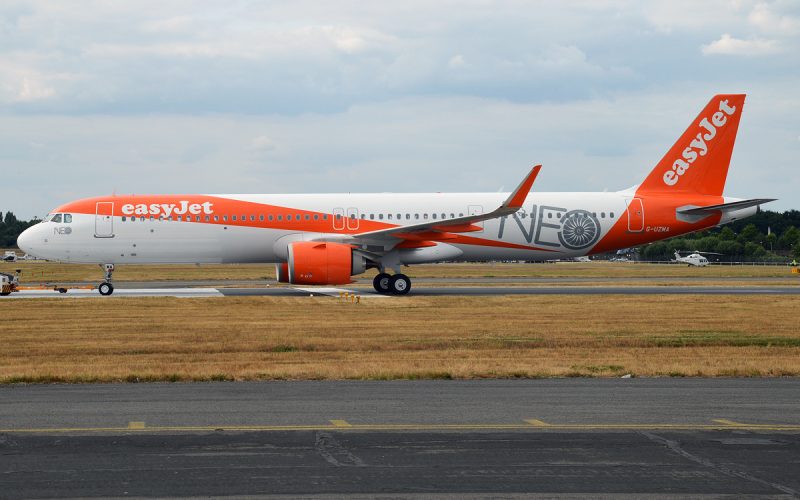
Claim directly and in writing, then use ADR or the CAA if eight weeks pass without a fair answer. The steps are the same for every carrier: our easyJet delays guide works through one airline in detail, and Airline Search helps you look up any other.
Continue to follow The Aviation Hub for more analysis and insight.
Advertise with us Your brand, in front of an aviation audience Home page and in-article placements, sold directly, one advertiser per slot. From £250 a year. See the rates