Many expectant parents are planning a last trip before the baby arrives, or a Christmas visit to family. Here is what the NHS says about flying while pregnant, when airlines may ask for a letter and how to reduce the health risks on a long flight.
Flying while pregnant is generally safe. The NHS says flying is not harmful to you or your baby, according to its guidance on travelling in pregnancy, but you should discuss any health issues or complications with your midwife or doctor before you book.
The bigger challenges are airline rules, insurance and comfort, especially later in pregnancy.
The Best Time to Fly
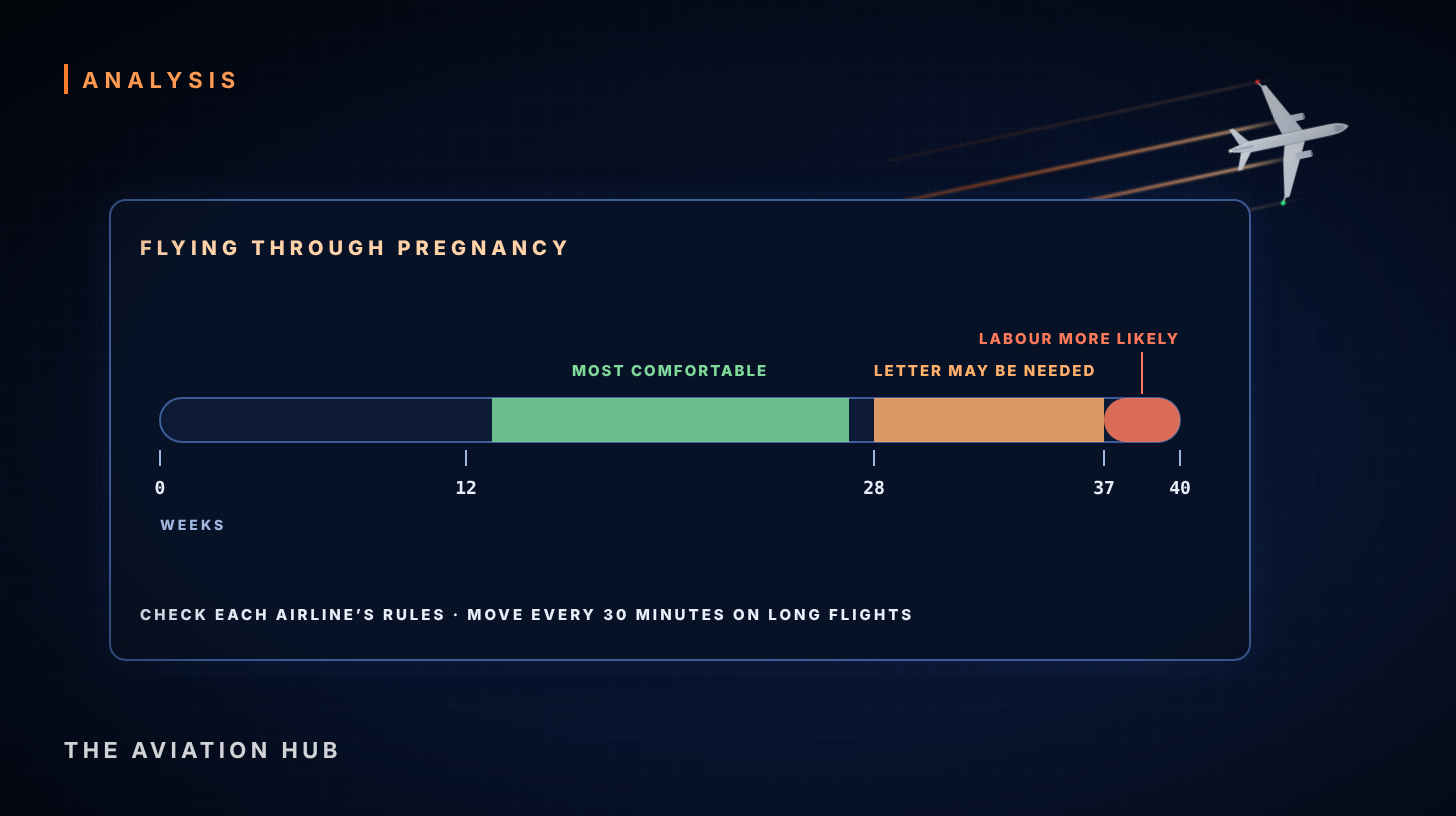
Many women find the middle of pregnancy, roughly between four and six months, the most comfortable time to travel, the NHS says.
The first 12 weeks can bring nausea and tiredness, and the final months can be tiring and uncomfortable, particularly on a long flight.
When Airlines May Ask for a Letter
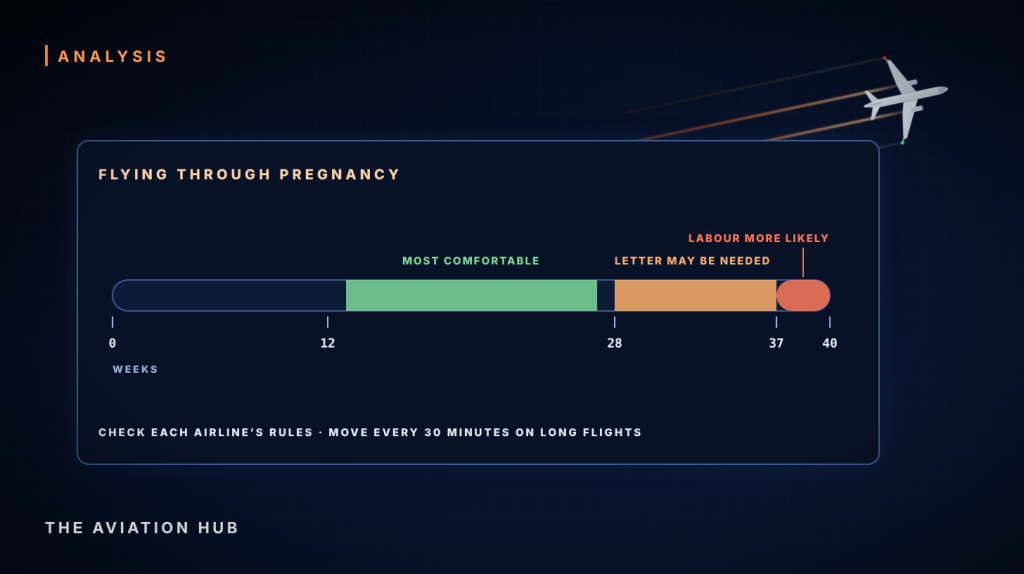
After 28 weeks, airlines may ask for a letter from your doctor or midwife confirming your due date and that you are not at risk of complications. You may have to pay for the letter and wait several weeks for it, so plan ahead.
Towards the end of pregnancy, some airlines will not let you fly at all. The NHS notes that the chance of going into labour is naturally higher after 37 weeks, or around 32 weeks if you are carrying twins.
Every airline sets its own rules, so check the policy for each airline on your trip, including the return flight.
Reducing the Risk of Blood Clots
Long distance travel of more than four hours carries a small risk of blood clots. The NHS advises drinking plenty of water and getting up to move around regularly, roughly every 30 minutes.
Graduated compression or support stockings, available from pharmacies, can help reduce swelling in your legs. An aisle seat makes it easier to get up and walk.
Get the Right Travel Insurance
Make sure your travel insurance covers pregnancy related care, premature birth and the cost of changing your return date if you go into labour while you are away, the NHS says.
Many standard policies have limits, so read the small print and tell your insurer you are pregnant.
Vaccinations and Destinations
Most vaccines that use live bacteria or viruses are not recommended during pregnancy, although non live vaccines are considered safe. Talk to your GP or midwife about any jabs needed for your destination.
The NHS advises against travelling to parts of the world where the Zika virus is present, including much of South and Central America, the Caribbean, the Pacific islands, Africa and Asia. Check the TravelHealthPro website for the latest risk in your destination.
Comfort on Board
Wear loose clothing and comfortable shoes, and fasten your seatbelt below your bump. Keep snacks and water with you, and carry your maternity notes in your hand luggage in case you need medical help while away.
The Bottom Line
Flying while pregnant is safe for most people, but airline rules tighten later in pregnancy. Expect to need a letter after 28 weeks, and check each airline’s cut off before booking.
Speak to your midwife first, get insurance that covers pregnancy and keep moving on longer flights to reduce the risk of blood clots.
Continue to follow The Aviation Hub for more analysis and insight.
Advertise with us Your brand, in front of an aviation audience Home page and in-article placements, sold directly, one advertiser per slot. From £250 a year. See the rates