GCAP: UK Open to Germany Joining Sixth-Generation Fighter Programme
Prime Minister Andy Burnham has told German Chancellor Friedrich Merz that Britain is open to Germany joining the GCAP fighter programme.
 By The Aviation Hub
6 min read
By The Aviation Hub
6 min read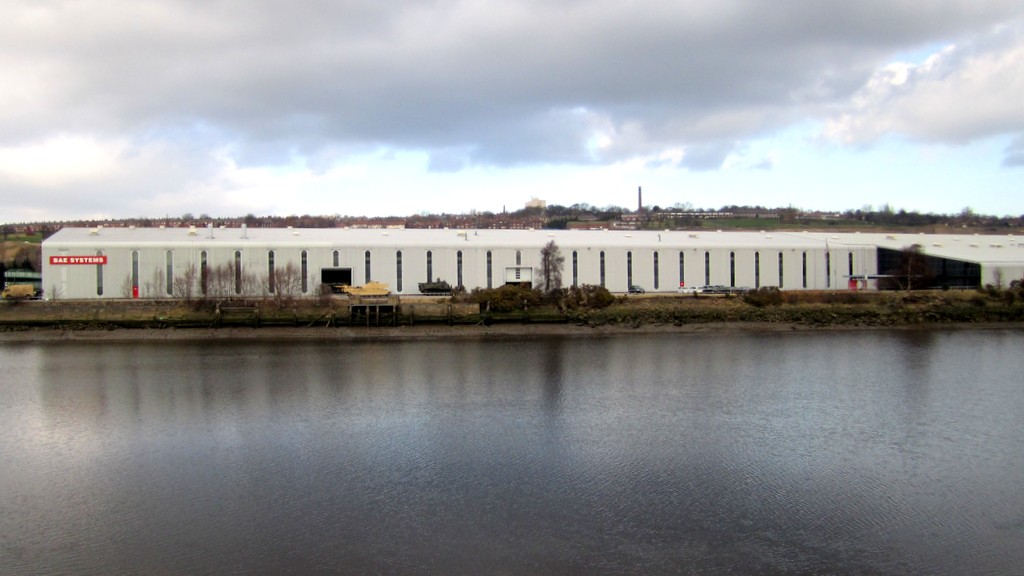
The Global Combat Air Programme (GCAP) could gain a fourth partner nation after British Prime Minister Andy Burnham declared on 8 October 2026 that the United Kingdom is open to Germany joining the tri-nation sixth-generation fighter effort alongside Italy and Japan.
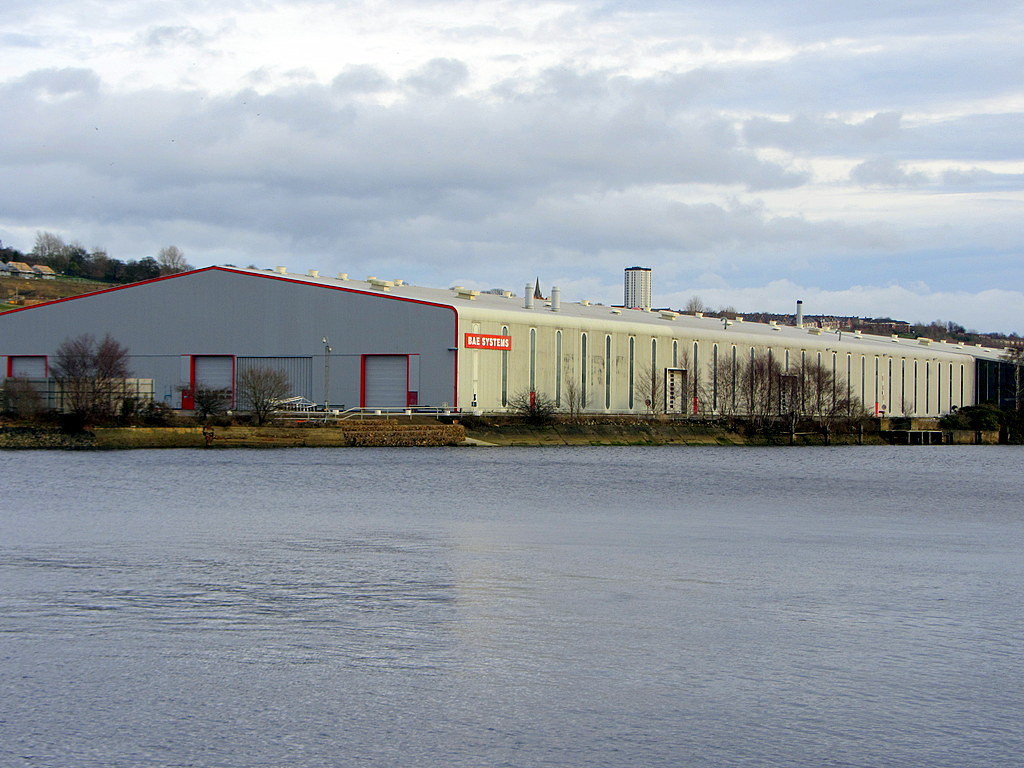
Burnham made the statement at a joint press conference with German Chancellor Friedrich Merz in Berlin, during his first visit to the German capital as prime minister. The declaration came on the same day that GCAP's industrial lead, Edgewing, opened its first engineering hub in Turin, Italy, underlining the pace at which the programme is advancing.
What Burnham Actually Said
"I've indicated to the chancellor our openness to Germany joining GCAP," Burnham said, according to AeroTime. He added that London would seek to move the idea forward "in the coming period" with Italy and Japan.
The statement is notable for what it is not. A German official told reporters that no decision had been made and that Berlin was still reviewing its options. A senior German official, speaking to POLITICO, described Burnham's words as "a first, small step" rather than a decision or preliminary decision.
AeroTime reports that POLITICO had reported in September 2026 that Berlin had already held exploratory talks about joining GCAP. Merz is understood to prefer a European solution over Germany pursuing an independent fighter programme.
Why Germany Is Looking for a New Home
Germany's interest in GCAP follows the collapse of the Franco-German Future Combat Air System (FCAS) in June 2026. That programme was launched in 2017 by then-Chancellor Angela Merkel and French President Emmanuel Macron, with Spain later joining as a partner, at an estimated cost of around $115 billion (roughly €100 billion).
The project stalled over a workshare dispute between Airbus, representing Germany, and France's Dassault Aviation. The two nations also required different aircraft: France needs a nuclear-capable, carrier-compatible jet, while Germany does not. After mediation failed in April, Merz told Macron on 6 June that the two countries would not build a shared fighter, according to AeroTime citing German business daily Handelsblatt. Dassault is now developing France's next fighter independently, while Airbus is expected to lead a separate German programme, both targeting the early 2040s.
What Germany Could Bring to GCAP
GCAP aims to deliver a sixth-generation stealth fighter, informally known as Tempest, with entry into service targeted for 2035. The industrial side is led by BAE Systems, Leonardo and Mitsubishi Heavy Industries, with Edgewing serving as the design authority and industrial lead.
Germany already operates the Eurofighter Typhoon alongside Britain and Italy, which provides an existing industrial and political foundation. For Britain, whose defence budget is under pressure, an additional partner could help share costs. Italy has previously indicated it is open to new members for the same reason.
Linus Terhorst, a research fellow at the Royal United Services Institute, told PA Media that German participation could bring extra funding and economies of scale. He cautioned, however, that the programme could be disrupted if Berlin pushed hard for a large design role, its own capability requirements and a significant workshare for German industry. He argued that any such collaboration would need to be "very carefully managed."
Japan's Concerns About the Timeline
Japan may be harder to persuade than the European partners. AeroTime notes that Tokyo is firmly focused on the 2035 in-service target, driven by the security threat from China and the planned retirement of its F-2 fighters in the mid-2030s. Any new partner that sought to renegotiate the schedule or the design would create friction with Japan's national requirements.
Canada has already joined GCAP as its first observer nation, and Saudi Arabia has long been discussed as another possible member, so the programme's framework does accommodate different levels of participation. Whether Germany would seek full membership or an observer role has not been determined.
GCAP's Engineering Infrastructure Takes Shape
While the diplomatic discussions develop, the programme's industrial base is moving forward. Aviation A2Z reports that Edgewing officially opened its Turin engineering hub on 8 October, located next to Leonardo's facilities in the city. The site will focus on aircraft systems and subsystems, with more than 300 employees from the three partner nations expected to be working there by the end of 2027. A second building is planned for 2027, with more than 1,000 employees expected at full operational capacity.
Two further Edgewing engineering hubs are planned: one in Nagoya, Japan, adjacent to JAIEC's facilities, and one in Warton, Lancashire, where BAE Systems is based. Firm opening dates for those two sites have not been confirmed, though Aviation A2Z notes that announcements on both were expected by the end of 2026.
Earlier in 2026, the tri-national GCAP Agency awarded Edgewing contracts worth more than $6 billion to advance engineering and design work. BAE Systems is also in the final stages of assembling its Combat Air Flying Demonstrator, with first flights planned for late 2027.
You can explore more about the manufacturers involved in GCAP using the Manufacturer Search tool.
Broader Context: Hybrid Threats and UK-EU Relations
The GCAP discussion was not the only item on the agenda in Berlin. Burnham and Merz also launched a new partnership to counter hybrid threats and ratified the UK-Germany Kensington Treaty, which was signed in July 2025 and covers cooperation in defence, security, science, technology and economic growth.
Burnham highlighted that both countries face hybrid attacks regularly, including interference in democratic processes. The visit followed Britain's summoning of a senior Russian diplomat in September 2026 over a drone attack at Germany's Leipzig airport, a freight hub used to supply Ukraine.
Burnham also stressed his commitment to deeper cooperation with the European Union at an upcoming UK-EU summit, expected towards the end of the year. Merz indicated that Germany would do everything it could to bring Britain closer to the bloc.
The Bottom Line
Burnham's statement moves Germany's potential GCAP membership from background speculation into the public diplomatic arena. It is a meaningful signal, but it is not an offer and it is far from a deal. Italy and Japan must be consulted, Japan has strong reasons to resist anything that threatens the 2035 target, and Germany's own requirements for workshare and design authority could prove difficult to accommodate.
The programme's equal-ownership and equal-workshare model, which Aviation A2Z identifies as a core principle, was designed in part as a lesson from the FCAS collapse. Adding a fourth major partner without disturbing that balance will be the central challenge for GCAP's governments and its industrial leadership in the months ahead.
Continue to follow The Aviation Hub for more analysis and insight.
Advertise with us Your brand, in front of an aviation audience Home page and in-article placements, sold directly, one advertiser per slot. From £250 a year. See the rates