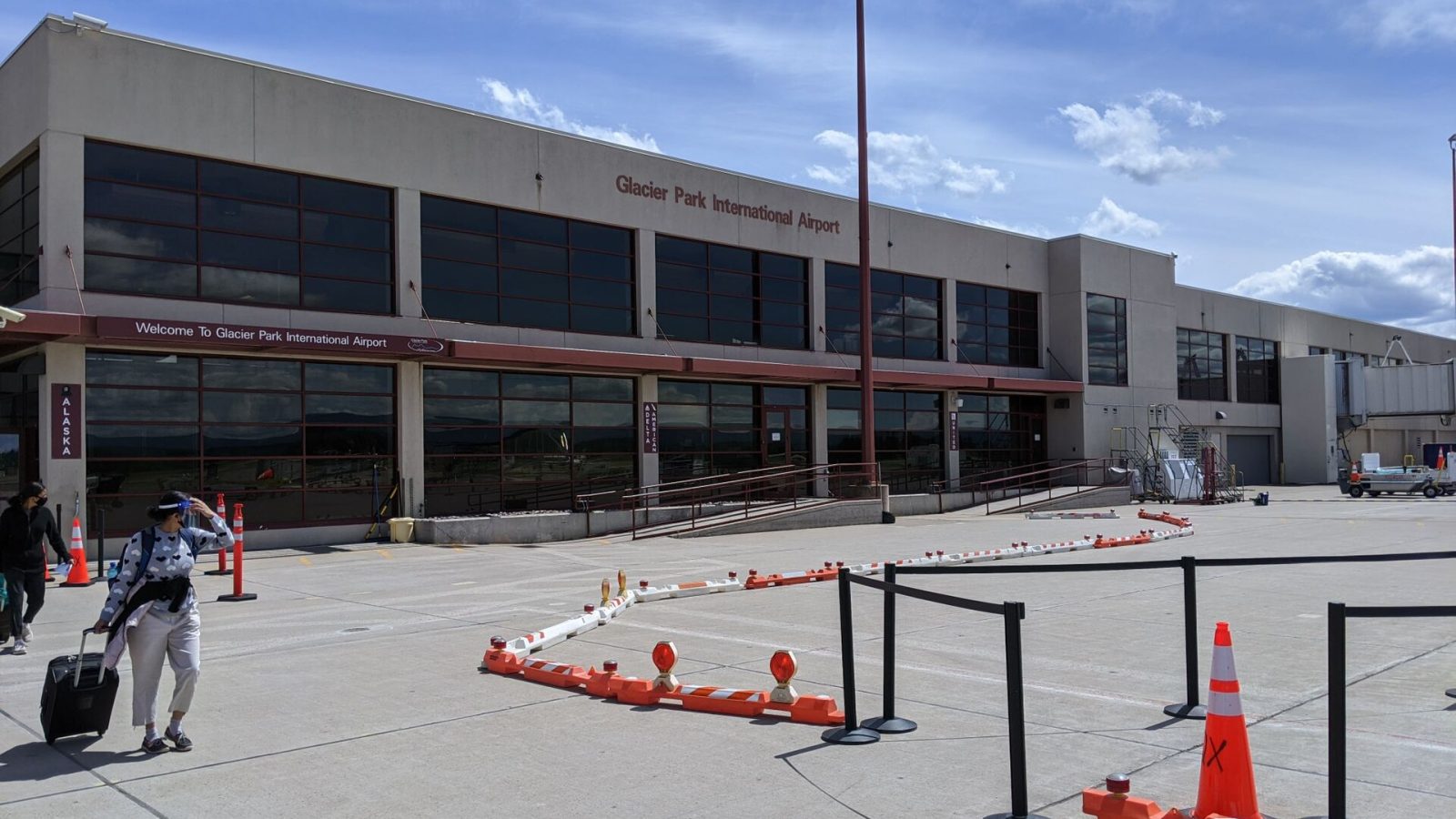
Glacier Park International Airport's decision to close its main runway on weekdays for a rehabilitation project pushed July boardings down nearly 39% year-on-year, according to Montana Department of Transportation aviation data reported by the Flathead Beacon. The closure was one of several pressures that left Flathead Valley businesses reporting a broadly flat summer tourism season.
The wider picture is one of a regional economy caught between rising costs and cautious consumers, with wildfire smoke, a weak Canadian dollar and wider inflation each playing a part alongside the airport disruption.
What the Glacier Park International Airport Runway Closure Did to Passenger Numbers
According to the Flathead Beacon, there were 53,436 boardings at Glacier Park International Airport in July, a fall of almost 39% compared to the same month the previous year. June, before the closure began, recorded an 11% year-on-year increase. August, after the project had affected the peak travel month, saw a more modest 3.6% rise.
Local outfitter Denny Gignoux, owner of Glacier Guides and Montana Raft, told the Flathead Beacon that potential customers contacted him to say the logistics created by the closure would be prohibitive. He noticed a slight dip in business during July as a result.
It is worth keeping the air traffic figures in context. The Flathead Beacon reports that data from the University of Montana Institute for Tourism and Recreation and Research shows only 14% of visitors to the area in 2024 arrived by plane, while 74% travelled by car and 11% by RV or trailer. The July boarding decline therefore affected a minority share of total visitor arrivals.
Smoke, Inflation and Cautious Spending
August brought a separate challenge. An active wildfire season blanketed the Flathead Valley in smoke, prompting cancellations and reducing demand at Gignoux's outfitting business. The guests who did arrive were, he said, spending less than in previous years.
"Things started to cool off, and we saw guests who were more cautious with how they spent their money," Gignoux told the Flathead Beacon. "The spending per guest was down and there were a lot more last-minute bookings and cancellations."
He described the overall revenue position as flat against the prior year, but noted that costs were rising sharply. "Fuel, property taxes, food, equipment, payroll, all of that is going up and the visitor is price conscious," he said. "It's hard to pass that on."
Clare Goble, who oversees several restaurants in the Glacier Restaurant Group including Mackenzie River Pizza and Ciao Mambo, reported to the Flathead Beacon that tourists gravitated toward cheaper dining options, leaving the more expensive restaurants with flat sales. "There was a shift in the clientele," she said.
How Hotels Fared
Hotel occupancy in Whitefish was up year-on-year, and Kalispell Chamber of Commerce CEO Lorraine Clarno reported similar demand in the lower valley. However, the Flathead Beacon notes that much of the revenue growth was driven by higher room rates rather than increased volume of guests.
Explore Whitefish Executive Director Zak Anderson described the overall season as solid given the economic backdrop. "We had a pretty solid summer considering economic headwinds," he told the Flathead Beacon. "We are seeing visitation in Whitefish trend back to pre-pandemic levels, which is good for everyone. It's busy but not too crazy."
Glacier National Park Bucked the Trend
One figure stands out against the generally flat picture. Glacier National Park is on pace to break its annual visitation record, according to the Flathead Beacon, after reporting a 10% increase in September compared to the previous year. August alone drew 828,126 visits, up 15.2% year-on-year.
The spike is attributed to the discontinuation of the park's ticketed entry system, which had been in place for five years. A reservation-based alpine transit system and a three-hour parking limit at Logan Pass on the 50-mile Going-to-the-Sun Road replaced the vehicle reservation requirement.
Anderson cautioned against reading the park's numbers as a proxy for the wider local economy. "While Glacier Park visitation is going to break a record, that doesn't necessarily mean Whitefish is going to break a record," he told the Flathead Beacon.
Canadian Visitors: A Mixed Picture
Cross-border traffic from Canada added another layer of complexity. Passenger vehicle crossings at the Roosville border crossing near Eureka rose 15% in July compared to July 2025, lifting numbers above 2024 levels. August, however, saw crossings fall back to a level 20% below 2024.
Clarno welcomed the July upturn but acknowledged the subsequent slowdown. "We started to see a nice uptick," she told the Flathead Beacon. "We are very excited about that but the last month or so we've seen it stall." A weak Canadian dollar and tense border relations were cited as factors limiting international travel.
You can use our Airline Search tool to explore routes serving Glacier Park International Airport and the carriers operating into the region.
The Bottom Line
The summer of 2026 in the Flathead Valley was defined by a convergence of pressures: a weekday runway closure that cut July boardings by nearly 39%, wildfire smoke that deterred visitors and shortened trips in August, and an inflationary squeeze that left businesses absorbing higher costs while guests spent more cautiously. Flat revenue against a rising cost base is a difficult position, and the data suggests the airport closure, though affecting a minority of total arrivals, amplified the effect of factors already working against the region's tourism economy.
The record trajectory at Glacier National Park offers a more positive signal, but Anderson's warning is well-placed: park gates and tills in Whitefish are not the same thing, and the rest of the season will test whether visitor numbers outside the park can recover the ground lost in July and August.
Continue to follow The Aviation Hub for more analysis and insight.
Advertise with us Your brand, in front of an aviation audience Home page and in-article placements, sold directly, one advertiser per slot. From £250 a year. See the rates