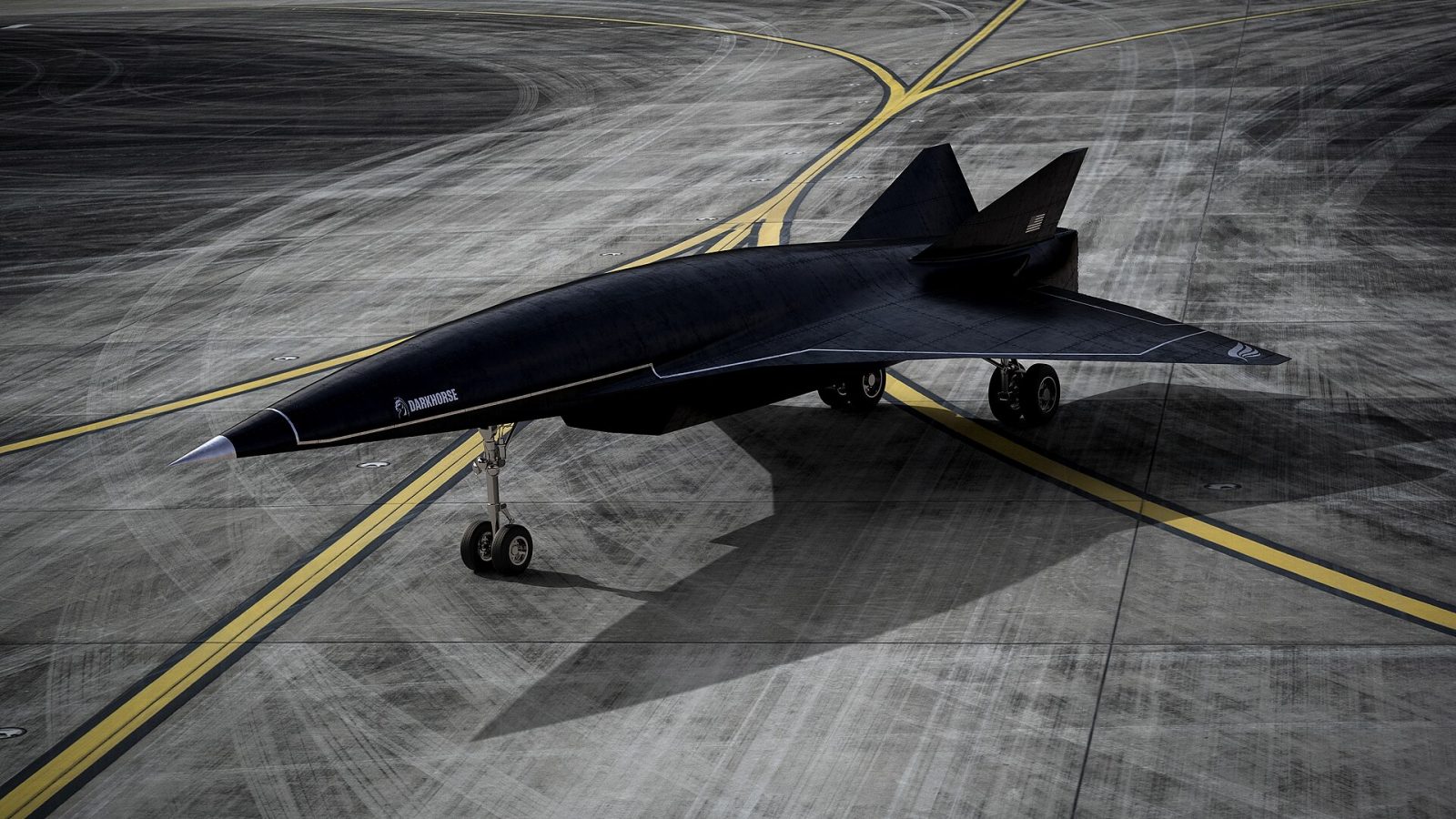
Northrop Grumman and Hermeus have signed a teaming agreement to bring military-grade systems to the Hermeus Quarterhorse uncrewed aircraft, with the deal announced on 12 November 2026. The partnership targets sensors, electronic warfare, communications and autonomous mission capabilities, according to Air Data News and Aerospace Global News.

What the Agreement Covers
The scope of the deal centres on what Air Data News describes as "mission kits" that Northrop Grumman will contribute to the platform. Those kits span the four capability areas: sensors, electronic warfare, communications and autonomous mission systems, as both outlets report.
Responsibility for the aircraft and all propulsion systems remains entirely with Hermeus, Air Data News reports. No operational aircraft procurement is attached to the deal, Air Data News also notes. Financial terms, specific equipment and any flight test schedule all remain undisclosed, according to Air Data News and Aerospace Global News.
Aerospace Global News reports that which US military branches are being targeted has not been disclosed.
The Hermeus Quarterhorse and Its Propulsion
Central to the agreement is the Mk 2.2, a vehicle that will draw on Hermeus's Gryphon propulsion system to push beyond Mach 2, according to Air Data News and Aerospace Global News. Hermeus has separately described plans for a ramjet-powered test vehicle, one that Quarterhorse would carry aloft and release, as both outlets report.
Zach Shore, CEO of Hermeus, described the broader aim: "We're building a new class of aircraft that gives the warfighter improved speed, range, and flexibility while integrating into the existing Force."
Open Architecture at the Core
At the core of the Hermeus architecture sits the Mission Management System (MMS), an open-architecture platform that keeps flight functions and mission functions in distinct, separated layers, according to Air Data News and Aerospace Global News. That separation is intended to compress the timescale for new integrations and upgrades from years down to weeks, Aerospace Global News reports.
That architecture is precisely what makes the Northrop Grumman teaming agreement possible without locking either party into a closed development cycle. It also signals that Hermeus is building the platform with multiple potential integrators in mind, not just a single customer or mission set.
For further detail on the manufacturers involved, readers can explore background through our Manufacturer Search.
What Comes Next
The agreement marks a meaningful step in maturing the Quarterhorse concept from a propulsion demonstrator towards an operationally relevant platform, but the path to fielded capability remains undefined at this stage. Neither company has disclosed a customer, a contract value or a flight test timeline.
Hermeus has stated its ambition to "deliver affordable capability on relevant timelines," and the open-architecture MMS is designed to support that by reducing the time and cost of mission system integration. Whether that promise is realised depends on development and procurement decisions that have not yet been made public.
The Bottom Line
The Northrop Grumman and Hermeus teaming agreement is a sign of growing industrial confidence in Quarterhorse as a credible military platform, even at an early stage. The pairing of a hypersonic uncrewed aircraft specialist with one of the United States' largest defence electronics integrators gives the programme a credible path toward capability demonstration, provided the development timeline holds and a military customer commits.
The key facts to watch are the first disclosure of a target service branch, the award of any development or test contract, and any announcement of a flight date for the Mk 2.2. We will update our coverage as either company or relevant government authorities release further information.
This article draws on reporting by Air Data News and Aerospace Global News.
Continue to follow The Aviation Hub for more analysis and insight.
Advertise with us Your brand, in front of an aviation audience Home page and in-article placements, sold directly, one advertiser per slot. From £250 a year. See the rates