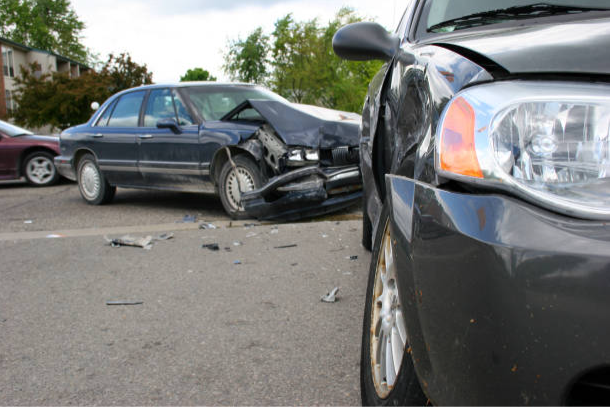
A passenger who never reaches the gate usually has no refund claim against the airline, even when a collision on Airport Boulevard caused the delay. Federal refund rules protect travelers when the airline cancels or changes a flight, and those protections end at the airport curb for everyone else.
Recovery therefore runs through the other driver’s insurer and the injured traveler’s own policies, supported by a paper trail that starts at the crash scene, not at the terminal. Four variables decide the result: fault evidence, available coverage, treatment timing, and receipt quality.
What to Do at the Crash Scene Before Chasing the Flight
The scene decides what a claim can prove later, so the traveler stays put even with a boarding pass waiting. A scene checklist from state insurance regulators calls for 911 when anyone is hurt, moving a drivable car out of traffic, and recording the other car’s plate, witness names, the officer’s badge number, and photographs of skid marks and road conditions.
Location decides who writes the report. Highway Patrol troopers usually respond on I-26 near Exit 113, while Cayce Department of Public Safety, West Columbia Police Department, or Lexington County Sheriff’s Department officers cover the surface streets along Airport Boulevard and the John N. Hardee Expressway, so ask that agency for a report number before leaving.
How Delayed Symptoms Turn a Missed Flight Into an Injury Claim
Adrenaline masks pain at the scene, and travelers rushing to rebook often skip the emergency room. The CDC reports that some concussion symptoms appear right away while others can take hours or days to appear, and federal medical references say whiplash pain may take hours to weeks to develop.
A same-day exam at Lexington Medical Center in West Columbia or at an urgent care clinic ties the crash to the injury, and every symptom, from neck stiffness to foggy thinking, belongs in that first chart. A traveler who flies on anyway should tell the destination doctor about the crash and keep every record. Emergency departments, urgent care clinics, and family doctors each create a dated chart, and the timestamp on the first one anchors the timeline between crash and flight.
Brent Stewart, a South Carolina car accident lawyer and a lifetime member of the Million Dollar Advocates Forum, leading Stewart Law Offices since 1995, an injury firm serving North Carolin as well, warns that a symptom that surfaces after the adrenaline fades gives a carrier room to blame some other cause: “If you don’t see a doctor right away, the insurance company is going to argue that the injuries were not caused by this accident. They’ll say you got hurt somewhere else, and they’ll say that you’re exaggerating. See the doctor that same day, even if you’re feeling okay.
Why the Airline Rarely Pays for a Crash-Caused Missed Flight
The U.S. Department of Transportation requires refunds when an airline cancels or significantly changes a flight, yet non-refundable ticket holders who arrive late for an on-time departure generally receive none. Fully refundable fares break that pattern and return the money for any unused ticket.
Airline agents sometimes rebook late travelers as a goodwill gesture. A call from the roadside or the emergency room, with the agent’s name and any quoted fee written down, starts the loss record before the day ends.
A missed flight can leave rebooking fees and lost fares alongside injuries that no airline form records, and matching those losses to a crash claim takes organization. Injured people in Spartanburg, Lexington, Beaufort, Fort Mill, Lancaster, Bluffton, Blacksburg, Rock Hill, York, Chester, Gaffney, Columbia, and Lake Wylie, South Carolina, can contact Stewart Law Offices to review trip costs and the injury claim together. Recognizing that a damaged car can leave an injured traveler without a ride to appointments, their attorneys can travel directly to meet with clients at home, in the hospital, or wherever they are receiving care.
Which Missed-Flight Losses Belong in the Claim
A claim can list the non-refundable fare, change fees, an extra hotel night, parking, and a missed paid event, each backed by a receipt or booking record. Insurers decide how much trip loss to accept, and the file reads stronger when a medical record shows the crash itself, not just delay, ended the trip.
The at-fault driver’s liability policy pays first, and South Carolina sets minimum limits of $25,000 per person and $50,000 per accident for injuries, plus $25,000 for property damage. Larger losses can quickly outrun those figures.
Why Adjusters Ask About the Drive to the Airport
A rushed drive gives the carrier an argument. Adjusters know the passenger was running late, so questions about departure time, speed, and braking arrive early. Lexington and Richland counties together recorded 282 preliminary fatal and serious injury collisions in 2025, and speeding-related collisions injured 13,359 people statewide.
Written answers beat guessed numbers. A traveler can decline a recorded statement until treatment and records are in hand, quote departure times from the written itinerary, and decline to estimate speed. Adjusters also compare spoken accounts against the event data recorder, a module in many newer vehicles that stores speed and braking in the seconds before impact, so an honest answer of “not sure” protects accuracy better than an invented figure.

Other Policies That Can Cover a Lost Trip
The at-fault driver’s insurer is not the only source of money. Trip cancellation coverage repays prepaid costs when a covered reason, such as an injury a doctor says prevents travel, ends the trip.
Travel Insurance
Policies usually cost 5% to 10% of the total trip price, and each sets its own covered reasons, limits, and exclusions, so the claim starts with the policy wording.
Credit Card Benefits
Some credit cards include trip cancellation coverage, and the card’s own terms decide whether a crash-related injury qualifies.
Auto Policy Add-Ons
Rental reimbursement and medical payments coverage, both optional in South Carolina, can cover early expenses when attached to the traveler’s own auto policy. A rental car or a ride after the crash often becomes the first receipt in the file.
Posts From the Rebooked Trip Can Undercut the Claim
Adjusters search public profiles, and a smiling destination photo can read as recovery. Check-ins, tagged posts, and comments about the crash all enter the file, and a traveler who flies out days after impact has already created a movement timeline.
Treatment records, the rebooked itinerary, and every post need to tell one consistent story, because adjusters line up the dates side by side. A traveler who flew despite pain keeps notes explaining why, so the claim file stays accurate and complete.
Advertise with us Your brand, in front of an aviation audience Home page and in-article placements, sold directly, one advertiser per slot. From £250 a year. See the rates