Discover how Dubai helped Emirates become one of the world’s most profitable airlines through its global hub, fleet, premium cabins and cargo network.
When people think about Emirates, they probably think about the Airbus A380, luxury First Class suites, the famous onboard bar or the distinctive red-and-white tail.
But behind all of those things is something much more important.
Dubai.
It is almost impossible to understand how Emirates became one of the world’s most successful airlines without understanding the city from which it operates.
Emirates has built a global airline around Dubai’s geographical position, its enormous investment in aviation infrastructure, its growing tourism industry and its ambition to become one of the world’s most important international cities.
The result is a business model that is very different from that of traditional airlines in Europe and North America.
Emirates does not need a huge domestic market to survive. Instead, it brings the world to Dubai, connects passengers through Dubai and then sends them onwards to destinations across six continents.
The strategy has produced extraordinary financial results.
For the financial year ending March 31, 2026, Emirates reported a record AED 22.8 billion ($6.2 billion) profit before tax, while revenue reached AED 130.9 billion ($35.7 billion). The wider Emirates Group reported AED 24.4 billion in profit before tax.
So, how does Emirates make so much money?
The answer starts with Dubai.
Dubai Is The Heart Of Emirates’ Business Model
Dubai’s location is one of its greatest economic advantages.
Situated between Europe, Asia, Africa and Australia, the city is ideally positioned for international air travel.
Emirates has turned that geography into a business model.
Rather than relying primarily on passengers travelling to and from Dubai, the airline connects passengers between other countries through the city.
A passenger travelling from Manchester to Sydney does not necessarily need a direct Manchester-Sydney service to make the journey with Emirates.
Instead, they can fly Manchester to Dubai and then Dubai to Sydney.
The same principle works across thousands of city pairs.
Passengers can travel from Europe to Asia, Asia to Africa, Australia to Europe or North America to destinations across the Middle East and Indian subcontinent, often using Dubai as the connecting point.
This is the essence of Emirates’ hub-and-spoke model.
The airline has effectively turned Dubai into an international crossroads.
Dubai Does Not Need To Be The Final Destination
This is one of the most important differences between Emirates and many traditional airlines.
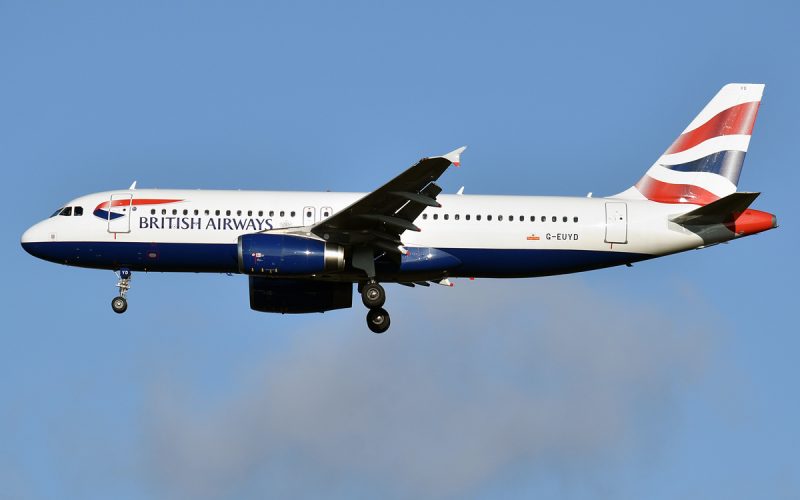
British Airways needs passengers travelling to and from the United Kingdom.
Lufthansa relies heavily on traffic associated with Germany and its European network.
American Airlines has access to one of the world’s largest domestic markets.
Emirates does not have that luxury.
The population of Dubai is nowhere near large enough to fill the enormous number of widebody aircraft operated by the airline.
Instead, Emirates has created a system in which Dubai itself becomes the connection.
That means the airline can combine passengers from dozens of different countries onto a single aircraft.
A Boeing 777 or Airbus A380 departing Dubai for Bangkok could contain passengers who began their journeys in London, Paris, Frankfurt, Manchester, Milan or New York.
The aircraft does not need Dubai to generate all of its passengers.
It simply needs Dubai to be an exceptionally effective place to connect them.
That is a crucial distinction.
Dubai International Airport Makes The Model Possible
The Emirates business model would not work without an airport capable of handling enormous numbers of passengers.
Dubai International Airport, or DXB, has become one of the most important airports on the planet.
In 2025, DXB handled 95.2 million passengers, its highest-ever annual passenger total and the largest number of international passengers handled by any airport in a single year. Dubai Airports says DXB is connected to 291 destinations through 108 international carriers.
Those numbers demonstrate the scale of the ecosystem surrounding Emirates.
The airline is not operating in isolation.
Dubai has developed an airport, tourism industry, hotel sector, business environment and transport infrastructure capable of supporting enormous international passenger flows.
The airport provides the physical infrastructure.
Emirates provides the airline network.
Dubai provides the destination and the wider economic ecosystem.
Each part strengthens the others.
The A380 Was Perfect For Dubai
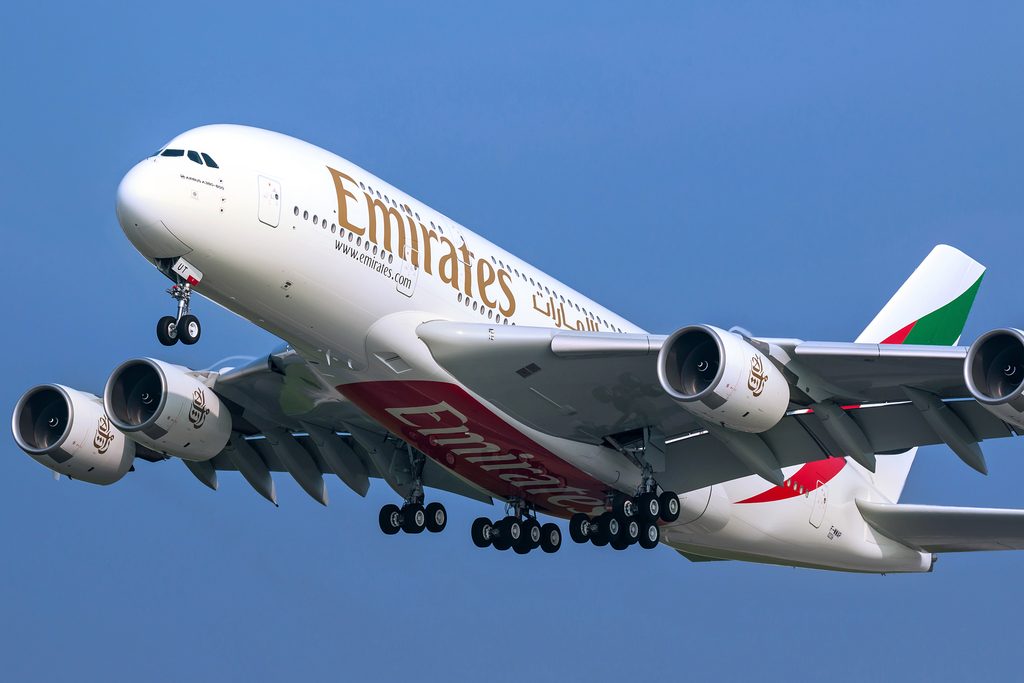
Emirates’ decision to embrace the Airbus A380 makes much more sense when viewed through the Dubai business model.
For many airlines, operating an aircraft capable of carrying more than 500 passengers is a significant risk.
They have to find enough passengers travelling between two specific cities to fill the aircraft.
Emirates has a different advantage.
It can combine passengers from multiple origins and destinations through Dubai.
That makes it possible to fill an enormous aircraft with connecting passengers who would never have travelled directly between the aircraft’s origin and destination.
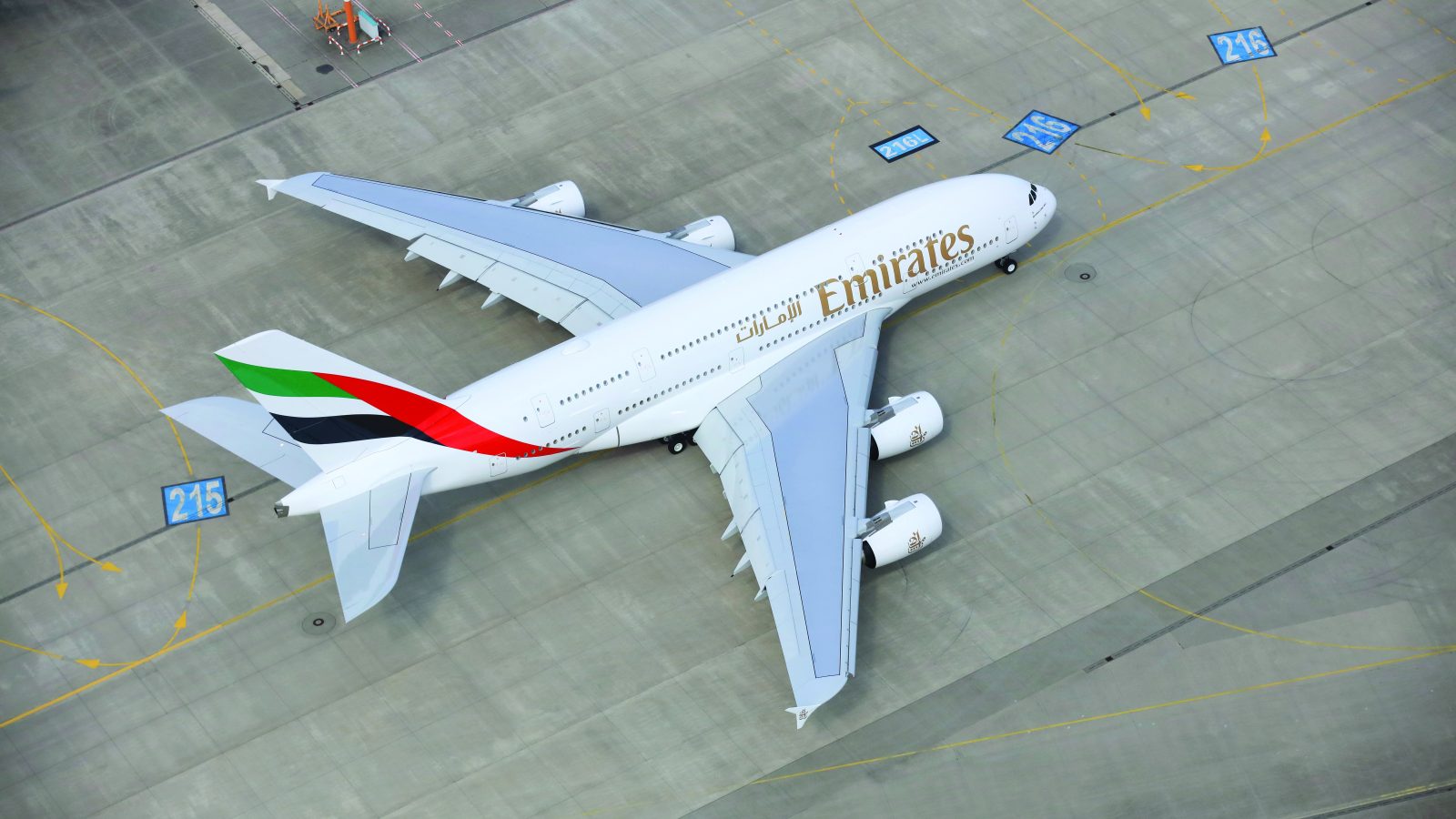
The A380 therefore became a natural fit for Emirates’ hub.
It also provided the airline with another important advantage: capacity at a constrained airport.
If an airline can transport hundreds of passengers using one aircraft movement rather than several smaller aircraft, it can potentially maximise the use of valuable airport slots.
For Emirates, the A380 became much more than an aircraft.
It became part of the brand.
The onboard lounge, First Class suites and showers helped transform the aircraft into a marketing tool for the airline.
Passengers did not simply want to fly Emirates.
Many wanted to experience the Emirates A380.
Emirates Is Now Preparing For The Next Generation
However, Emirates knows that the future cannot depend entirely on the A380.
The airline has begun building a more diverse widebody fleet around aircraft including the Airbus A350 and Boeing 777X.
At the 2025 Dubai Airshow, Emirates ordered another 65 Boeing 777-9 aircraft worth $38 billion at list prices. That took its total 777X order book to 270 aircraft.
The airline also ordered another eight Airbus A350-900s at the same airshow, taking its total A350 commitment to 73 aircraft, including those already delivered.
This is important because the A350 gives Emirates an aircraft better suited to markets where the enormous capacity of the A380 is unnecessary.
The 777X, meanwhile, is expected to become one of the airline’s principal high-capacity aircraft of the future.
Emirates says its aircraft orders are specifically aligned with Dubai’s growth plans, demonstrating just how closely the airline’s fleet strategy is connected to the city’s wider ambitions.
Premium Passengers Are A Major Part Of The Formula
The Emirates brand is built around premium travel, and there is a very good financial reason for that.
A First Class or Business Class passenger can generate substantially more revenue than an economy passenger occupying a single seat.
Emirates has invested heavily in its premium cabins to take advantage of this.
Its First Class suites, Business Class cabins, lounges and onboard amenities are designed to convince customers that paying a premium is worthwhile.
The strategy is particularly valuable on long-haul flights.
An aircraft may carry hundreds of economy passengers, but a comparatively small number of premium customers can contribute a significant amount of revenue.
Emirates has also introduced Premium Economy, allowing it to capture passengers who want something more than standard economy without paying the full price of Business Class.
The result is a layered product strategy.
Emirates can sell economy seats to price-sensitive travellers while simultaneously extracting considerably higher yields from customers willing to pay for additional comfort.
But Emirates Is Not Just A Luxury Airline

It would be wrong to describe Emirates as simply a premium airline.
The majority of passengers still travel in economy.
That is where the sheer scale of Dubai becomes important again.
An Emirates A380 can carry hundreds of passengers.
Those passengers can originate from dozens of countries before connecting through Dubai.
The airline therefore combines high-volume traffic with premium revenue.
That is a powerful combination.
The economy cabin provides scale.
The premium cabins provide higher yields.
The Dubai hub provides the connecting traffic required to fill the aircraft.
Dubai Is Also A Global Cargo Hub
Passengers are not the only people moving through Dubai.
Cargo is another important part of the Emirates business model.
Emirates SkyCargo transports freight in the belly holds of passenger aircraft as well as operating dedicated Boeing 777 freighters.
During the first half of the 2025-26 financial year, Emirates SkyCargo transported 1.25 million tonnes of cargo, up 4% year-on-year. The division also added three Boeing 777 freighters during the period.
That cargo network is strengthened by Dubai’s position as a major global logistics centre.
The airline can carry goods between major markets while simultaneously transporting passengers on the same aircraft.
It creates another revenue stream from the same network.
Dubai’s Tourism Industry Helps Emirates Too
There is another relationship that is easy to overlook.
Emirates does not just benefit from Dubai.
Emirates also helps Dubai.
The airline makes it easier for millions of international visitors to reach the city.
Those visitors stay in hotels, visit attractions, eat in restaurants, shop in malls and spend money across the local economy.
Dubai therefore has a strong incentive to maintain its position as a global aviation hub.
The city’s aviation strategy and Emirates’ expansion strategy are closely connected.
More Emirates flights can bring more visitors.
More visitors can support Dubai’s tourism industry.
A larger tourism industry can generate more demand for flights.
And that creates a cycle that benefits both the city and the airline.
Dubai Is Already Planning For The Next Stage
The next chapter of this story is already being planned.
Dubai is developing Al Maktoum International Airport at Dubai World Central.
Dubai Airports says the project involves an investment of $35 billion and is designed to eventually handle up to 260 million passengers and 12 million tonnes of cargo annually. The airport is expected to become a major part of Dubai’s long-term aviation strategy.
This matters enormously to Emirates.
The airline cannot continue expanding indefinitely if its principal hub becomes constrained by airport capacity.
Dubai therefore needs an airport capable of supporting the next generation of Emirates growth.
The development of Al Maktoum International is effectively an extension of the same strategy that helped create Emirates in the first place.
Build the infrastructure first.
Then use it to facilitate international connectivity.
Emirates’ Business Model Is Difficult To Copy
This is ultimately what makes Emirates so difficult for competitors to replicate.
An airline could purchase Airbus A380s or Boeing 777Xs.
It could offer First Class suites.
It could launch hundreds of international routes.
But it cannot easily recreate Dubai.
The city has spent decades developing its airport infrastructure, tourism industry, international business links and global brand.
Emirates has grown alongside that development.
The airline and the city have effectively become two parts of the same aviation ecosystem.
That creates a significant barrier to entry.
An airline trying to replicate Emirates elsewhere would need an exceptionally well-positioned geographical hub, enormous airport capacity, extensive international traffic rights and enough connecting passengers to fill hundreds of widebody aircraft.
Very few locations can offer all of those things.
The Risks To The Dubai Model
The strategy is not without risks.
Emirates remains heavily dependent on international long-haul travel and Dubai as its central hub.
Geopolitical instability can disrupt routes across the Middle East, while changes in airspace availability can increase flight times and operating costs.
The airline also has enormous exposure to widebody aircraft.
While that is one of its greatest strengths during periods of strong demand, it can become a disadvantage if international travel demand falls sharply.
The A380 also presents a long-term fleet challenge as airlines across the industry increasingly favour smaller and more efficient twin-engine aircraft.
Emirates is addressing that through its A350 and 777X orders.
But the airline’s future still depends upon maintaining the enormous passenger flows that make its high-capacity fleet economically viable.
So, How Does Emirates Actually Make Money?

The simplest answer is that Emirates makes money because Dubai allows it to operate at an extraordinary scale.
The city provides the geography.
Dubai International provides the airport infrastructure.
Emirates provides the global network.
Premium cabins generate high-value revenue.
Economy provides enormous passenger volumes.
SkyCargo adds freight revenue.
And Dubai’s tourism and business economy creates additional demand for international travel.
None of these elements exists independently.
They reinforce one another.
That is the secret behind Emirates.
The airline did not simply happen to choose Dubai as its home.
Its entire business model has been built around what Dubai can offer.
The result is one of the most ambitious aviation strategies in modern history.
And the financial results suggest that it continues to work.
Emirates reported a record AED 22.8 billion profit before tax for 2025-26, while the wider Emirates Group generated AED 24.4 billion.
The airline also ended the financial year with AED 54.9 billion in cash assets.
Those numbers demonstrate that Emirates is not merely benefiting from a strong travel market.
It has created a business model capable of converting Dubai’s unique geographical and economic position into one of the world’s most powerful aviation networks.
The fascinating part is that the story is not finished.
As Dubai prepares to develop Al Maktoum International, Emirates prepares to receive hundreds of new-generation aircraft and international passenger demand continues to grow, the relationship between the city and its airline could become even more important.
For Emirates, Dubai is not simply home.
Dubai is the business model.
Continue to follow The Aviation Hub for more analysis and insight!
Advertise with us Your brand, in front of an aviation audience Home page and in-article placements, sold directly, one advertiser per slot. From £250 a year. See the rates