
airBaltic filed for Chapter 11 protection on 14 September 2026, placing the Latvian flag carrier under the supervision of the United States Bankruptcy Court for the Southern District of New York.
The airline was careful to stress that passengers will notice nothing.
Flights are operating on schedule, tickets and reservations remain valid, and the company has secured EUR 350 million in new debtor in possession financing to keep the business running through the process.
But behind that calm public message sits a far messier financial story, one built from years of ambitious expansion, a debt pile the airline could no longer service, and a fuel shock that arrived at exactly the wrong moment.
airBaltic & Chapter 11: A Debt Load That Outgrew The Airline
airBaltic carried 5.2 million passengers in 2025 and generated revenue of EUR 779.3 million, yet still posted a net loss of EUR 44.3 million for the year, according to Aerotime.
That loss then widened sharply, with Skift reporting a net loss of around EUR 70 million in the first quarter of 2026 alone.
Total liabilities were reported to exceed 1 billion US dollars by the time of the filing, according to USA Herald.
The underlying arithmetic never balanced.
Analysts at Fitch projected airBaltic’s 2026 earnings before interest, tax, depreciation, rent and amortisation at around EUR 130 million, well short of the roughly EUR 160 million the airline owed annually in aircraft lease payments, before even counting a EUR 57 million bond coupon, Aerospace Global News reported.
That gap produced sizeable negative free cash flow long before the latest crisis hit. In August 2026, holders of airBaltic’s EUR 380 million bonds agreed to defer interest payments and waive minimum liquidity requirements, a sign the airline was already running out of road, Aerotime noted.
Fuel Prices Deliver The Final Blow
The immediate trigger was geopolitical rather than financial.
When conflict between the United States and Iran escalated in 2026, jet fuel prices surged, reportedly approaching 2,000 US dollars per metric tonne at their peak, nearly triple prior levels, according to USA Herald.
airBaltic had not hedged its fuel consumption, leaving it fully exposed to the spike. The same instability forced the airline to temporarily suspend flights to Tel Aviv and Dubai, cutting revenue at the worst possible time.
This was not the airline’s first brush with lost markets.
The Russian invasion of Ukraine in 2022 forced airBaltic to permanently withdraw from Russia, Belarus and Ukraine, routes that had historically generated strong returns for a carrier built around Baltic connectivity.
Layered on top of lingering pandemic era weakness, the fuel shock simply removed whatever cushion remained.
A Fleet Plan Built For A Different Airline
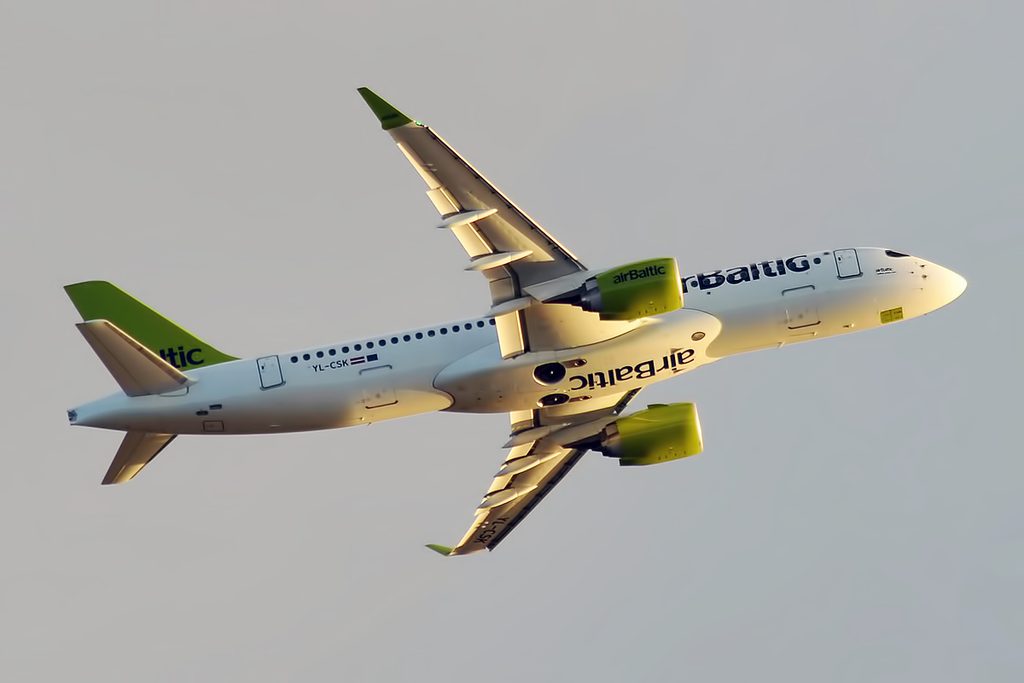
airBaltic’s difficulties were compounded by its own ambition.
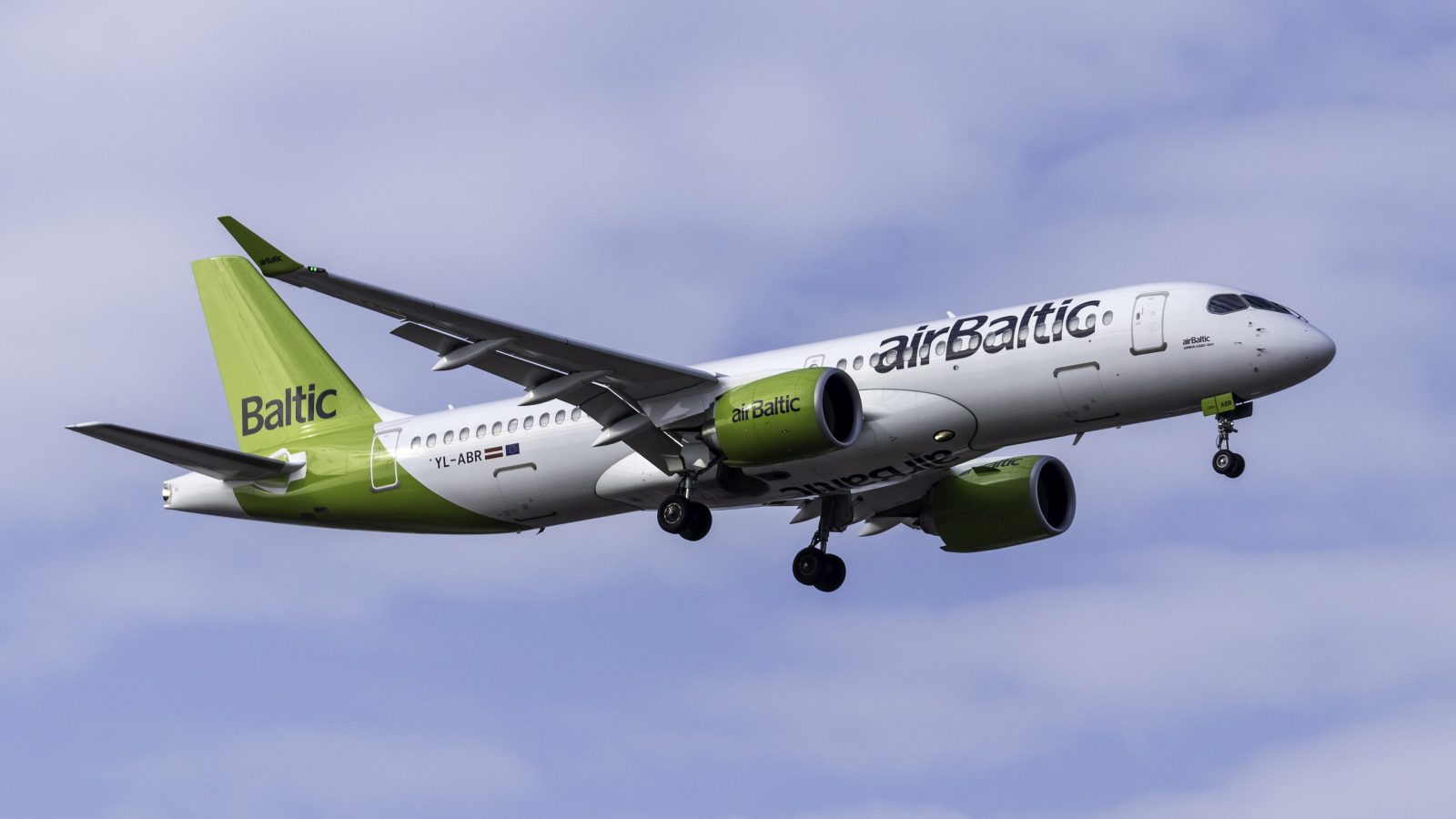
The airline had planned to grow its all Airbus A220 fleet toward 100 aircraft, a scale far beyond what its balance sheet could support.
That plan has now been cut back to 36 aircraft by the end of 2026, rising only gradually toward roughly 40 by 2031, Aerotime and Aerospace Global News both report.
The retreat was forced partly by the aircraft themselves.
The Pratt and Whitney PW1500G engines that power the A220 have been affected by a wider industry durability problem, requiring extended shop visits and leaving spare engines in short supply.
airBaltic, like other A220 operators, was forced to ground aircraft and lease substitute capacity at extra cost, eroding the efficiency the A220 was meant to deliver in the first place.
Government Support For airBaltic Reaches Its Limits: Chapter 11 Inevitable?
The Latvian state owns roughly 88 percent of airBaltic, with Lufthansa Group holding a 10 percent stake acquired in 2025, Aerotime reported.
Riga extended a EUR 30 million loan in April 2026, but Fitch judged this bought only a few months of breathing room rather than a solution, according to Aerospace Global News.
A long promised initial public offering, floated repeatedly over several years as the route to fresh equity, kept slipping, leaving debt as the only lever available, Skift noted.
By early September 2026, bondholders had stepped in with EUR 257 million of interim financing, an initial EUR 180 million tranche of which was released before the Chapter 11 filing itself, Aerotime reported.
When that still proved insufficient, the airline turned to the US courts.
What Happens Next
Chapter 11 gives airBaltic protection from creditor claims while it restructures aircraft leases, bond obligations and other commitments under court supervision, a path already used by SAS, United Airlines, Delta Air Lines, GOL and American Airlines.
Chairman Andrejs Martinovs described it as a framework for reaching agreement with lessors and creditors while the airline keeps flying.
Chief Executive Erno Hildén struck a similar note, insisting the process will not be noticeable to passengers even as the company reshapes itself financially.
The restructuring is expected to run into 2027, backed by the new EUR 350 million facility priced at SOFR plus 8 percent, roughly 12 percent, arranged by Strategic Value Partners alongside Barclays, Hayfin Capital Management, Morgan Stanley and Oaktree Capital Management.
For now, airBaltic insists it is simply flying, selling tickets and planning ahead.
Whether Chapter 11 delivers the sustainable structure the airline has chased for years will depend on how quickly it can bring its ambitions back in line with what its revenue can actually support.
Continue to follow The Aviation Hub for more analysis and insight!