Qatar Airways has now described the Iran war as the biggest test in its history. Speaking at the Qatar Economic Forum in New York, the airline’s chief executive, Hamad Al Khater, told the audience that the conflict was “our single largest crisis in our history”, according to the Qatar Tribune.
That is a striking admission from a carrier that has operated for more than 30 years and has navigated everything from regional blockades to a global pandemic.
The war, which now involves the United States, Israel and Iran, has entered its seventh month.
For Qatar, the consequences have been felt far beyond the balance sheet.
The airline’s home base at Doha’s Hamad International Airport sits in one of the most sensitive corners of the world, and the closure of Qatari airspace stripped the carrier of the very geography that makes its business model work.
The good news is that the worst appears to be behind the airline.
Qatar Airways recently announced that it had returned to its pre-war route numbers for the first time since the conflict began.
Yet a full recovery is a different matter, and the questions now facing Qatar are about profitability, fuel and resilience rather than simple survival.
In this analysis, we look at how the war disrupted Qatar Airways, what it has cost the airline, how it compares with its Gulf rivals, and what the coming months could hold.
Airspace Closures and the Gulf Hub Model
The crisis began on 28 February 2026, when the US and Israel launched military strikes on Iran and Tehran responded with missile and drone attacks across the region. Al Jazeera reported that airspace was closed and airlines halted flights as the situation escalated.
Qatar was among the countries that shut its skies, alongside Bahrain, Iraq, Israel, Kuwait, Syria and the UAE, as Wikipedia’s summary of the economic impact records.
For most airlines, a closed airspace is an inconvenience that can be solved with a diversion. For Qatar Airways, it is an existential problem.
The carrier’s entire model rests on a simple idea: connect passengers from Europe, Africa, Asia and the Americas through a single Doha hub, using the Gulf’s central position to make long-haul journeys efficient.
When the hub itself cannot operate, there is nothing to fall back on.
The scale of the disruption was enormous.
According to Wikipedia’s summary of the conflict’s economic impact, more than 4,000 flights a day were cancelled across the region, stranding hundreds of thousands of passengers.
Qatar’s CEO put it in even starker terms, telling the forum that tens of thousands of flights were cancelled when Gulf states temporarily closed their airspace.
The situation stayed fluid for weeks.
Al Jazeera reported on 6 March that Qatar had partially reopened its airspace even as Iranian strikes continued to hit the Gulf.
That cautious approach reflected the reality that safety, rather than commercial pressure, had to drive every decision made in Doha.
The result was a hub that had to keep stopping and starting, which is arguably harder to manage than a clean shutdown.
Crew positioning, aircraft parking and connecting schedules all had to be rebuilt repeatedly while the security picture kept changing.
Network and Capacity Disruption For Qatar Airways…
Qatar Airways did not simply pause its operations; it had to rebuild them in stages. In mid-March, the airline announced limited flights to and from Doha, running from 18 March to 28 March.
Those services covered dozens of destinations across Africa, Europe, Asia, the Middle East, the Americas and Asia Pacific, giving stranded travellers a route home and keeping a skeleton of the global network alive.
The airline was clear that this was a temporary measure.
Its statement said that Qatar Airways would resume operations once the Qatar Civil Aviation Authority announced the safe, full reopening of Qatari airspace. In other words, the schedule was being dictated by the authorities and the security situation, not by the commercial team.
That has clear implications for the network.
A hub carrier lives and dies by connections, and a limited schedule cannot offer the same breadth of onward options that a full timetable can.
Passengers who might normally connect through Doha from, say, London to Perth or Johannesburg to Bangkok had far fewer choices, and many simply booked elsewhere or waited.
As the CEO explained at the forum, the return to normal has been gradual. Qatar Airways recently confirmed that it had returned to pre-war route numbers, which is a significant milestone.
However, Al Khater was careful to point out that the airline is now examining its network with a sharper eye. “We are looking at routes and saying, what are most profitable routes?” he said.
That comment matters.
Restoring a route on the map is not the same as restoring it profitably, and the war has given Qatar an opportunity, and a reason, to review which services truly earn their place.
Other carriers have taken a similar approach, with multiple airlines suspending their less profitable routes to conserve cash during the conflict.
The Financial Impact: Fuel, Costs and Revenue
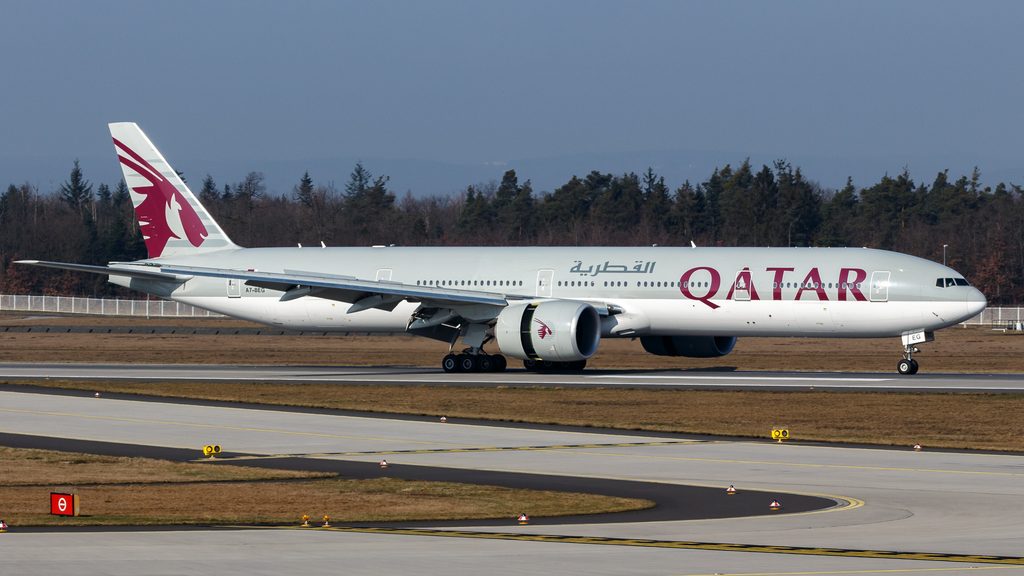
Qatar Airways has not published a full accounting of what the war has cost it, so any figure should be treated with caution.
What is clear is that the pressure came from several directions at once.
Grounded aircraft earn nothing, cancelled flights require refunds and rebooking, and the airline still has to pay for staff, leases and maintenance while the fleet sits idle.
The airline moved quickly to protect its finances.
Bloomberg reported in late March that Qatar Airways was seeking ways to cut costs as the war halted its flights.
That is a notable step for a carrier that has historically been willing to spend heavily to protect its brand and market share.
Fuel is the second major pressure point.
According to Wikipedia’s overview of the war’s economic impact, the conflict more than doubled the price of kerosene-based products such as diesel and jet fuel, because refineries lack certain types of crude oil.
Airlines have also been rerouting around the Middle East on longer flight paths, which adds journey time and burns more fuel.
The CEO’s comments suggest the picture is more nuanced.
Al Khater said fuel remains something that “we are all closely monitoring”, and the Qatar Tribune noted that rising jet fuel costs were partly offset by a global oversupply of crude oil earlier in the year.
In short, crude may be plentiful, but the refined product that airlines actually need has been much more expensive.
Revenue has been affected too.
Customers delayed their bookings because of the uncertainty, and travel advisories and fewer tourist visits reduced traffic across the wider Middle East.
On the positive side, Al Khater told the forum that demand is “still pretty strong”, which suggests that the appetite for travel through Doha has not been permanently damaged.
The wider industry offers a warning of what is at stake.
Wikipedia notes that the American low-cost carrier Spirit Airlines ceased operations on 2 May 2026 after higher fuel costs worsened its existing financial troubles.
Qatar’s balance sheet is far stronger, but the episode shows how unforgiving the economics have become.
Passengers, Rivals and the Competitive Picture
The passenger experience during the closures was, by any measure, difficult.
Travellers were stranded at airports and in hotels around the world, and the airline’s limited schedules in March were designed largely to get those people home.
For a brand that trades heavily on its premium reputation, how Qatar Airways handled those weeks will shape customer loyalty for years.
The airline was far from alone.
Emirates and Etihad, Qatar’s closest Gulf competitors, also suspended their operations, and international carriers including British Airways, Lufthansa, Virgin Atlantic, Air India and Cathay Pacific halted Middle East services, as Wikipedia’s account sets out.
Simple Flying’s analysis of the airlines most disrupted by Middle East airspace closures makes the same point: this was a regional shock, not a problem unique to Doha.
That shared misfortune is important for understanding where Qatar now stands.
Nobody in the Gulf gained a lasting advantage from the closures, and the CEO noted that neighbouring Emirates has also restored its network capacity.
The battle for connecting traffic between Europe and Asia is therefore returning to something like its old shape, with Qatar, Emirates and Etihad all competing for the same passengers.
There are still some opportunities for the winners of the recovery.
Passengers who were unable to fly through the Gulf during the conflict will eventually need to travel, and the carrier that restores reliability and confidence fastest is likely to recapture the largest share of that pent-up demand.
The competition from Turkish Airlines through Istanbul and from European and Asian carriers flying direct routes is a further factor, since any traveller who found an alternative during the war may not automatically come back.
For its part, Qatar Airways is emphasising experience.
Al Khater’s remark that “geopolitics is something we deal with on daily basis” points to a company culture that treats disruption as a fact of life rather than an aberration.
Whether passengers share that calm attitude is something that only the booking data will reveal over the coming months.
Outlook: What Happens Next for Qatar Airways
The immediate outlook for Qatar Airways is cautiously positive.
The network is back to pre-war levels, demand is holding up, and the airline’s leadership has made clear that it intends to be disciplined about where it flies.
For a carrier that has lived through a crisis of this size, that is a solid foundation.
The risks, however, have not gone away.
The war is still in its seventh month, and there is no guarantee that airspace closures will not return if the conflict escalates.
Each closure would force the airline to repeat the stop-start process it endured in March, with all the cancellations and costs that follow.
Insurance, rerouting and security considerations will remain part of the planning process for as long as the fighting continues.
Fuel will be the other variable to watch.
If the price of refined products stays elevated, Qatar will have to decide how much of that cost it can pass on to passengers and how much it must absorb.
The airline’s focus on its most profitable routes suggests it is already preparing for a world in which margins are thinner.
There is also a strategic opportunity.
A carrier that has proved it can survive its single largest crisis, and rebuild its network within months, has a powerful story to tell corporate customers, alliance partners and investors.
The lessons learned in Doha, from crisis communication to fleet and crew management, could make the airline more resilient than before.
Ultimately, the Iran war has shown both the vulnerability and the strength of the Gulf hub model.
Qatar Airways has been hit hard, but it has responded quickly and is flying again.
The real test will be whether it can turn that recovery into profitable growth while the region remains unsettled.
Continue to follow The Aviation Hub for more analysis and insight!
Advertise with us Your brand, in front of an aviation audience Home page and in-article placements, sold directly, one advertiser per slot. From £250 a year. See the rates