Iberia Is Near Its 100th Birthday: Its History
 By The Aviation Hub
12 min read
Updated September 23, 2026
By The Aviation Hub
12 min read
Updated September 23, 2026 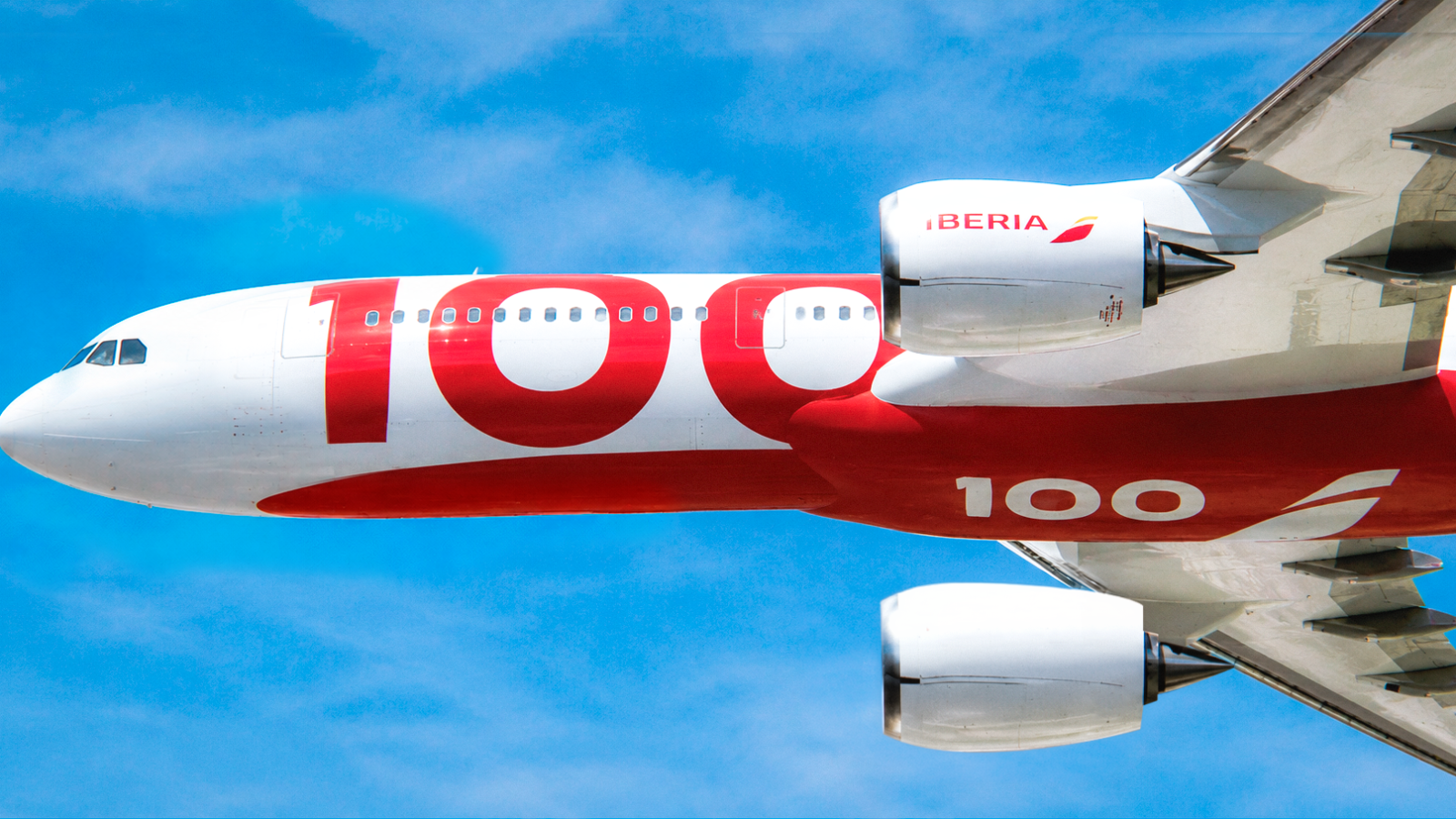
Iberia has started the countdown to its centenary.
With under 100 days to go until 2027, the Spanish flag carrier has unveiled a special anniversary livery and a year long programme of celebrations.
Chairman and CEO Marco Sansavini presented the plans in Madrid, and they stretch from the hangars at La Muñoza to new Iberia Spaces in four Latin American capitals.
The timing matters. Iberia was founded in June 1927, so the airline will turn 100 next summer.
Few carriers in the world can claim a century of continuous identity, and even fewer have survived dictatorship, civil war, nationalisation, privatisation and a cross border merger along the way.
In this article, we first look at what Iberia announced and what it tells us about the airline today.
After that, we go back to the beginning and trace almost 100 years of Iberia history, from a single Rohrbach Roland on the Madrid to Barcelona route to a launch customer for the Airbus A321XLR.
Iberia Unveils Its Centenary Livery
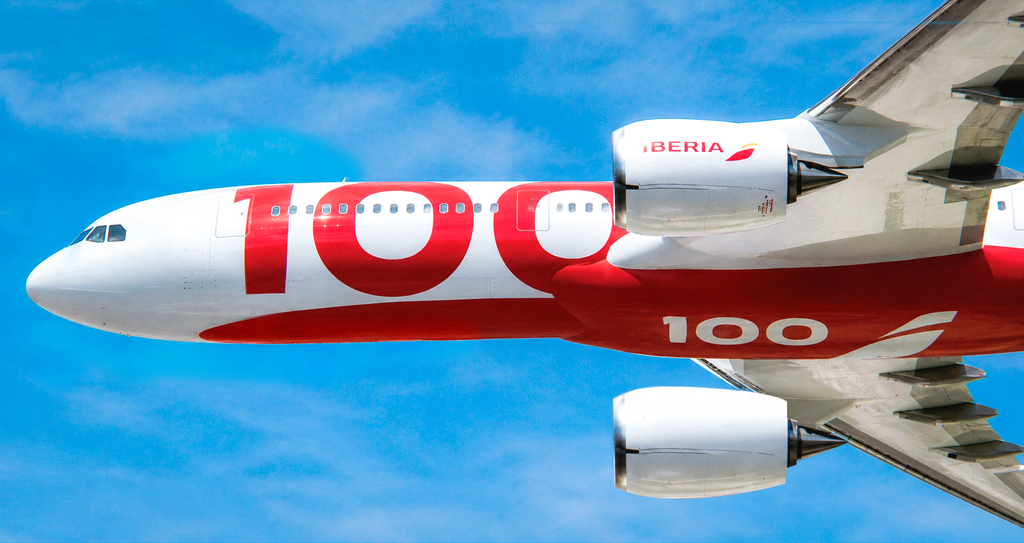
The headline item was the new livery. Iberia confirmed that a special centenary design will appear on some of its aircraft throughout 2027.
The airline has not said how many jets will carry it. However, it will clearly act as a flying billboard for the anniversary across the network.
Sansavini framed the celebrations around people rather than aircraft.
“The centenary events will pay tribute to the more than one billion people who have flown with Iberia over the past 100 years, to all the employees who have made every flight possible throughout this century and to everyone whose family, business or cultural ties have been strengthened by our connectivity,” he said.
That figure of more than one billion passengers is striking. It also underlines the central message of the launch.
Iberia wants the centenary to look backwards and forwards at the same time, celebrating a century of history while presenting a new chapter of transformation.
The airline has also launched a dedicated website at iberia100.es to host further details.
A Programme Built Around Madrid and Latin America
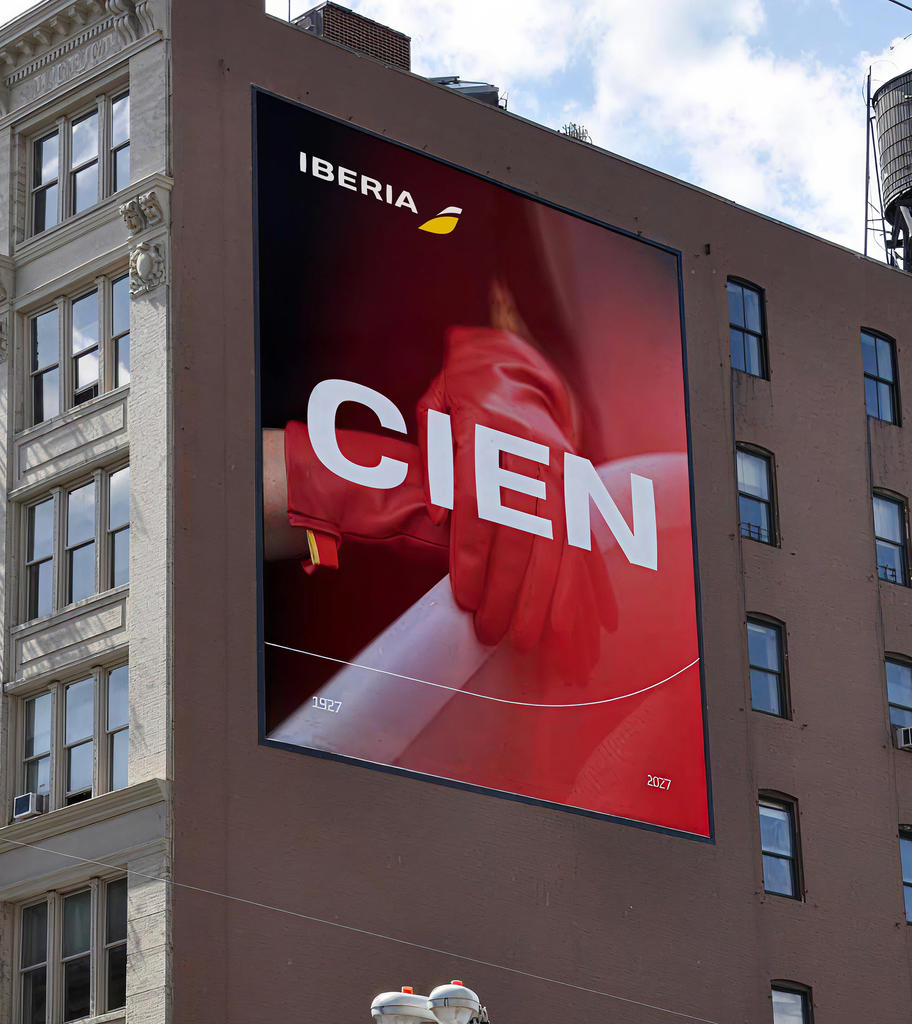
The main institutional event will take place in June 2027, the month of the founding. Iberia will hold it at La Muñoza, its maintenance base beside Madrid Barajas, where its aircraft are prepared for flight every day.
Choosing an operational site rather than a hotel ballroom is a deliberate signal. In short, the airline wants to put its engineers and ground teams in the spotlight.
Latin America will receive special focus as well. Iberia describes the region as its main market, and Casa de América in Madrid will host an initiative on the ties between Spain and the region.
It will also celebrate Spanish as a shared language. Meanwhile, a project called Generation of ’27 will spotlight young people who are shaping Spain’s future, in a nod to the famous literary generation of a century ago.
Business travellers are also on the agenda. Iberia will hold an event with the Spanish business confederation CEOE at the Madrid Stock Exchange.
In addition, the airline will celebrate alongside the Juan Sebastián de Elcano, the Spanish Navy training ship.
The vessel also turns 100 in 2027, and it shares a founder with Iberia in the Basque industrialist Horacio Echevarrieta, whose Cádiz shipyard built it.
Several other plans fill out the calendar. Iberia will take a larger stand at FITUR, the Madrid tourism fair, in January 2027.
Together with Madrid City Council, it will also install the tail fin of one of its aircraft at a landmark location in the Barajas district.
Furthermore, a book and a documentary will chart the airline’s story, and a major air show will take place at Cuatro Vientos airfield.
Perhaps the most lasting initiative is the Iberia Foundation.
It will launch in 2027 and build on the airline’s humanitarian aid work to multiply its social impact.
Iberia Spaces From Madrid to São Paulo
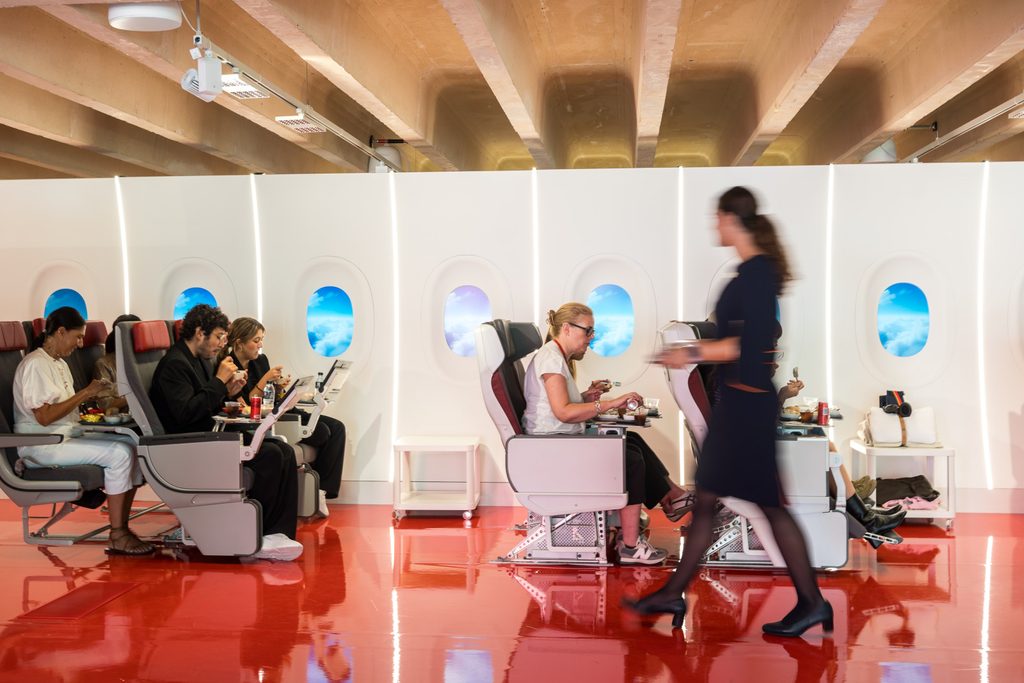
Physical venues will anchor the celebrations.
The Madrid Iberia Space will move to 44 Calle Alcalá, one of the capital’s main streets, and it will stay open for much of 2027.
It will host activities on aviation, culture and social impact, as well as meetings with customers and the public.
Beyond Spain, Iberia will open new Iberia Spaces in Buenos Aires, Bogotá, Mexico City and São Paulo.
That list is telling.
These four cities represent the core of the airline’s transatlantic franchise, and they are markets where Iberia faces strong competition from local and European rivals.
Therefore, a visible brand presence in each city makes commercial sense as well as sentimental sense.
Cabins, Starlink and a Taste of Spain
Anniversaries are often about nostalgia.
Yet Iberia also used the launch to point to product upgrades.
The biggest of these is a retrofit of cabins across its long haul fleet. The airline has not revealed the design yet, but says it will be unveiled in the coming months.
At the same time, the gradual rollout of free, high speed Starlink internet will continue across the fleet.
Iberia is also working with the Royal Academy of Gastronomy to put emblematic Spanish products at the heart of its catering, both on board and in its premium lounges.
For passengers, these are the parts of the announcement that will matter most.
A refreshed long haul cabin, in particular, would help Iberia compete more closely with Air France, Lufthansa and Turkish Airlines on premium traffic between Europe and the Americas.
Employees at the Heart of the Iberia Centenary
Staff will play a central role throughout the year.
Iberia expects around 60,000 current and former employees to visit the Iberia Spaces and attend events in Spain and Latin America.
All of them will be recognised for their contribution to the company.
One highlight will be IB100, a special flight that will symbolically retrace the century shaped by the people of Iberia.
Concerts, gatherings and air displays are also planned. Taken together, this is a sensible move.
Airlines depend on goodwill from crews and engineers, and a centenary offers a rare chance to reward it.
Flight Plan 2030 and the €6 Billion Bet
The anniversary will also showcase progress under Flight Plan 2030, the strategy Iberia unveiled in June 2025.
The plan carries an investment of €6 billion and aims to consolidate Madrid Barajas as one of Europe’s leading hubs.
According to the press release, Iberia has grown from 43 long haul aircraft at the start of 2025 to 51 today, with a target of around 70.
The Airbus A321XLR has been central to that growth.
It has allowed the airline to add destinations such as Orlando, Recife, Fortaleza, Toronto and Monterrey, several of which were flagged when the plan launched.
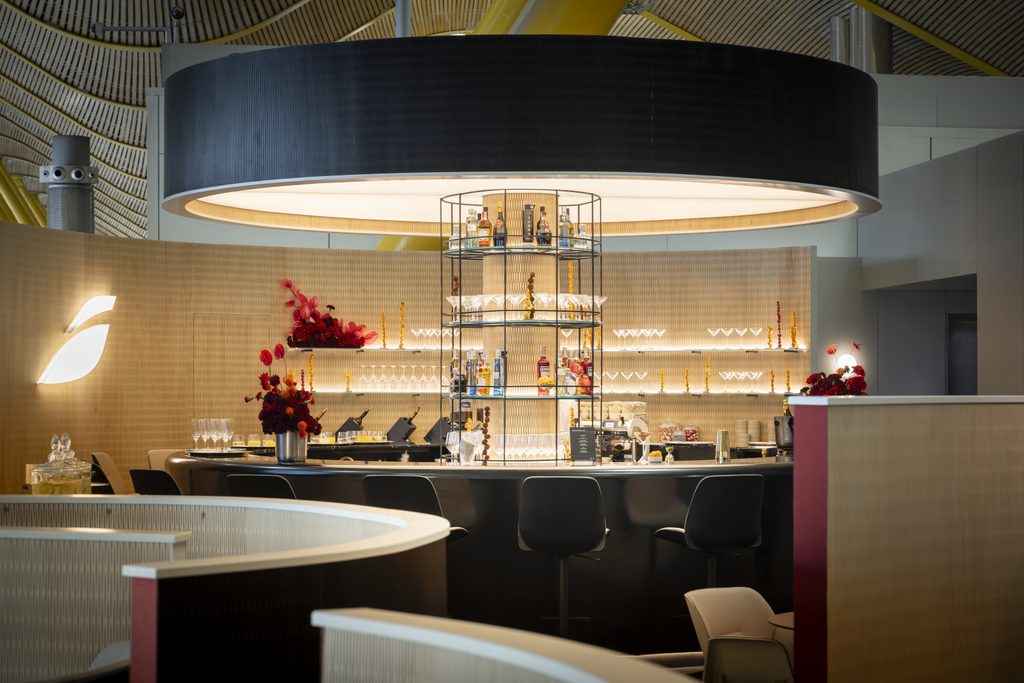
Other milestones include the new Emerald Lounge Sorolla at Terminal 4 and a stronger push into technology, digitalisation and artificial intelligence.
On the industrial side, Iberia has won the LEAP Premier MRO licence and helped create IAG Engine Tech.
As a result, its maintenance division is becoming a business in its own right.
Our Analysis
The centenary programme is more than a celebration.
It is a showcase for a carrier that is growing again after years of restructuring.
Iberia is using its history as a platform to sell its future, whether that future means new cabins, new routes or a bigger Madrid hub.
There is also a clear competitive subtext.
Since IAG walked away from its Air Europa takeover in August 2024, Iberia has had to grow organically.
Flight Plan 2030 and the centenary effectively form one story, and that story is about scale without acquisition.
The History of Iberia
To understand why this anniversary carries such weight, it helps to look back.
Iberia’s first century mirrors the story of modern Spain, and the airline has reinvented itself several times along the way.
1927: Echevarrieta, Luft Hansa and the First Flight
Iberia, Compañía Aérea de Transporte, was formally founded on 28 June 1927.
Horacio Echevarrieta provided the Spanish capital, while Deutsche Luft Hansa took a significant stake and supplied technical expertise.
According to the company’s own historical timeline, the new airline opened Spain’s first commercial air route between Madrid and Barcelona on 14 December 1927.
King Alfonso XIII attended the launch.
The aircraft of choice was the Rohrbach Roland, a three engine monoplane with a top speed of 205 km/h.
Each one carried a crew of two plus ten passengers.
At the time, flying was an exclusive luxury, and Simple Flying’s account of the first flight shows how much of an event it was.
1929 to 1939: Absorbed, Reborn and Civil War
The first chapter was short.
Under the dictatorship of Miguel Primo de Rivera, the government consolidated Spanish aviation into a single subsidised carrier.
As a result, Iberia ceased independent operations in May 1929 and merged into CLASSA, although the name stayed registered.
The Spanish Civil War brought the brand back.
In 1937, the company was reconstituted to serve Nationalist held territory, using Junkers Ju 52 aircraft obtained from Luft Hansa.
Then, on 1 May 1939, Iberia launched its first regular international service, a route from Madrid to Lisbon.
1940s: Nationalisation and the Leap Across the Atlantic
In 1940, the state granted Iberia a monopoly on domestic air transport.
Four years later, on 30 September 1944, the government nationalised the airline and placed it under the Instituto Nacional de Industria.
This period also saw a major shift in suppliers.
Iberia moved away from German aircraft and bought Douglas DC-3s and DC-4s from the United States.
With the DC-4, it made history in 1946. According to the history of Iberia, it became the first airline to fly between Europe and South America after the Second World War, connecting Madrid with Buenos Aires.
That route set the pattern for the next eight decades.
Latin America would become the core of Iberia’s long haul network, and it remains so today.
1950s and 1960s: New York, Aviaco and the Jet Age
The 1953 Pact of Madrid improved relations between Spain and the United States.
Consequently, Iberia added three Lockheed Super Constellations, the first named Santa María.
It opened its Madrid to New York service on 3 August 1954, the anniversary of Columbus setting sail.
Domestic consolidation followed.
In 1959, Iberia bought a controlling stake in the private carrier Aviaco, which it would eventually absorb in 1999.
Meanwhile, the jet age arrived in 1961 with the first Douglas DC-8. Over the following years, the Sud Aviation Caravelle and Douglas DC-9 joined the short haul fleet.
1970s and 1980s: Jumbo Jets, the Puente Aéreo and Amadeus
The early 1970s brought widebodies.
Iberia introduced the Boeing 747 and the McDonnell Douglas DC-10, and by the middle of the decade it served almost every Latin American capital.
It also ordered 35 Boeing 727-200s in 1971, and the type stayed in service until 2001.
In 1974, Iberia launched the Puente Aéreo, the Madrid to Barcelona air shuttle.
Passengers could simply turn up and board the next available flight without a booking, which was revolutionary for its time.
The service celebrated its 50th anniversary in 2024, and it remains one of the airline’s key commitments in Spain.
Later, in 1987, Iberia helped found the Amadeus distribution system with Lufthansa, Air France and SAS.
Amadeus went on to become one of the most important technology companies in global travel.
In the same year, the airline began planning a fleet renewal around the McDonnell Douglas MD-87 and the Airbus A320.
1990s: Latin American Ambitions and oneworld
The 1990s were a decade of ambition and pain.
From 1990, Iberia bought stakes in Aerolíneas Argentinas, Viasa of Venezuela and Ladeco of Chile.
The idea was to build a pan Latin American network around Madrid. In practice, however, the investments produced heavy losses.
By 1995, Aerolíneas Argentinas had passed to the Spanish state holding company.
Viasa was liquidated in 1997, and Iberia sold its Ladeco shares the same year. Nevertheless, the decade also brought lasting successes.
Iberia Plus launched in 1991 as Europe’s first international frequent flyer programme, according to the main Iberia entry on Wikipedia.
In February 1998, Iberia ordered 76 Airbus aircraft, then the largest single order in Airbus history.
Then, on 1 September 1999, it joined the oneworld alliance alongside British Airways, American Airlines and others. That decision would shape the next quarter century.
2001 to 2011: Privatisation, Terminal 4 and IAG
On 3 April 2001, Iberia was privatised and listed on the Madrid stock exchange. British Airways took a 13.2% stake, alongside Caja Madrid and El Corte Inglés.
Five years later, the hub itself changed. Madrid Barajas Terminal 4 opened on 5 February 2006.
Designed by Antonio Lamela, Richard Rogers and Luis Vidal, it won the Stirling Prize that year.
Iberia and its oneworld partners operate from T4, and the airline accounts for more than 40% of all traffic at Barajas.
The biggest structural change came next. In November 2009, Iberia and British Airways confirmed merger talks.
After shareholder approval in 2010, the deal completed on 21 January 2011 and created International Airlines Group.
Iberia kept its brand and headquarters, but it now sat inside a larger group with a single strategic direction.
2012 to 2019: Crisis, Iberia Express and Recovery
The early years inside IAG were difficult.
Iberia was losing money, and Spain was deep in economic crisis.
In March 2012, the airline launched Iberia Express, a low cost subsidiary for short and medium haul flights from Madrid.
Later that year, it announced 4,500 job cuts and a smaller fleet.
Recovery came under Luis Gallego, who became CEO in March 2013.
He halved losses in his first year and returned Iberia to profit in his second, after six years of operating losses.
In addition, punctuality and customer satisfaction climbed to record levels.
The airline also refreshed its brand in 2013 and moved its headquarters to Ciudad Lineal in Madrid.
Gallego’s success did not go unnoticed. In September 2020, he succeeded Willie Walsh as IAG chief executive.
2020 Onwards: Pandemic, Air Europa and the A321XLR
The pandemic hit Iberia hard, as it did every airline.
During the crisis, IAG agreed to buy Air Europa, which would have given Iberia a dominant position at Madrid.
However, the European Commission raised serious competition concerns. Eventually, IAG terminated the deal in August 2024 and paid Globalia a €50 million break fee.
Iberia then turned to organic growth.
In April 2024, Marco Sansavini took over as Chairman and CEO. Later that year, Airbus delivered the first A321XLR to Iberia as launch customer.
On 14 November 2024, flight IB347 operated the world’s first A321XLR revenue service from Madrid to Boston.
The narrowbody opened a new type of route for the airline.
It allows Iberia to serve thinner transatlantic markets that could never fill an A350.
Iberia also returned to Tokyo in October 2024, and by the end of 2025 it operated an all Airbus fleet of close to 100 aircraft.
Iberia and the Next 100 Years
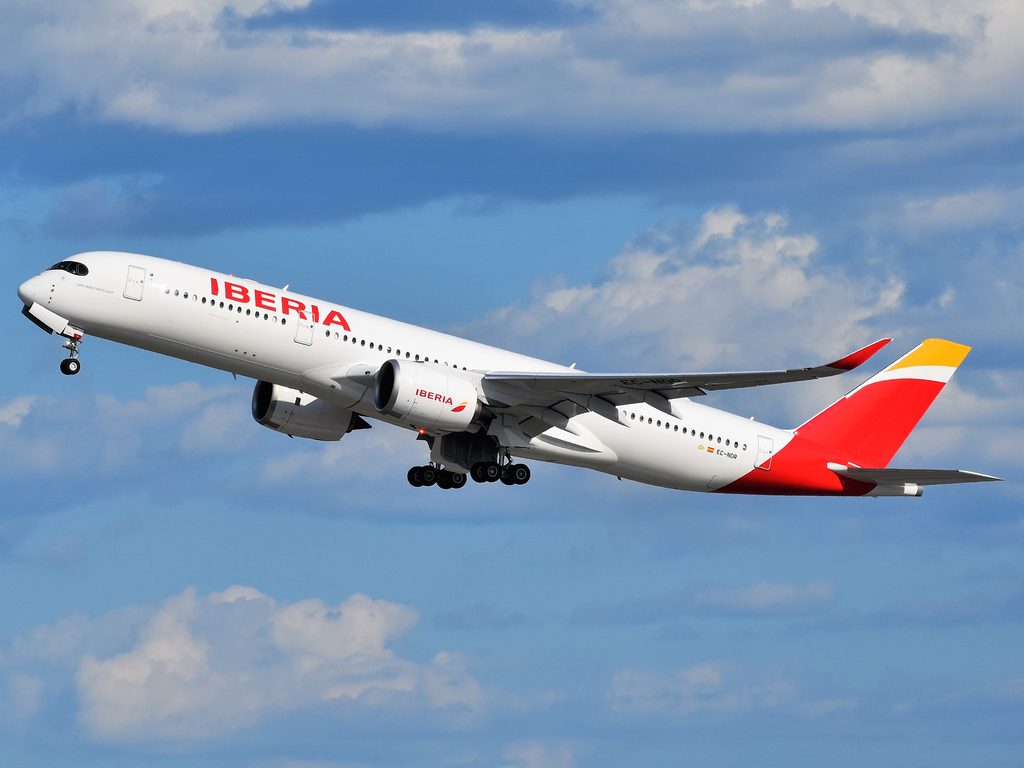
Looking at the full sweep of history, a few themes stand out.
First, Iberia has always been tied to Latin America.
The 1946 Buenos Aires service, the 1990s investments and the four new Iberia Spaces all follow the same logic.
Second, the airline has shown an unusual ability to reinvent itself after crisis, whether in 1937, 2001 or 2013.
The centenary programme draws on both themes.
It celebrates the bridge between Spain and Latin America, and it presents Flight Plan 2030 as the latest reinvention.
The real test, however, will come after the celebrations. Iberia must deliver on new cabins, a larger long haul fleet and a stronger Madrid hub, all without the Air Europa deal it once hoped for.
For now, the countdown has begun.
Iberia has flown more than one billion people since a Rohrbach Roland left Madrid in 1927, and it enters its second century in a far stronger position than seemed possible a decade ago.
We will follow the anniversary closely throughout 2027.
Continue to follow The Aviation Hub for more analysis and insight!
Advertise with us Your brand, in front of an aviation audience Home page and in-article placements, sold directly, one advertiser per slot. From £250 a year. See the rates