If WW3 Happens, What Happens to Commercial Aviation?
 By The Aviation Hub
8 min read
Updated September 20, 2026

Talk of WW3 has moved from the fringes of internet debate into mainstream political conversation, and it is worth being clear from the outset that nothing in this article is a prediction.
It is a thought experiment built on evidence: what has already happened to commercial aviation during smaller conflicts, and what those events suggest would happen if a war between major powers ever spread across continents.
That evidence is more current than many readers might expect.
The US and Israeli war on Iran, which began in late February 2026, has already delivered a shock on a scale the industry has not seen since the pandemic.
Within days, more than 21,300 flights had been cancelled at seven major airports, and one industry commentator described it as “pretty well the biggest shutdown we’ve seen certainly since the COVID pandemic”.
Months later, airlines were still cutting millions of seats and raising fares because of the fuel price spike that followed.
If a regional conflict can do that, a genuine WW3 would test aviation in ways it has never been tested.
Air travel is the most globally connected transport system on earth, dependent on shared airspace, shared fuel supplies, shared navigation satellites and supply chains that cross almost every conceivable front line.
In this analysis, we look at six pressure points: airspace, fuel, navigation, manufacturing, airline fleets and passengers.
Closed Skies Would Be the First Casualty Following Start of WW3
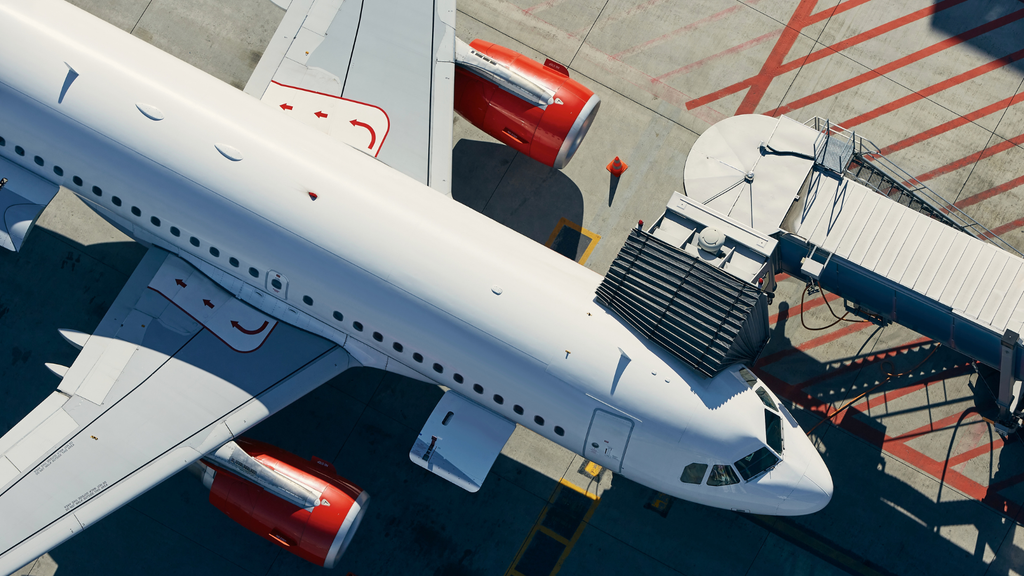
The first thing to go in any major conflict is airspace, and history shows how quickly that can happen.
On 11 September 2001, the FAA ordered every aircraft in US skies to land.
There were more than 4,500 aircraft in the air at the time, and the airspace was completely clear of commercial and private flights in roughly three and a half hours.
A wartime closure would look different, because it would probably be patchy and prolonged rather than a single national shutdown.
Russia’s airspace, closed to many Western carriers since 2022, shows what long-term rerouting really costs.
Research published in ScienceDirect found that the Helsinki to Beijing route lengthened by 1,729 nautical miles, adding almost four hours, while Frankfurt services faced a 710-nautical-mile detour worth around 90 minutes.
Fares on affected routes from northern Europe rose by an average of $43, or 5.4 per cent, with business class passengers hit hardest.
The wider operational effects, as Airways Magazine explains, include extra fuel burn, payload restrictions, crews running into duty-time limits, and widebodies that can manage only one long-haul rotation a day instead of two.
Now imagine that happening in several regions at once.
The Iran war offers a preview. Dubai, Doha and Abu Dhabi, hubs where at least 90,000 people change flights every day, were shut, with airspace closed across Israel, Qatar, Syria, Iran, Iraq, Kuwait, Bahrain, Oman and the UAE.
More than 2,800 flights were cancelled across the Middle East on the first Sunday alone.
In a WW3 scenario, the Gulf corridor and the Russian corridor could both be restricted while further routes close around them, leaving airlines to squeeze traffic through ever narrower gaps.
WW3 Could Cause Fuel Shortages and Soaring Costs
Fuel is the pressure point that reaches every airline, everywhere.
It typically accounts for 25 to 30 per cent of operating costs, and conflict scrambles supply fast.
Since the Iran war began, jet fuel has risen by more than 80 per cent, while law firm Morgan Lewis put the rise at more than 120 per cent at its peak, reaching $1,838 per tonne in early April.
The figures differ depending on the benchmark and date, but the direction is unmistakable.
The driver was the closure of the Strait of Hormuz, which Morgan Lewis says cut off roughly 20 per cent of the world’s oil supply.
Refining margins for jet fuel and diesel widened to between $50 and $80 a barrel from $15 to $20 before the conflict, and some East African airports were reportedly operating “hand-to-mouth” with only days of reserves.
The consequences reached the schedule.
Airlines cut 9.3 million seats for the period between June and September, including around 2 million at Qatar Airways, 700,000 at Emirates and 450,000 at Etihad. Spirit Airlines, already under pressure, permanently ceased operations in May.
Insurers tightened war-risk exclusions and withdrew cover for some regions, and the leasing market split in two: fuel-efficient new aircraft held their value, while older jets faced faster depreciation and their weaker operators faced a higher risk of lease defaults.
A WW3 scenario would likely be far harsher, because it would hit energy supply from more than one direction at once.
Governments would probably prioritise fuel for military use, and airlines with thin margins would struggle to survive long.
GPS Jamming and Spoofing in the Cockpit
Modern airliners lean heavily on satellite navigation, and that dependence is already being exploited.
EASA has updated its Safety Information Bulletin on GNSS jamming and spoofing, and both EASA and the FAA report a “notable increase” in incidents since 2022, with events growing in severity and sophistication.
Affected regions include the Mediterranean, the Black Sea, the Middle East, the Baltic, the Arctic and Eastern Europe.
EASA warns that spoofing carries greater operational risk than jamming because it is harder to detect and can affect multiple systems, producing a cumulative effect.
Its guidance recommends that operators use alternative navigation aids to verify aircraft position in affected areas, and it endorses electronic flight bag applications that display real-time radio frequency interference data.
The FAA published its own updated resource guide in March 2026, and suppliers such as Honeywell are developing advanced inertial systems and anti-spoofing receivers.
In a great-power conflict, electronic warfare would almost certainly be far wider and more intense, and the interference would not stay neatly confined to war zones.
Aircraft would still fly, because pilots are trained to fall back on inertial systems and ground-based aids, but flights would become less efficient and the workload on crews would rise.
Airports whose approaches depend on satellite guidance could also face restrictions.
Aircraft Production and the Supply Chain
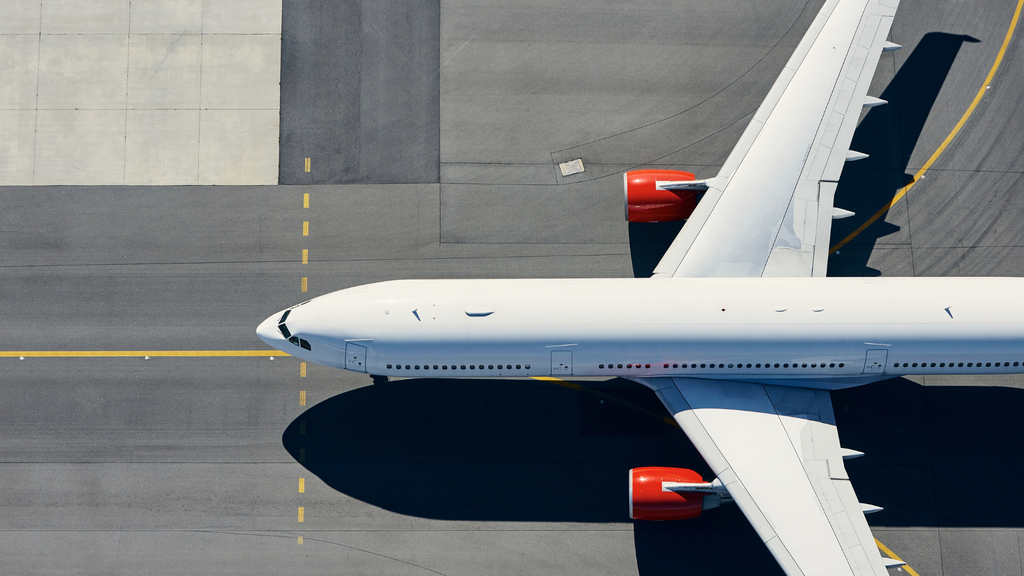
Aviation’s supply chain was built for a peaceful, interconnected world, and titanium shows how exposed that makes it.
Before 2022, Russia supplied around half of the world’s aerospace-grade titanium.
According to AeroTime, up to 65 per cent of Airbus’s titanium came from Russia’s VSMPO-AVISMA, Boeing took around 40 per cent from the same supplier in 2014, and Embraer relied on it entirely.
When Russia invaded Ukraine, Boeing said it would stop importing Russian titanium almost immediately, while Airbus was still looking for alternative suppliers and building reserves months later.
That was one material, one supplier and one sanctions decision, and the industry absorbed it, albeit at a cost.
A WW3 scenario would layer many such disruptions on top of each other.
Titanium is only one example, and engines, forgings and electronics all depend on cross-border supply.
Manufacturers with large defence divisions might also be pushed to prioritise military output over airliners.
The result would be delayed deliveries, and airlines unable to receive new aircraft would be forced to keep older, thirstier jets in service at exactly the moment fuel is most expensive.
Airline Fleets Could Be Called Up for War
In a major conflict, some airliners would stop being commercial aircraft altogether.
The United States operates the Civil Reserve Air Fleet, known as CRAF, which was established under the Defense Production Act of 1950 and lets the military draw on contracted airline aircraft when its own airlift capacity is not enough.
It has three stages, and the highest, Stage III, covers national mobilisation. Carriers must respond within 24 to 72 hours depending on the stage.
As of September 2022, the fleet consisted of 450 aircraft from 25 airlines, made up of 413 aircraft for international operations and 37 for domestic use.
CRAF has been activated three times: for Operation Desert Shield in 1990 and 1991, for Operation Iraqi Freedom in 2003, and in 2021 to support the evacuation of Afghanistan.
Those activations were limited in scale.
A Stage III call-up in a WW3 scenario would remove passenger widebodies and freighters from commercial service just as demand for air cargo and evacuation flights was rising.
Even the Iran war showed the pattern in miniature, with the US securing military and charter flights to move its citizens out of the Gulf.
WW3: What It Would Mean for Passengers and Airports
For passengers, the most immediate effect would be price.
In late April, the average US international fare was $1,101, up 16 per cent year on year, while US domestic fares jumped 24 per cent.
Analysts reported that some Europe to Asia routes rose as much as fivefold, and Morgan Lewis noted long-haul fares up by as much as 76 per cent.
Then comes the human cost of disruption.
When the Gulf hubs shut, more than 1,600 tourists were stranded in Bali alone, and the US State Department was in contact with nearly 3,000 American citizens who were caught up in the disruption.
The UAE authorised emergency flights to begin repatriating people, while Emirates, flydubai and Etihad ran limited services.
Airports themselves became targets.
Dubai International and Abu Dhabi’s Zayed International were both directly hit, and one person was killed at Abu Dhabi airport.
That is a sobering reminder that terminals, runways and air traffic control facilities are infrastructure that a warring state may treat as a legitimate objective.
In a WW3 scenario, we would expect tighter security, fewer routes and a strict hierarchy of priorities in which military, cargo and repatriation flights come ahead of leisure travel.
Lessons From History and Final Thoughts
Aviation has a long record of recovering from shocks.
After 9/11, controllers began restarting the system within two days.
The industry rebuilt after the pandemic, adapted to the loss of Russian airspace, and is now working through the fuel crisis triggered by the Iran war.
That resilience is real, and it should not be dismissed.
But each of those shocks was either regional, temporary or limited to a single pressure point.
A WW3 scenario would combine all of them at once: closed airspace on several axes, fuel supply constrained from more than one direction, navigation systems degraded by electronic warfare, factories short of critical materials, fleets requisitioned and passengers unable to afford or reach the flights that remain.
No airline plan, and no single regulator, is built for that.
Nobody wants to see WW3 tested against the industry’s resilience, and we hope it remains a thought experiment.
If it does not, the pressure points outlined above are the ones that will decide how quickly the world’s skies go quiet, and how long it takes them to reopen.
Continue to follow The Aviation Hub for more analysis and insight!
Advertise with us Your brand, in front of an aviation audience Home page and in-article placements, sold directly, one advertiser per slot. From £250 a year. See the rates