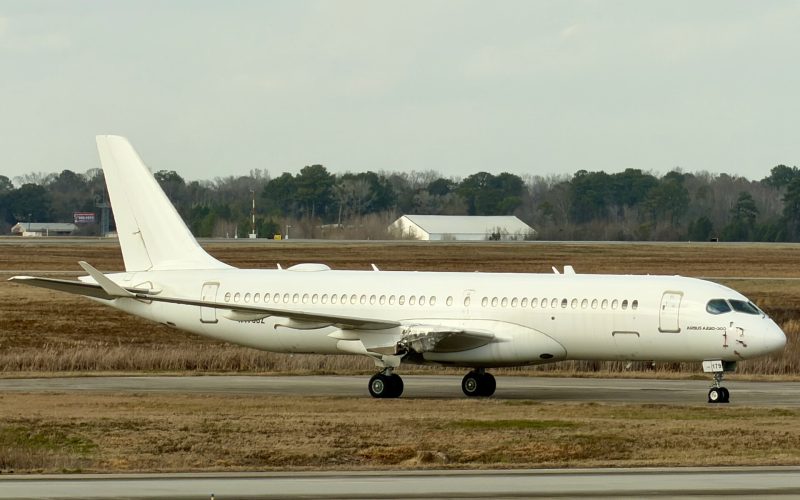
Istanbul Sabiha Gokcen Airport Guide: Pegasus and the Asian Side
Istanbul Sabiha Gokcen Airport is the low cost gateway on the Asian side of the Bosphorus. Pegasus, two runways, routes, metro access and spotting explained.
 By The Aviation Hub
6 min read
Updated October 20, 2026

Istanbul Sabiha Gokcen International Airport is the second airport of Turkey’s largest city, located in Pendik on the Asian side of the Bosphorus about 20 miles (32 km) southeast of the historic centre. It handled roughly 48 million passengers in 2025 and ranks among the busiest low cost airports in Europe. Istanbul Sabiha Gokcen Airport grew from a single runway overflow field into the home of Pegasus Airlines and a major base for AJet, the Turkish Airlines budget subsidiary. A second runway opened in late 2023 and removed the constraint that defined its first two decades.
Istanbul Sabiha Gokcen Airport at a Glance
The airport carries the IATA code SAW and the ICAO code LTFJ. It sits at 95 metres (312 feet) above sea level on the hills of the Kocaeli peninsula, between the Sea of Marmara and the E80 motorway. Two parallel concrete runways and one large terminal handle all traffic. The operator is ISG, a company controlled by Malaysia Airports Holdings, under a long concession from the owner HEAS, a state defence industry body.
Passenger numbers reached about 48.4 million in 2025, up 17 per cent on the year before. Pegasus Airlines is the dominant carrier and has its headquarters and main hub here. AJet, formerly AnadoluJet, operates a large base and flies the Turkish Airlines group’s schedule on the Asian side. Qatar Airways, flydubai, Air Arabia and other foreign carriers add further international capacity. Transport and parking information is on the airport’s official website.
How the Asian Side Got Its Airport
By the late 1990s Ataturk Airport on the European side was saturated and Istanbul needed a second field. The government chose a military site at Kurtkoy near Pendik, and Istanbul Sabiha Gokcen Airport opened on 8 January 2001. It was named after Sabiha Gokcen, the adopted daughter of Mustafa Kemal Ataturk and widely recognised as the world’s first female fighter pilot. Early years were quiet, with a handful of charter and domestic flights.
Pegasus changed everything. After its purchase by the Esas group in 2005 the airline moved its base here and built a low cost network across Turkey, Europe and the Middle East. A consortium of Turkish, Indian and Malaysian investors won the concession in 2007 and delivered a new terminal in October 2009 with capacity for 25 million passengers. Malaysia Airports later bought out its partners.
Traffic passed 35 million in 2019, and the field claimed to be the busiest true single runway airport in the world. The airport opened a hotel and airside lounge in January 2020. The decisive turning point came on 25 December 2023, when the second runway entered service and doubled hourly capacity from 40 to 80 movements.
Runways at Istanbul Sabiha Gokcen Airport
The original strip is Runway 06L/24R, which measures 3,000 metres (9,843 feet) by 45 metres on concrete. The new Runway 06R/24L is longer and wider at 3,540 metres (11,614 feet) by 60 metres, also concrete, and can take any wide body in service. The pair sit far enough apart for independent parallel operations, which was the whole point of the project.
Prevailing northeasterly winds mean the 06 runways see most use, with aircraft approaching over the Marmara shore. Southwesterly storms in winter switch operations to the 24s. The terrain is hilly and the airport sits noticeably higher than the sea a few miles south, which produces gusty crosswinds and occasional low cloud.
The single runway era had a grim postscript. In January 2020 a Pegasus Boeing 737-800 left the runway on landing without casualties. A month later, on 5 February 2020, another Pegasus 737-800 overran Runway 06 in heavy rain and a tailwind, broke into three pieces and killed three passengers.
Terminals and Airlines
A single terminal, opened in 2009, handles domestic and international flights under one roof with separate piers. Pegasus occupies the largest share of gates and check in desks. Its Boeing 737-800 and Airbus A320neo family fleet turns around on tight schedules that keep the aprons busy from before dawn until after midnight.
AJet flies from the same building at Istanbul Sabiha Gokcen Airport, giving the Turkish Airlines group a presence on the Asian side. Other carriers include flydubai, Qatar Airways, Air Arabia, Azerbaijan Airlines, AirAsia X and a range of Gulf, Iraqi and Central Asian airlines. There is no alliance segregation, as the terminal is too compact for it.
Lounges are modest. The Pegasus lounge and a pay in CIP lounge serve the international pier, and a hotel attached to the terminal offers rooms for early departures. The cargo terminal has capacity for around 90,000 tonnes a year.
Routes and Destinations
Domestic flying is intense. Ankara, Izmir, Antalya, Trabzon, Adana and Diyarbakir see frequent departures by Pegasus and AJet, and the airport serves almost every scheduled airfield in Turkey. The Istanbul to Izmir and Istanbul to Antalya routes rank among the heaviest domestic city pairs in Europe.
Internationally, Istanbul Sabiha Gokcen Airport reaches western Europe, the Balkans, Russia, the Caucasus, Central Asia and the Gulf. London Stansted, Amsterdam, Paris Orly, Dusseldorf, Vienna, Tbilisi, Baku, Dubai and Tehran all feature. Pegasus has pushed as far as Bishkek and Manchester. Flydubai and Qatar Airways link the airport to their Gulf hubs for onward connections to Asia.
Summer brings heavy leisure traffic to Turkey’s resorts and to Mediterranean islands, while winter concentrates on domestic and Gulf flying. No long haul wide body services are based here, which leaves that market to Istanbul Airport on the European side.
Getting to and from Istanbul Sabiha Gokcen Airport
Istanbul Metro Line M4 reached the airport in October 2022 and runs to Kadikoy on the Asian shore for a few lira, the cheapest sensible option. From Kadikoy, ferries cross to Eminonu and Karakoy in 20 minutes, which is the most scenic route to the old city. The Marmaray suburban rail line is reachable by connecting at Ayrilik Cesmesi station.
Havaist shuttle buses and IETT express buses run to Taksim and Kadikoy and take 60 to 90 minutes depending on traffic. Intercity coaches serve Izmit, Bursa and other towns. The E80 motorway provides direct road access, and a taxi to Taksim costs roughly TRY 1,200 to 1,500 (around £25 to £32) and takes an hour or more. Open air and multi storey car parks surround the terminal.
Spotting and Photography
The terminal’s upper level and the hotel rooms facing the apron give views across the Pegasus stands and Runway 06L/24R. Outside the fence, the roads and open ground to the southwest towards Pendik sit beneath the 06 approaches, which are used for most of the year. The elevated E80 motorway bridges offer distant but useful angles on departures.
Morning light favours the eastern perimeter, afternoon light the western side. Security staff and military police at Istanbul Sabiha Gokcen Airport are vigilant because of its defence industry neighbours, so stay on public roads, keep cameras away from military aircraft and move on if asked. The reward is a dense procession of Pegasus and AJet jets with regular Gulf wide bodies for variety.
What Comes Next
With two runways in service, the terminal is now the bottleneck. The plans call for new passenger terminals between the two runways, along with apron expansion. The M10 metro line, under construction, will link the airport with Marmaray and the high speed trains at Pendik.
Pegasus has large orders for the Airbus A321neo and the Boeing 737 MAX 10, so growth is almost guaranteed. The question is how fast the terminal can keep pace. Istanbul Sabiha Gokcen Airport is closing the gap with the giant on the European shore in passenger numbers, if not in long haul reach. Compare the two on our Airports of the World map.
Continue to follow The Aviation Hub for more analysis and insight.
Advertise with us Your brand, in front of an aviation audience Home page and in-article placements, sold directly, one advertiser per slot. From £250 a year. See the rates