JetBlue Creditors Hire Bankruptcy Advisers as Bonds Crash to 42 Cents
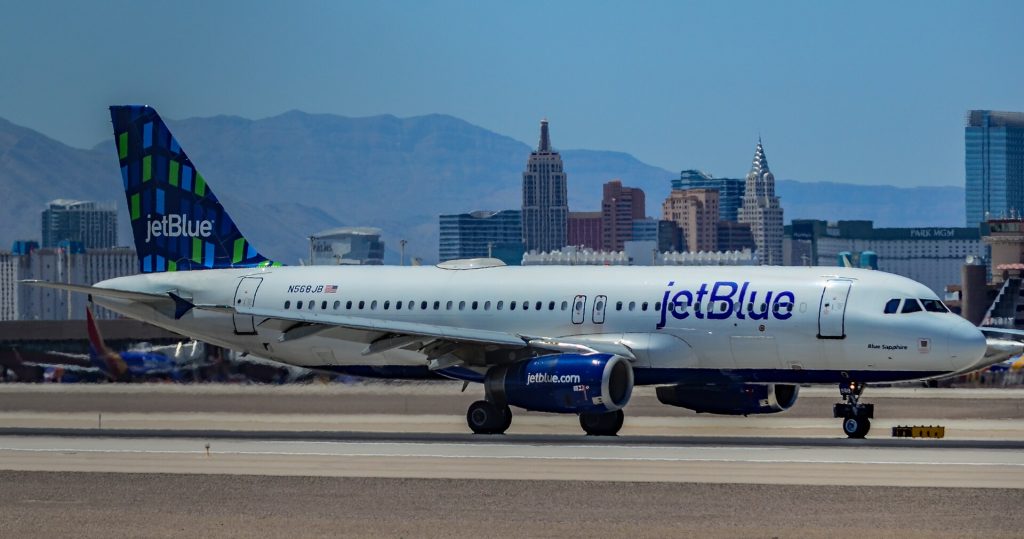
JetBlue's creditors have hired bankruptcy advisers as $2 billion in frequent flyer-backed bonds fell sharply to 42 cents on the dollar.
 By The Aviation Hub
5 min read

A group of JetBlue creditors has hired bankruptcy advisers after $2 billion in bonds backed by the airline's TrueBlue frequent flyer programme fell to 42 cents on the dollar, according to View from the Wing. JetBlue shares closed Friday at $2.63, leaving the airline's market capitalisation below $1 billion.
The speed of the bond collapse is striking. View from the Wing notes that these same bonds were trading near 80 cents on the dollar earlier this month, meaning they lost roughly half their value in a matter of weeks. These are secured creditors whose claims sit against what is considered JetBlue's strongest, highest-margin business: its frequent flyer programme and Barclays credit card revenue.
Who the JetBlue Creditors Are Working With
The Wall Street Journal, as cited by View from the Wing, reports that the creditor group is working with PJT Partners as their financial adviser. One Mile at a Time adds that the group is also working with a law firm, as the airline continues to grapple with cash burn and rising jet fuel costs.
The creditors hold the $2 billion notes due in 2031 that are secured against TrueBlue and the Barclays card partnership. View from the Wing points out this arrangement carries $197.5 million in annual interest, the portion of JetBlue's obligations that should, in theory, be most likely to be met.
What JetBlue's Balance Sheet Shows
JetBlue's June 30 balance sheet, as reported by View from the Wing, showed $2.2 billion in unrestricted cash and investments, an undrawn $600 million credit line, and $8.5 billion in total debt and finance leases. The airline claims $6 billion in unencumbered assets, though the source notes it is far from clear how much can actually be raised against them.
Roughly 67% of JetBlue's assets at book value are already mortgaged, according to View from the Wing. There are also strict covenants tied to the TrueBlue-backed mortgage, including a requirement for at least $750 million of quarter-end liquidity and a cap on the senior debt-to-collateral ratio at 62.5%. Breaching either condition would divert credit card revenue towards accelerated debt repayment.
The Airline's Recent Financial Performance
JetBlue has not turned a profit since before the pandemic, according to One Mile at a Time. The airline reported a $141 million operating loss in the second quarter, meaning it would not have been profitable even if interest costs were stripped out entirely, as View from the Wing points out.
Second quarter results did contain some brighter figures. View from the Wing reports that revenue rose year on year, albeit slightly behind the industry, and that new premium Barclays card acquisitions were up almost 40%. Fort Lauderdale revenue per available seat mile increased 11% despite a near 40% capacity rise at that base.
To put the debt burden in perspective, One Mile at a Time notes that Delta carries only around double JetBlue's debt despite generating roughly seven times as much revenue, while Southwest holds materially less debt than JetBlue despite having more than three times the revenue.
What Went Wrong for JetBlue
View from the Wing traces the root of the airline's difficulties through a string of strategic missteps. Its partnership with American Airlines was blocked by regulators, and its proposed merger with Spirit collapsed after the same outcome. The source also notes that in 2023, then-chief executive Robin Hayes acknowledged the airline had neglected TrueBlue, which operates in major financial and high-spending markets, calling it an extraordinary error.
Current chief executive Joanna Geraghty is now attempting to turn the carrier around. JetBlue is concentrating on its East Coast leisure network, introducing a first class cabin, opening lounges, and updating the TrueBlue programme to drive credit card spend, according to One Mile at a Time.
You can track JetBlue and other carriers directly through our Airline Search tool.
The United Question
On United Airlines' recent earnings call, analyst Jamie Baker asked chief executive Scott Kirby why United should not be considered a potential solution for JetBlue as it considers restructuring. View from the Wing reports that Kirby replied: "So I'm not going to create any new news. I just have nothing new to add on that," before moving on without further comment.
One Mile at a Time notes that United has long held at least a theoretical interest in JetBlue, principally for its positions at New York JFK. However, with JetBlue's debt approaching $9 billion, the maths of any acquisition are difficult. Any purchase of the shares would not remove that debt, and integration costs plus the need to bring staff onto United's pay scales would add further pressure.
What JetBlue Says
In a statement cited by One Mile at a Time, JetBlue said the company "remains confident in its JetForward strategy and the progress being made toward returning to sustained profitability." The statement made no reference to a potential Chapter 11 filing.
One Mile at a Time reports that JetBlue's CEO has stated there will be no bankruptcy filing in 2026. The airline was due to hold its third quarter earnings call on Tuesday, which was expected to provide further detail on its financial position, according to View from the Wing.
The Bottom Line
JetBlue creditors organising with PJT Partners is a material escalation beyond a falling share price. The bonds that secured creditors hold against TrueBlue, the airline's most valuable asset, have halved in value inside a month. That signals the market believes the risk of a formal restructuring is real and near-term.
One Mile at a Time argues that a Chapter 11 filing may ultimately be what gives JetBlue a viable path forward, even if it is not what management would prefer. Whether that process would attract a strategic partner such as United would likely depend on what JetBlue looks like once debt is restructured. The third quarter earnings call was the next scheduled moment for the airline to address its position publicly.
Continue to follow The Aviation Hub for more analysis and insight.
Advertise with us Your brand, in front of an aviation audience Home page and in-article placements, sold directly, one advertiser per slot. From £250 a year. See the rates