After almost six years of approvals and restructuring, Korean Air will absorb Asiana Airlines next month, and the Asiana name will vanish from the skies. Here is what the Korean Air Asiana merger means for passengers, frequent flyers and Asia’s airline map.
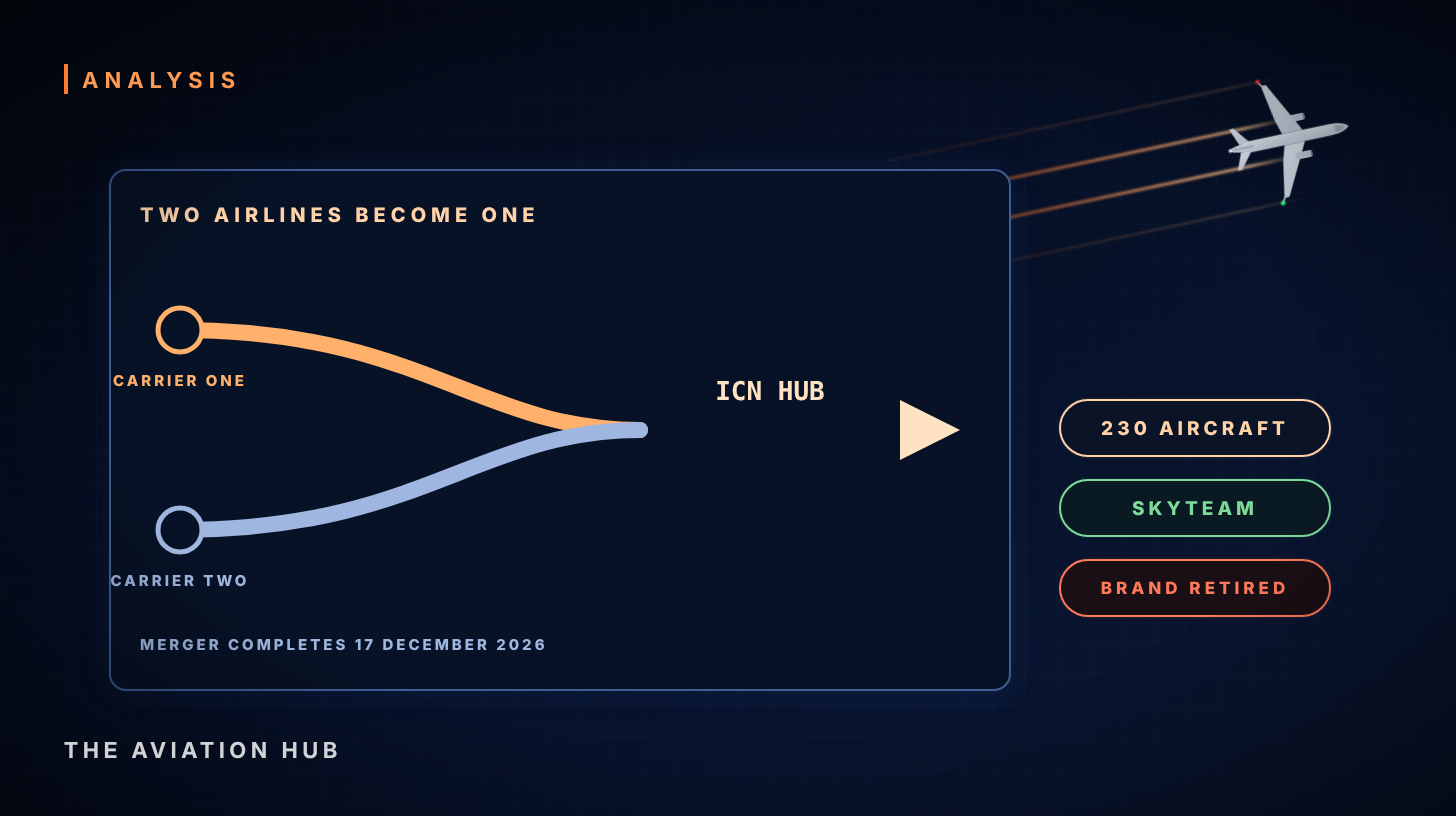
The Korean Air Asiana merger reaches its final stage on 17 December 2026. That is the day Korean Air plans to launch its integrated airline, absorbing all of Asiana’s assets, liabilities and staff, The Korea Times reports.
The deal began with a share subscription agreement in November 2020, during the pandemic. Asiana had received 3.6 trillion won of liquidity support from the Korean government and state lenders after the Covid outbreak.
The End of the Asiana Brand
The Asiana name will disappear once operations are integrated. All former Asiana flights will carry Korean Air branding, including aircraft liveries and check in counters, One Mile at a Time reports.
Scheduling and fleet planning will be combined, creating a single flag carrier based at Seoul Incheon. Korean Air says the move will raise its global market presence and establish Incheon as a dominant global hub.
Goodbye Star Alliance
The merger also redraws the alliance map. Asiana will leave Star Alliance and move into SkyTeam, Korean Air’s alliance, One Mile at a Time says.
Former Asiana flights will become part of Korean Air’s joint venture with Delta Air Lines across the Pacific. For Star Alliance members such as United and Lufthansa, it means losing a major partner in Northeast Asia.
What Happens to Your Miles
There will be no separate Asiana loyalty programme. Asiana Club members will move into Korean Air’s SkyPass programme.
Korean Air has been working with Korea’s Fair Trade Commission on how the two programmes will be merged, but full details, including the exact conversion rate for Asiana miles, have not been widely published. Members should check their accounts and look out for official notices before the switch.
A Top 10 Airline Ambition
Korean Air wants the combined airline to become one of the world’s 10 largest, with about 230 aircraft and annual revenue of around 23 trillion won, according to The Korea Times.
Integration will not be cheap. Korean Air estimates the cost at between 900 billion and 1 trillion won, but expects synergies of about 300 billion won a year to cover that by the end of 2028 or early 2029.
What It Means for Passengers
For most travellers, the immediate change is the name on the ticket and the aircraft. Existing bookings on Asiana flights should be honoured by the combined airline, but check your booking and contact details so you receive any updates.
The longer term question is competition. With one dominant full service airline at Incheon, travellers on some routes may see fewer choices, which is why regulators in Korea, the EU and the UK required remedies, such as handing slots and routes to rival airlines, before approving the deal.
The Bottom Line
The Korean Air Asiana merger completes on 17 December, ending Asiana’s 38 year history as an independent airline. Its flights will become Korean Air flights, its passengers SkyPass members and its aircraft part of SkyTeam.
Frequent flyers should watch for details on mileage conversion, and Star Alliance loyalists should plan for losing Asiana as a partner.
Continue to follow The Aviation Hub for more analysis and insight.
Advertise with us Your brand, in front of an aviation audience Home page and in-article placements, sold directly, one advertiser per slot. From £250 a year. See the rates