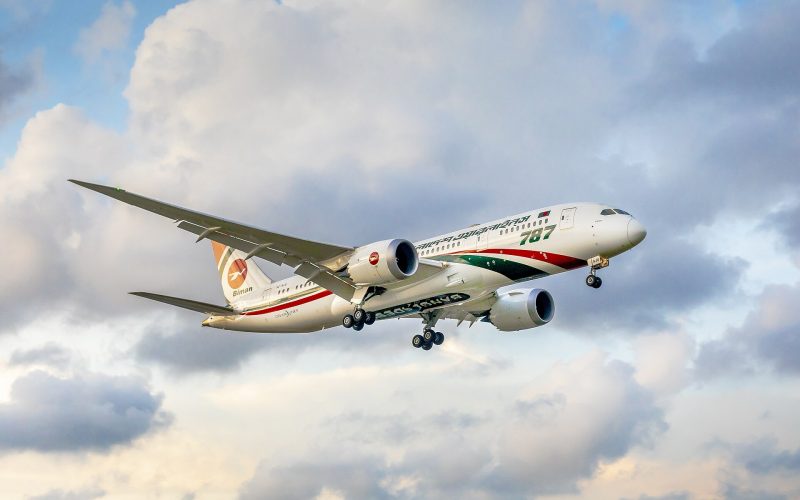
Lucknow Airport, officially Chaudhary Charan Singh International Airport, is the main air gateway to the capital of Uttar Pradesh, India’s most populous state. It sits at Amausi, about 9 miles (14 km) southwest of the city centre on the road to Kanpur. A large new Terminal 3 opened in 2024, and the Lucknow Metro stops at the airport. Around 6.4 million passengers used it in the 2024 to 2025 financial year, ranking it 11th in India.
Lucknow Airport at a Glance
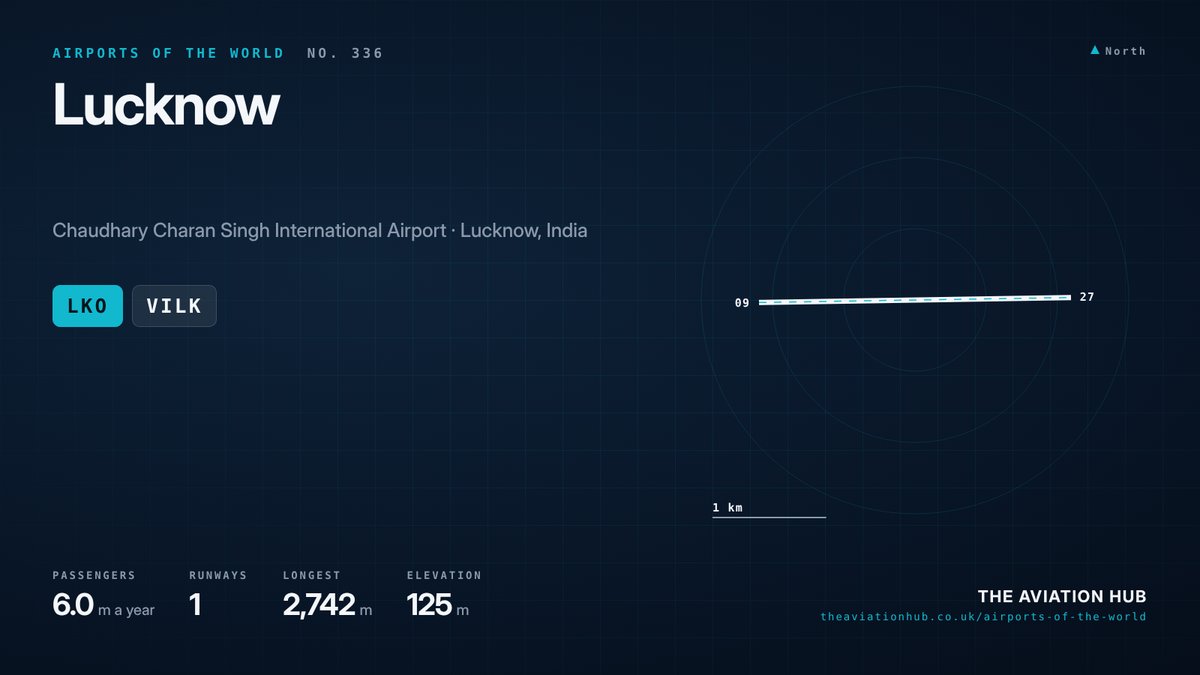
The airport uses the IATA code LKO and the ICAO code VILK. It stands 125 m (410 ft) above sea level on the flat Gangetic plain. A single runway serves the field, alongside three terminal buildings of different ages. Lucknow International Airport Limited, a consortium led by the Adani Group, runs it under a 50 year agreement won in February 2019.
Lucknow Airport handled about 6.44 million passengers in the 2024 to 2025 financial year, along with 49,662 aircraft movements and around 22,100 tonnes of cargo. IndiGo is the dominant airline, with Air India, Air India Express and Akasa Air also prominent. Flight information and terminal guidance appear on the airport’s official website.
How Lucknow’s Airport Came to Be
The airfield at Amausi has a long history, but the present civil airport took shape in the 1980s. Its first terminal, now Terminal 1, dates from 1986 and was expanded in 1996. For years the airport was known simply as Amausi Airport. On 17 July 2008 the Government of India renamed it after Chaudhary Charan Singh, the farmers’ leader who served as India’s fifth Prime Minister.
Terminal 2 opened in June 2012 with 17,000 square metres of floor space and two aerobridges. Its glass facade carries chikankari patterns, a nod to Lucknow’s famous embroidery. The airport won Airports Authority of India recognition in 2013 and an Airports Council International Asia Pacific award for its size category in 2018. Adani took over operations after winning the 2019 privatisation bid at ₹171 per passenger.
Terminal 3 was the big step. Prime Minister Narendra Modi inaugurated it on 10 March 2024. It covers 111,367 square metres over three floors and cost about ₹2,400 crore (roughly £220 million). Its first phase is designed for more than 13 million passengers a year. The project ran late, slipping from a December 2021 target, and its budget rose from ₹1,383 crore.
Runways at Lucknow Airport
A single runway serves Lucknow Airport. Runway 09/27 is 2,742 m (8,996 ft) long and 45 m wide with an asphalt surface. That is enough for the Airbus A320neo and Boeing 737 families that make up nearly all traffic, and for occasional wide body flights. Runway 27, approached from the east, has a CAT IIIB instrument landing system that allows landings in visibility as low as 50 m.
That matters in winter, when dense fog blankets the Gangetic plain from December to February and can halt operations at less equipped airports. Plans call for the runway to be extended to 3,500 m (11,483 ft), with new taxiways and lighting, so wide body types such as the Airbus A350 and Boeing 787 can operate without restriction. That would open the door to long haul routes.
Terminals and Airlines
Terminal 3 now handles most flights at Lucknow Airport, both domestic and international. The three level building has spacious security halls, aerobridges and far more room than its predecessors. Terminal 2 remains on the site, and Terminal 1 is due to be demolished in a later phase of expansion. An elevated four lane road of about 1.8 km links the terminals with the city road network.
IndiGo runs the largest operation, flying Airbus A320neo and A321neo jets to major Indian cities and the Gulf. Air India and Air India Express cover domestic trunk routes and the Middle East. Akasa Air flies the Boeing 737 MAX 8 on domestic routes, and Star Air adds regional links with Embraer jets. Gulf traffic brings in further international capacity throughout the year.
Routes and Destinations
Delhi, Mumbai and Bengaluru are the core domestic routes from Lucknow Airport, served many times a day. Hyderabad, Kolkata, Pune and Chennai follow, along with business and family travel to smaller cities. The domestic network reflects the size of Uttar Pradesh and the number of its people working elsewhere in India.
The Gulf dominates international flying. Routes to Dubai, Abu Dhabi, Sharjah and Riyadh serve the many workers from the state employed in the Middle East. Seasonal Hajj flights to Saudi Arabia run each year. Bangkok has also appeared in schedules. Winter fog and the summer monsoon both disrupt operations, and traffic peaks around Diwali, Eid and the wedding season.
Getting to and from Lucknow Airport
The Lucknow Metro is the cheapest sensible option. CCS Airport station, the southern terminus of the Red Line, sits in front of Terminal 2, a short walk or shuttle ride from Terminal 3. Trains run north through Charbagh railway station and Hazratganj towards Munshi Pulia. Charbagh is roughly 20 to 25 minutes away, with Hazratganj a few stops further on.
By road, the airport sits on National Highway 27, the Lucknow to Kanpur road, and the elevated link carries traffic straight to the terminals. Taxis and app based rides reach Hazratganj in around 30 to 45 minutes depending on traffic. Kanpur is about 50 miles (80 km) to the southwest. Parking is available beside the terminals.
Spotting and Photography
Spotting at Lucknow Airport is limited by Indian security rules, which treat airports as sensitive sites. Photography from public roads near the perimeter can draw quick attention from police or the Central Industrial Security Force. The safest views come from inside the terminals and from window seats on arrival and departure.
The flat terrain and long straight approaches make for clean shots when visibility allows. Winter mornings bring fog and haze, while the clearest light comes after the monsoon in October and November. Keep cameras discreet, avoid photographing security installations and comply at once if asked to stop.
What Comes Next
Adani plans to invest about ₹10,700 crore to lift capacity towards 39 million passengers a year over the long term, including a future Terminal 4. The runway extension to 3,500 m is the key airside project. A 30,000 tonne integrated cargo terminal is planned to build on the cargo facility opened in March 2022, and an Aerocity mixed use development is planned.
Lucknow Airport looks set for strong growth as the economy and population of Uttar Pradesh drive demand. The new terminal has headroom, and the longer runway would bring long haul flights within reach. Compare it with other Indian airports on the Airports of the World map.
Continue to follow The Aviation Hub for more analysis and insight.
Advertise with us Your brand, in front of an aviation audience Home page and in-article placements, sold directly, one advertiser per slot. From £250 a year. See the rates