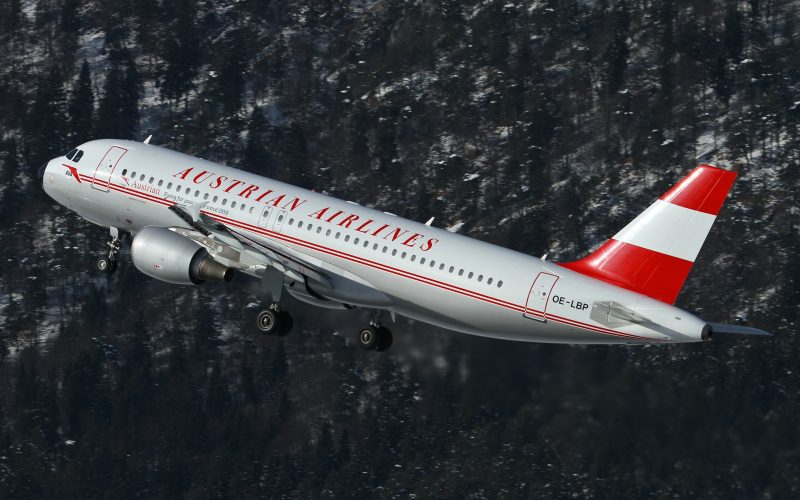
Lufthansa A340 Retirement: What the End of Four Engines Really Means
Lufthansa has retired its last A340-600 after 23 years, completing a group-wide shift away from four-engine widebodies that SWISS is also finalising.
 By The Aviation Hub
5 min read

The Lufthansa A340 story reached a milestone this week when the airline operated its final A340-600 passenger service, closing out 23 years of four-engine widebody operations on that variant. Across the group, SWISS is simultaneously retiring its own A340 fleet, with the first of four aircraft already withdrawn in October.

Why the Lufthansa A340 Retirement Matters Beyond a Single Farewell Flight
Retirements happen all the time. What makes this one significant is the scale and speed of the shift it represents. According to Airline Geeks, Lufthansa operated a total of 24 A340-600s over the years, and the type carried more than 40 million passengers in its time with the carrier. Reducing a 24-strong fleet to zero is not a routine rotation: it is the closing of an entire chapter in how European carriers approached ultra-long-haul flying.
The four-engine formula made sense when twin-engine aircraft could not match the range or payload of jets such as the A340-600. That logic no longer holds. The arrival of the Airbus A350 and the Boeing 787 Dreamliner has made twins the default choice for intercontinental routes, and the economics have moved decisively against keeping quads in service.
The Numbers That Drove the Decision
AeroTime reports that Lufthansa Group confirmed in April 2026 that its final four A340-600s would leave the fleet in October, as part of a broader package of capacity and cost measures introduced amid rising kerosene prices and additional costs from industrial disputes. The group also announced plans to ground two Boeing 747-400s for the 2026/2027 winter season.
That context matters. The retirement was not purely a scheduled modernisation: external cost pressures accelerated it. When fuel prices rise, four-engine aircraft are the first candidates for early withdrawal because each additional engine compounds the operating cost penalty. The A340-600 carries four Rolls-Royce Trent 500-series engines; its twin-engine replacements burn significantly less fuel per seat-mile.
Airline Geeks notes that Lufthansa had already postponed the type's retirement several times as delays to replacement aircraft extended its service life. The fact that delivery schedules, not operational preference, kept the A340-600 flying this long underlines how ready the airline was to see it go.
SWISS and the Same Logic Applied to the A340-300
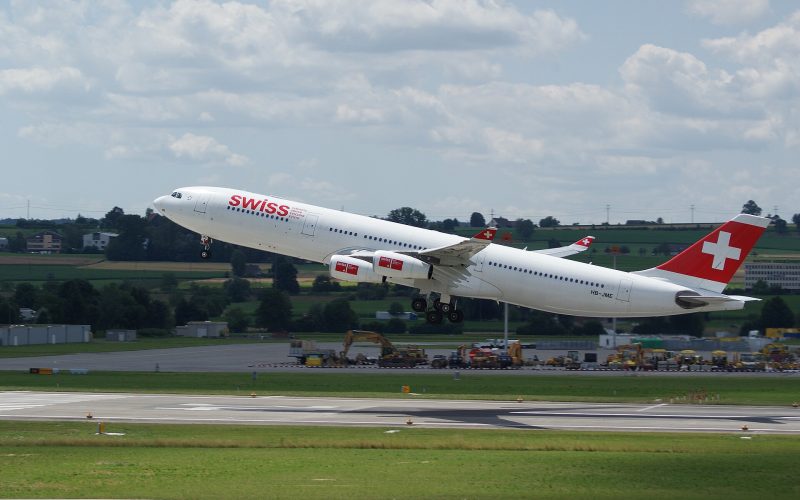
The pattern repeats one level down the group. Aviacionline reports that SWISS is retiring four A340-300s, with HB-JMB becoming the first to be withdrawn on 14 October, operating its last flight from Zurich to Enschede in the Netherlands. The three remaining frames, HB-IFA, HB-IFB and HB-IFC, continue to serve routes including Chicago, Montreal, Johannesburg, Dubai, Mumbai, Shanghai and Málaga while SWISS awaits new deliveries.
We looked at this transition in detail when it began: our piece on what the end of four engines means for SWISS set out why the carrier's long-haul strategy is now built around the A350-900 and the Boeing 777-300ER. The picture has not changed, but the pace has quickened.
Aviacionline notes that Cirium Fleets Analyzer data pointed to SWISS receiving its two pending A350-900s in November and December 2026. Those deliveries are the direct trigger for the remaining A340-300 retirements, since SWISS has not set firm dates independently of the replacement aircraft arriving.
What the Fleet Picture Looks Like Now
Lufthansa's position after the A340-600 exits is more complicated than a clean break from four-engine flying. AeroTime points out that the airline still operates A340-300s, Airbus A380s and Boeing 747s, so the group retains a meaningful quad presence even as the A340-600 chapter closes.
Airline Geeks adds that Lufthansa plans to replace the A340-600 with the A350-1000, Boeing 787 Dreamliner and 777-9, and that its remaining A340-300 fleet is scheduled for retirement in 2027. The trajectory is clear even if the group is not yet quad-free.
For SWISS, Aviacionline describes a long-haul fleet that already includes 12 Boeing 777-300ERs and three A350-900s, with more of each on order or pending. The A340s are not being retired into a gap: they are being retired into a fleet that has already grown around them.
You can track the current composition of both carriers using our Airline Search tool, which covers fleet and route data across the major operators.
What Is Still Not Certain
Several details remain open. SWISS has not announced firm retirement dates for HB-IFA, HB-IFB and HB-IFC, with Aviacionline noting that the schedule depends on new aircraft arriving on time. Delivery programmes are rarely immune to slippage, so the A340-300s could fly into 2027 if the A350 handovers shift.
On the Lufthansa side, the precise identity of the aircraft that operated the final LH419 service had not been independently confirmed at the time AeroTime published its preview. That is a small detail, but it is a reminder that even well-managed farewells can produce gaps in the public record.
The broader question of how quickly Lufthansa will clear its remaining four-engine types is also open. The 747 groundings announced for winter 2026/2027 suggest an accelerated direction, but the A380 and A340-300 programmes have not yet attracted confirmed end dates beyond the 2027 figure cited for the latter.
The Bottom Line
The retirement of the Lufthansa A340-600 and the ongoing drawdown of the SWISS A340-300 fleet are two expressions of the same group-level calculation: four-engine widebodies are no longer commercially defensible when fuel costs are high and modern twins are available. The economics have been pointing this way for years, and rising kerosene prices in 2026 simply accelerated the timetable.
What to watch is the delivery sequence. The SWISS A340-300 retirements hinge on A350-900 handovers in the final weeks of 2026. Any delay to those deliveries extends the quad's life by default rather than by design. Lufthansa's broader fleet modernisation, including the 777-9 programme, will determine how quickly the group reaches its twin-engine long-haul ambition.
The era is not quite over yet, but the direction is settled.
Continue to follow The Aviation Hub for more analysis and insight.
Advertise with us Your brand, in front of an aviation audience Home page and in-article placements, sold directly, one advertiser per slot. From £250 a year. See the rates