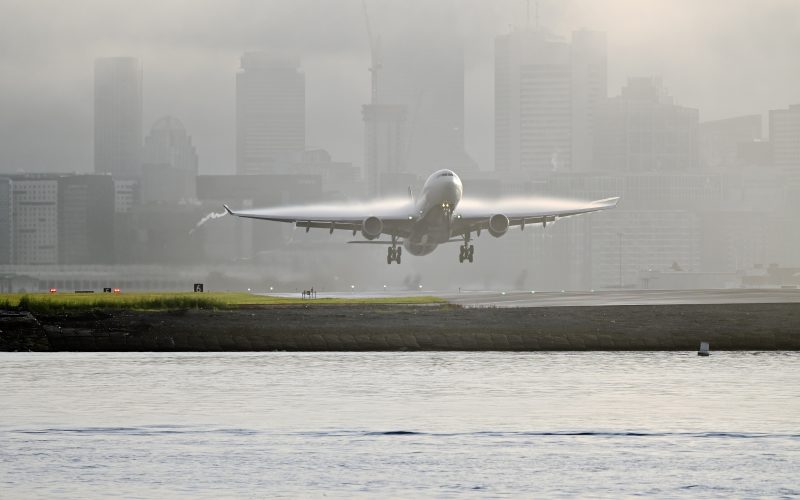


A Lufthansa flight from Frankfurt to Lisbon diverted to Lyon on Saturday evening after a passenger’s power bank overheated and caught fire in the cabin.
The Airbus A321 landed safely and there were no reports of injuries among the 204 people on board.
Frankfurt Departure and Diversion Over France
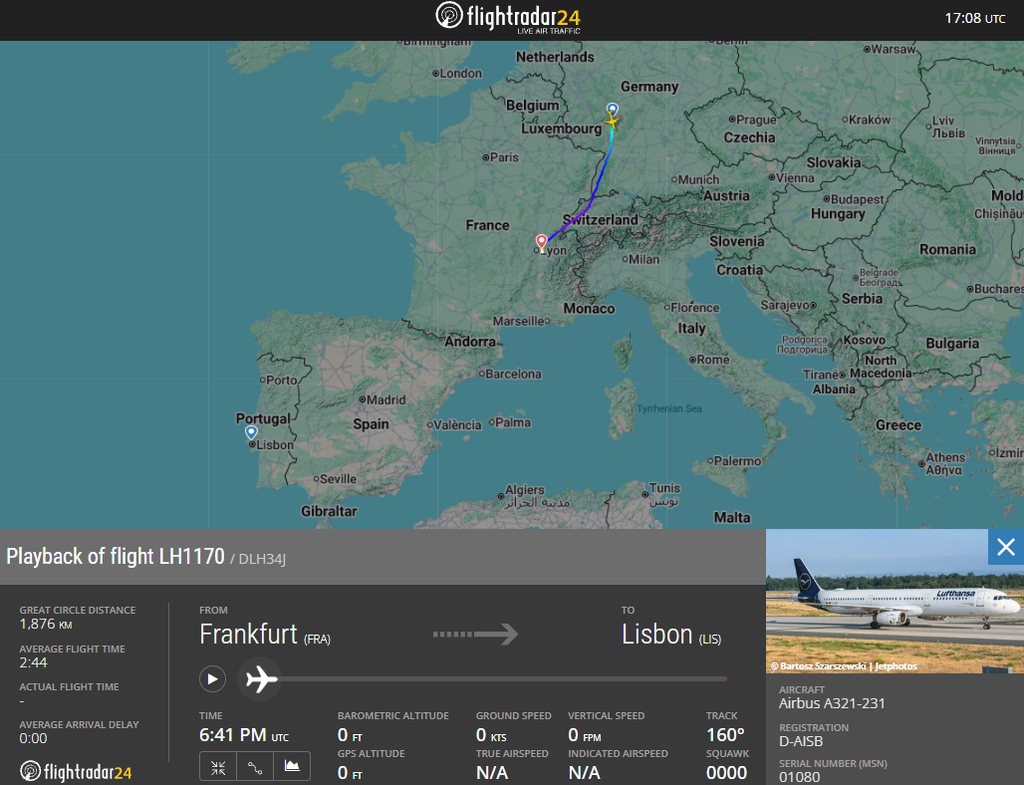
Lufthansa flight LH1170 departed Frankfurt/Main on 26 September 2026, bound for Lisbon in Portugal.
The Airbus A321-200, registered D-AISB, was carrying 198 passengers and six crew members.
Flight data from Flightradar24 shows the service was scheduled to leave Frankfurt at 17:40 but departed more than an hour late at 18:57.
The aircraft was cruising at FL350, around 35,000 feet, about 70 nautical miles northeast of Lyon when the crew decided to divert.
The A321 landed safely on runway 17L at Lyon Saint Exupéry Airport roughly 25 minutes later.
Power Bank Fire in the Cabin
Lufthansa confirmed that a passenger’s power bank overheated and caught fire in a seat.
Cabin crew moved quickly to deal with the device and secured it inside a Lithium Safe Bag.
These containment bags are designed to isolate overheating lithium batteries and stop a fire from spreading through the cabin.
Many airlines now carry them as standard equipment after a steady rise in battery incidents on board commercial flights.
With the immediate threat under control, the flight crew chose to divert to Lyon as a precaution.
Continuing to Lisbon would have meant almost two more hours over France, Spain and Portugal with a damaged battery still on board.
Passengers Stranded Between Frankfurt and Lisbon
The diversion left passengers stranded in Lyon, roughly halfway between Frankfurt and their final destination.
Lufthansa arranged hotel accommodation for everyone overnight.
Passengers were then rebooked onto other flights the following day to complete their journeys to Lisbon.
The airline has not said how the rebooked passengers were routed, although connections through Frankfurt or Munich would be typical for the carrier.
Aircraft Positions Back to Frankfurt
D-AISB remained on the ground in Lyon for about 16 hours after landing.
The aircraft then positioned back to Frankfurt without passengers.
A cabin fire of any size usually triggers a thorough inspection of the affected seat and surrounding area before an aircraft returns to revenue service.
Returning the jet to Frankfurt, Lufthansa’s largest hub, gives the airline the best access to engineering support and replacement parts.
About the Aircraft
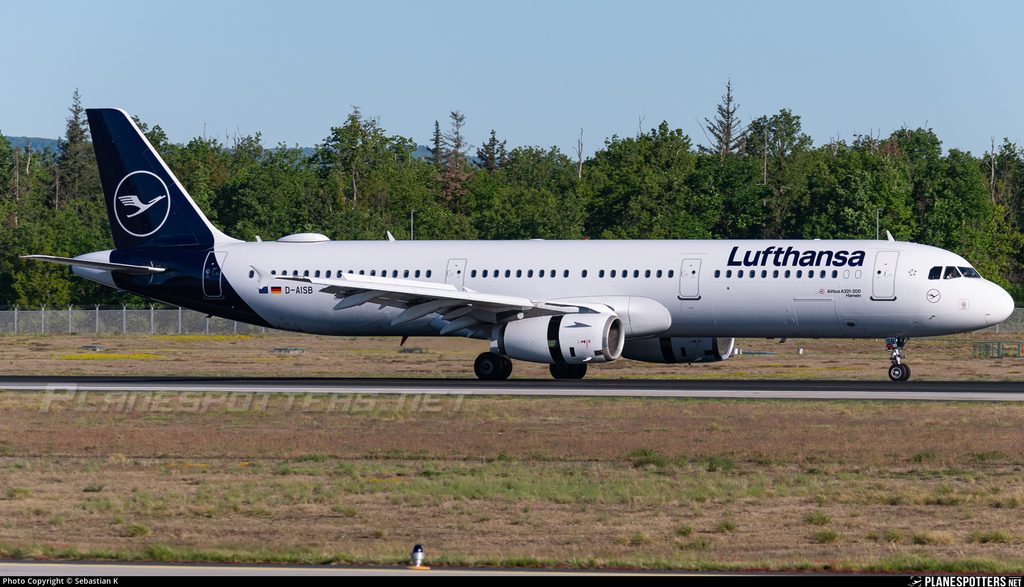
According to The Aviation Hub aircraft database, D-AISB is an Airbus A321-231 with manufacturer serial number 1080.
The jet first flew on 2 September 1999 and was delivered to Lufthansa on 17 September 1999.
At 27 years old, D-AISB is one of the older aircraft in the Lufthansa short haul fleet.
The A321-231 is powered by two IAE V2500 engines and remains a regular sight on European routes from Frankfurt.
Why Power Banks Remain a Concern for Airlines
Lithium battery fires have become one of the most common causes of in flight diversions in recent years.
Power banks store a large amount of energy in a small space, and damaged or poorly made units can enter thermal runaway with little warning.
Several airlines, including Emirates and Southwest Airlines, have tightened their rules on using power banks during flight.
The Aviation Hub recently reported on a similar Swiss A330 diversion caused by an overheating power bank, which highlights how often these incidents now occur.
This latest event shows how effective crew training and containment equipment can be.
The cabin crew on LH1170 dealt with the fire quickly, and the diversion ensured every passenger who left Frankfurt on Saturday evening reached the ground safely.
Continue to follow The Aviation Hub for more analysis and insight!
Advertise with us Your brand, in front of an aviation audience Home page and in-article placements, sold directly, one advertiser per slot. From £250 a year. See the rates