Lufthansa Group Orders 737 MAXs: Which Airline Will Get Them?
 By The Aviation Hub
5 min read
By The Aviation Hub
5 min read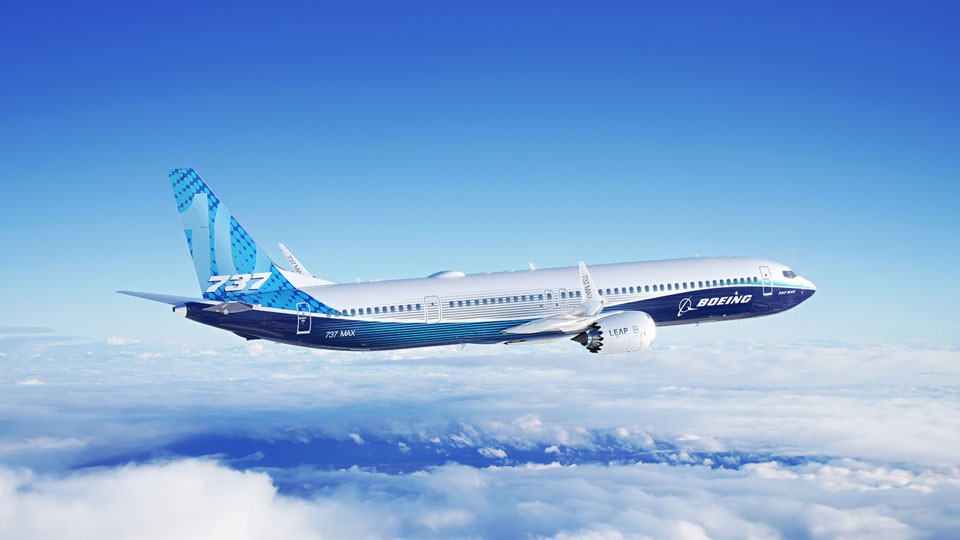
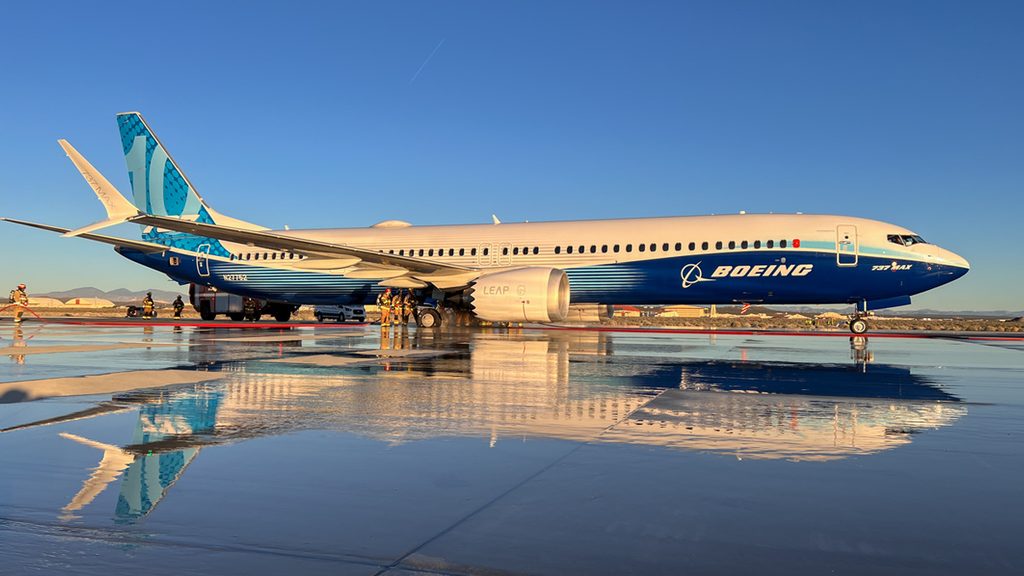
Lufthansa Group confirmed on September 17 that the Supervisory Board of Deutsche Lufthansa AG has approved the exercise of options for 20 Boeing 737 MAX 10 aircraft, according to the group’s own newsroom announcement.
The rights were secured back in 2023, when Lufthansa Group placed a firm order for 40 Boeing 737 MAX 8 jets alongside 60 further purchase options across the wider MAX family.
Converting the first 20 of those options into a firm commitment lifts the group’s total 737 MAX order to 60 aircraft, carrying a list value of roughly $3.4 billion, as FlightGlobal reported.
Deliveries begin in the early 2030s, and the aircraft are described only as replacements for older Airbus A320 family jets “across the Group.”
That is deliberately vague.
Lufthansa Group runs seven passenger airlines with very different narrowbody profiles, and working out which one actually takes delivery of the MAX 10 says a great deal about where the group sees its short haul future heading.
What The MAX 10 Brings To The Table For The Lufthansa Group…
The MAX 10 is the largest aircraft in Boeing’s MAX family, seating more passengers than the MAX 8 already on order and competing directly with the Airbus A321.
Lufthansa Group says the type burns around 30 percent less fuel than the aircraft it will replace, while its extra seating capacity cuts unit costs by close to 20 percent.
Those figures matter most on busy European trunk routes, where an airline wants more seats per departure without adding frequencies or crew.
Eurowings Already Has The Boeing Foundations
The clearest candidate is Eurowings, which is part of the Lufthansa Group.
The original 2023 order was placed for “an undisclosed subsidiary other than Lufthansa or Swiss,” as ch-aviation noted at the time, and that mystery was resolved when Lufthansa Group confirmed Eurowings as the operator, with the first 737-8s arriving from 2027 to replace 28 A319s and a number of older A320s, as covered by Business Traveller.
Eurowings CEO Jens Bischof has already made the economic argument publicly, noting that a single type fleet carries its own savings in crew training, maintenance, and spares holding, a point picked up by Enginecowl.
Eurowings is also growing quickly on longer leisure routes to the Gulf, where weekly departures have more than doubled year on year, and the MAX 10’s extra range and seat count fit that expansion better than a A319 replacement ever could.
Reporting from Aviacionline adds that the remaining, unallocated options carry flexibility between Eurowings proper and its Malta based subsidiary, Eurowings Europe, giving the group room to shuffle aircraft between the two operating certificates as demand dictates.
Why Lufthansa And Swiss Look Unlikely
Lufthansa Mainline and SWISS were both explicitly ruled out of the original 2023 order, and the logic that excluded them then still applies now.
Lufthansa’s own narrowbody fleet remains entirely Airbus, spanning A319s, A320ceos and neos, and A321ceos and neos, with more A320neos and A321neos already on order to replace the oldest jets.
Introducing a Boeing type into that fleet would mean sacrificing exactly the single type savings that make the MAX attractive to Eurowings in the first place, only in reverse.
SWISS sits in a similar position, running its own all Airbus narrowbody operation out of Zurich.
Unless the group’s strategy shifts markedly, both carriers look set to keep renewing with Airbus metal rather than introducing a second manufacturer into their short haul operations.
Austrian Flirted With The MAX, Then Chose Airbus
Austrian Airlines briefly looked like a wildcard.
Reports from Simple Flying and Aviation Week in the past two years described Austrian weighing the 737 MAX 8 as a replacement for its aging A320 fleet in Vienna, a fleet that includes some of the oldest Airbus narrowbodies still flying in the group.
That flirtation appears to have ended in Airbus’s favor, however, with Air Data News reporting that the Lufthansa Group-owned carrier committed to 17 additional A320neo aircraft while retiring its Embraer E195 fleet instead.
That decision does not fully close the door on a future MAX 10 for Vienna, but it does suggest Austrian already found its answer for the current renewal cycle.
Brussels Airlines And ITA Are Not In The Running
Brussels Airlines is a smaller operation that has been steadily adding Airbus A320neos, with three more due by the middle of this year, leaving little appetite or fleet size to justify a second aircraft type.
ITA Airways, meanwhile, has spent the past two years building out what is now widely regarded as one of Europe’s youngest narrowbody fleets under Lufthansa Group’s integration, mostly fresh A320neos and A321neos.
Neither airline has an aging fleet problem the MAX 10 would obviously solve, which puts both towards the bottom of the list.
The Likeliest Landing Spot
Taken together, the evidence points squarely at Eurowings, and possibly its Malta based Eurowings Europe subsidiary, as the most probable operator of the new MAX 10s once deliveries begin in the early 2030s.
The group already has Boeing training and support infrastructure being built for the MAX 8, an expanding long thin route network that suits the bigger jet, and a leadership team on record about the value of fleet commonality.
Lufthansa Mainline and SWISS remain committed Airbus operators, Austrian appears to have already made its choice, and Brussels Airlines and ITA simply do not need the aircraft yet.
None of this is confirmed by Lufthansa Group itself, and a decade is a long time in fleet planning.
But as part of a wider push toward more than 250 new aircraft by 2035, this order fits a pattern the group has followed since 2023: keep the Boeing narrowbody fleet concentrated where it already makes sense, and let Airbus continue to do the heavy lifting everywhere else.
Continue to follow The Aviation Hub for more analysis and insight!