
Lufthansa Wins TAP Air Portugal Stake: What the Deal Really Means
Lufthansa has beaten Air France-KLM to secure a minority stake in TAP Air Portugal for €1.2 billion, reshaping European airline consolidation.
 By The Aviation Hub
6 min read
By The Aviation Hub
6 min read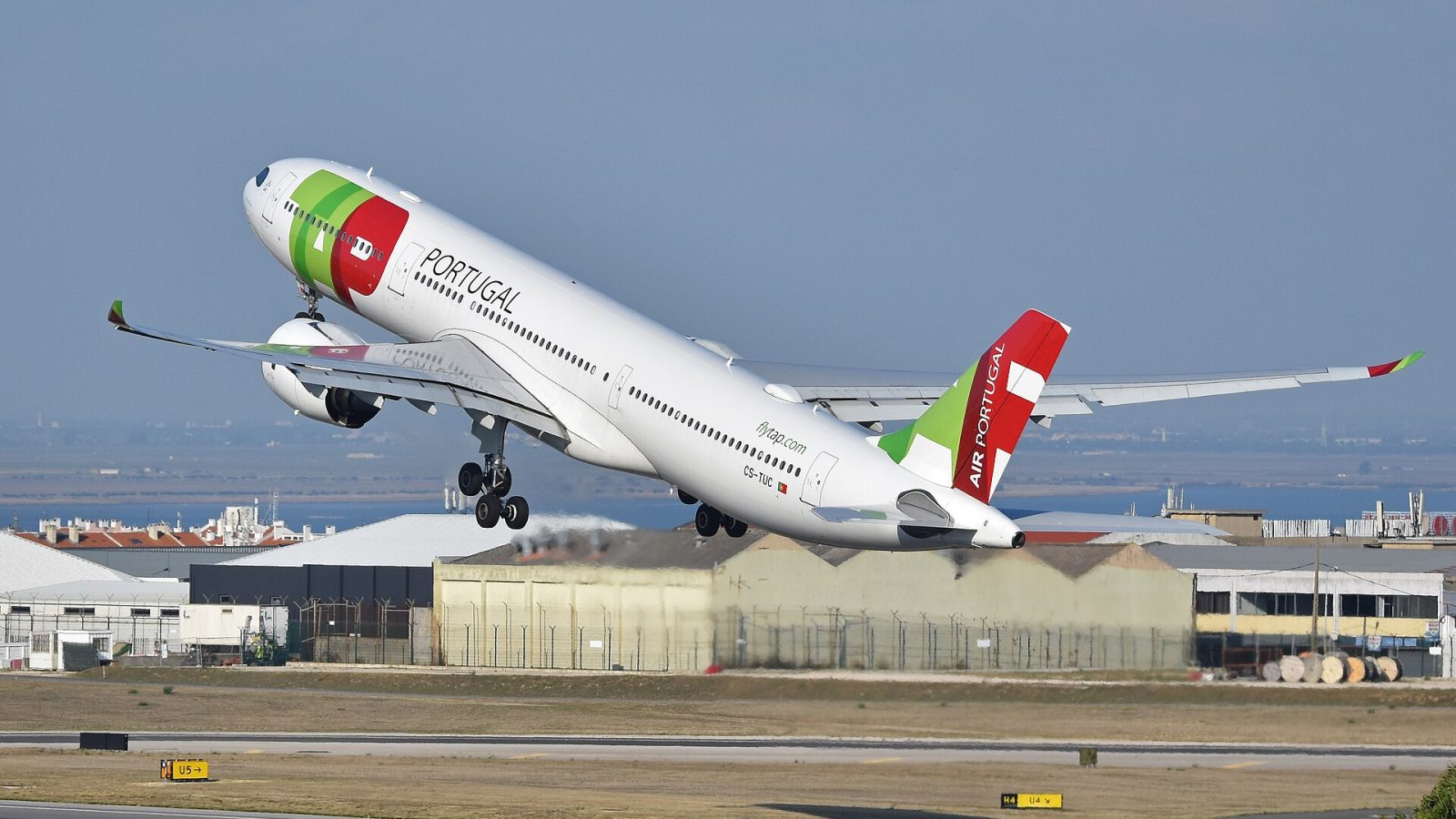
The Lufthansa TAP deal was confirmed on 14 October 2026, when Portugal's government announced that Lufthansa had won the right to acquire a minority stake in TAP Air Portugal, beating rival bidder Air France-KLM. The deal values the stake at up to €1.2 billion (approximately $1.3 billion), according to CNBC, and marks the conclusion of a privatisation process that began in earnest in July 2025.

Why Lufthansa TAP Matters for European Aviation
Europe's airline industry has been consolidating steadily, and this deal is a significant step in that process. CNBC describes it as "the next step in the consolidation of Europe's airline industry, a process seen as necessary to help smaller national carriers become more resilient as part of larger groups." TAP is one of the last unaligned European flag carriers, which made it an unusually attractive target.
Aviation analyst John Strickland, quoted by CNBC, captures the strategic logic concisely: "This will give them an additional hub, albeit in a sphere of influence where they've lacked reach currently." Southwest Europe and the transatlantic routes rooted in Lisbon have not been a Lufthansa strength, and TAP changes that.
We recently examined a similar dynamic in our analysis of Aegean's quiet acquisition of a stake in Volotea, where a larger carrier used a minority position to gain access to markets and capacity it lacked organically. The TAP deal is a larger and more complex version of that logic.
What the Numbers Reveal
The Portuguese government said Lufthansa's financial offer exceeded Air France-KLM's by 16%, according to AeroTime. That margin is not trivial, but the government was explicit that price alone did not determine the outcome. Infrastructure minister Miguel Pinto Luz said the decision "was not confined to price," and that the government assessed each bidder's industrial plan for TAP's long-term growth and sustainability.
One structural factor that appears to have influenced the outcome is deal currency. AeroTime reports, citing Reuters, that Lufthansa offered an all-cash transaction while Air France-KLM's bid combined cash and shares. For a government seeking certainty on the amount it recovers for taxpayers, an all-cash offer carries less execution risk.
TAP's own figures suggest the airline is in reasonable shape heading into this partnership. CNBC reports that TAP carried a record 8.2 million passengers in the first half of 2026, up 4.2% year-on-year, while operating revenue rose 4.3%. Those are not distressed numbers, which gives Lufthansa a more stable platform to work from than it faced when it acquired ITA Airways in Italy.
The Strategic Assets Lufthansa Is Buying
TAP's value is not primarily about its domestic Portuguese network. It is about geography and route rights. CNBC identifies TAP's key assets as its landing slots connecting Lisbon with Brazil, Portuguese-speaking Africa, and the United States, routes that carry significant tourism, diaspora and commercial traffic. Lufthansa's existing network has limited reach into Brazil and Lusophone Africa, and those gaps are now substantially reduced.
The Portuguese government has also tied Lufthansa to specific commitments. CNBC reports that Lufthansa has committed to growing TAP's fleet to 117 aircraft by 2035 and to 130 aircraft after 2035, when Lisbon's new airport is expected to be operational. TAP currently operates 101 aircraft serving 93 destinations, per the same source. The government has also extracted commitments to serve Porto, Faro, the Azores and Madeira, not just the Lisbon hub.
TAP's chief executive Luis Rodrigues, speaking before the announcement at the World Aviation Festival in Lisbon, said that joining a larger group would allow TAP to "access a larger pool of resources at better value," as quoted by CNBC. That framing is consistent with how TAP's leadership has publicly positioned the deal throughout the process.
What Is Still Uncertain
The deal as announced covers only a minority stake of 44.9%, with a possible increase to 49.9% if employees do not exercise their purchase rights, according to AeroTime. The Portuguese government remains the majority shareholder for now. A second phase, covering the sale of a majority stake, is expected to follow, with closing anticipated by early 2028, per the same source. The terms and valuation of that second phase are not yet established.
Whether Lufthansa can deliver on its growth commitments while managing its own financial pressures is a genuine open question. Strickland, again quoted by CNBC, is direct about it: "Lufthansa is still struggling financially. Lufthansa Deutsche Airlines, as the largest part of the group, is still losing money. It has to get its own house in order." He also noted that the turnaround of ITA Airways is still ongoing, adding another integration burden to the group's management. Lufthansa has publicly targeted an operating profit margin of 8% to 10% between 2028 and 2030, per CNBC, but analysts are watching whether that is achievable while absorbing TAP.
Regulatory approval has not yet been discussed in depth in the public sources available. Deals of this size involving flag carriers typically face scrutiny from European competition authorities, and any conditions attached to clearance could affect the shape of the final arrangement.
You can explore TAP Air Portugal's routes and compare carrier profiles using our Airline Search tool.
What to Watch Next
The immediate question is whether the minority stake purchase completes without complications and on what timeline. AeroTime indicates that preparation for the second-phase majority sale will begin shortly. How aggressively Lufthansa pursues full control, and at what price, will say a great deal about how seriously it intends to integrate TAP rather than simply hold a strategic minority position.
Air France-KLM's response is also worth tracking. The carrier said in a statement, quoted by CNBC, that it was "naturally disappointed" but would "assess all options to increase its presence in the country, as well as in the strategic South America region." That language is broad enough to encompass several possibilities, including commercial agreements, codeshares, or pursuit of other acquisition targets in the region.
The Bottom Line
Lufthansa has secured access to one of the most geographically distinctive route networks in Europe, at a price 16% above its nearest rival's offer and on the strength of an all-cash bid and a credible industrial plan. The strategic case is clear. The execution risk is equally clear, given Lufthansa's own financial position and its existing integration workload. The coming months will show whether the group can manage multiple recovery programmes simultaneously while pressing ahead with TAP's fleet expansion and the move towards majority ownership.
Continue to follow The Aviation Hub for more analysis and insight.
Continue to follow The Aviation Hub for more analysis and insight.
Advertise with us Your brand, in front of an aviation audience Home page and in-article placements, sold directly, one advertiser per slot. From £250 a year. See the rates

.jpg)