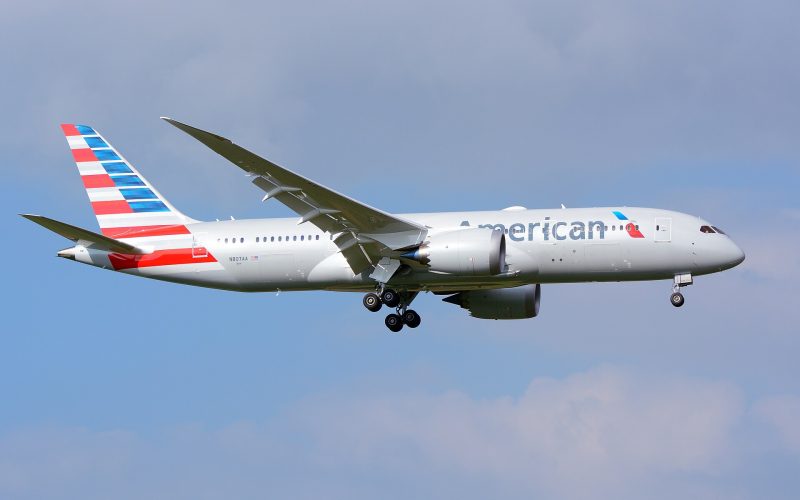

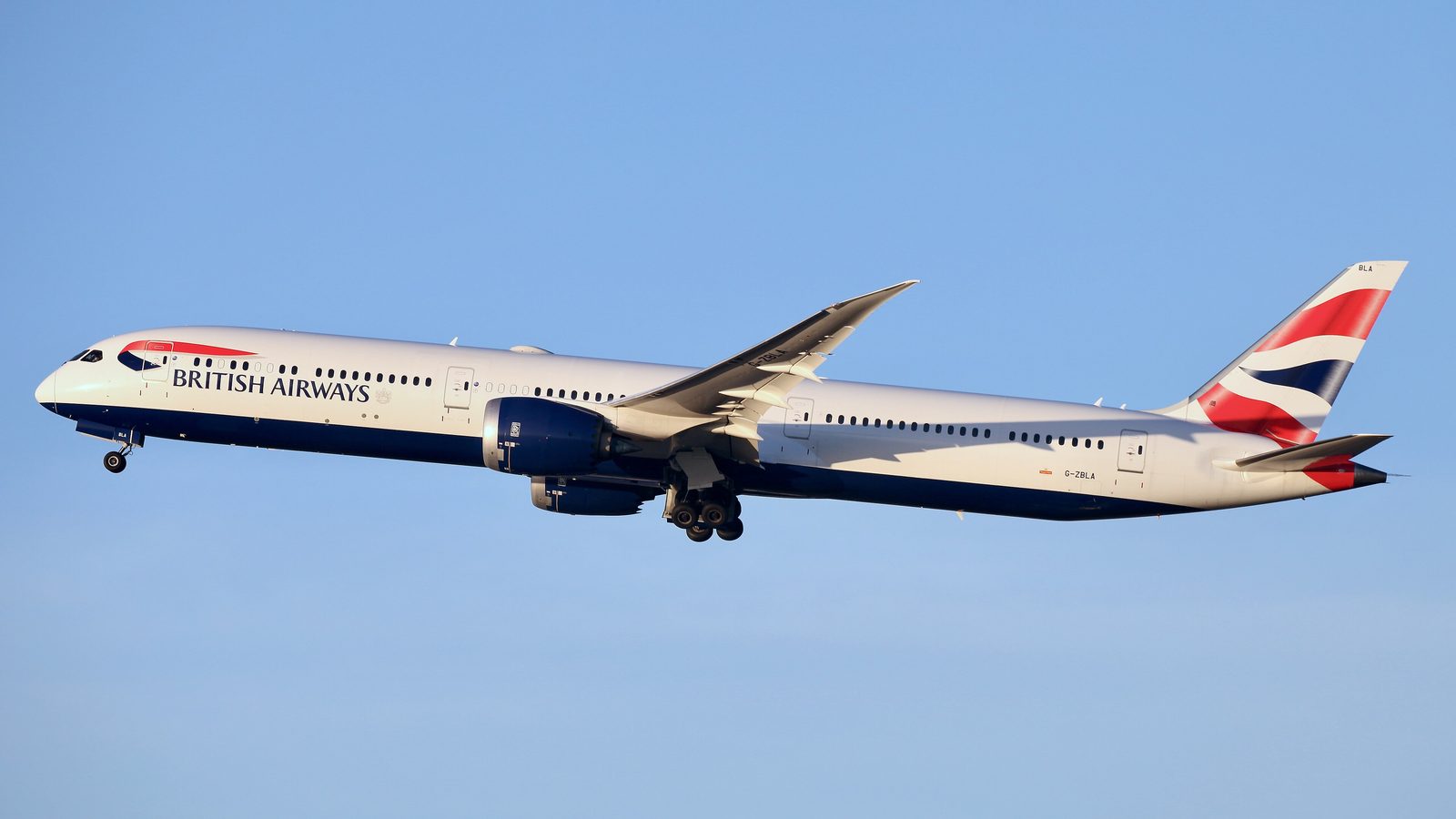
A British Airways Boeing 787-10 Dreamliner, registration G-ZBLA, was preparing to depart Montreal Trudeau Airport on Saturday 5 September when its left rear emergency evacuation slide deployed without command.
The aircraft was operating flight BA94, the daily service from Montreal (YUL) to London Heathrow (LHR), and had not yet pushed back from the gate when ground crew noticed the slide had inflated.
A catering truck was positioned alongside the aircraft at the time, and the sudden deployment brought pre departure preparations to an immediate halt.
Ground staff and maintenance teams were called to secure the area, deflate and remove the slide, and begin an inspection of the affected door and surrounding fuselage before any decision could be made on the aircraft’s onward serviceability.
Details of Aircraft Involved in Montreal Incident
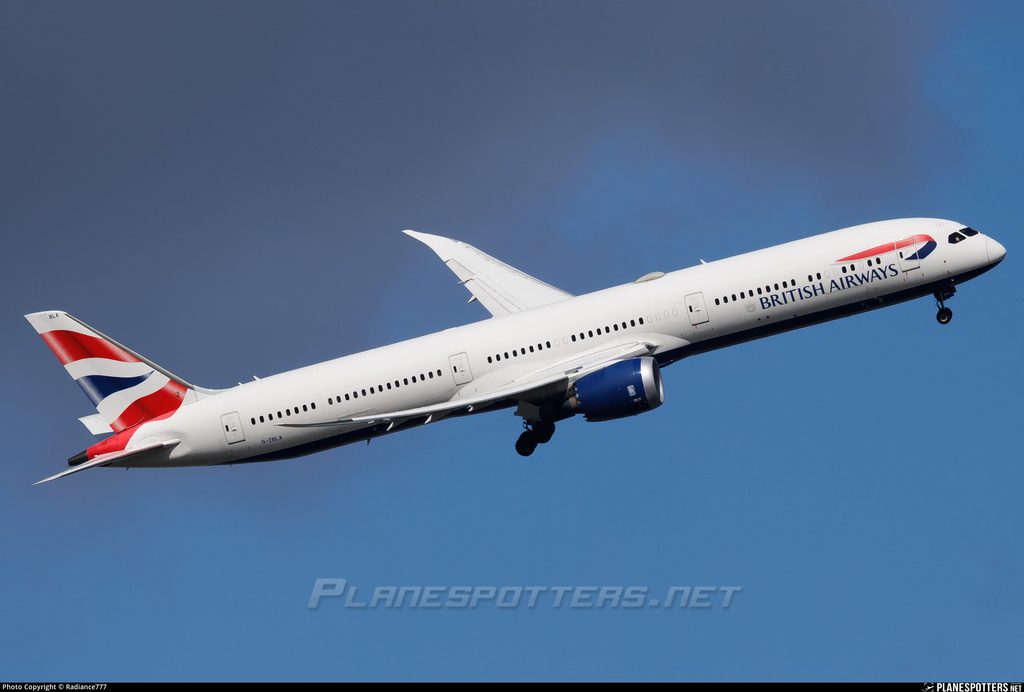
G-ZBLA is a Boeing 787-10 Dreamliner with the manufacturer serial number 60637 and line number 956.
Built at Boeing’s Charleston production site, the airframe first flew on 17 January 2020 and was delivered new to British Airways on 26 June 2020, having been ferried from Charleston to Heathrow that same month.
Now six years old, the aircraft is configured with Rolls Royce Trent 1000 J3 engines and remains active within the British Airways long haul fleet.
Operational Disruption
The inadvertent deployment forced a lengthy delay while engineers worked through the required checks.
An emergency slide cannot simply be reinflated and reattached once triggered.
It must be removed, inspected for damage, and either professionally repacked into its housing or replaced outright before the door can be certified for normal service, and that process typically takes several hours to complete on the ground.
BA94 eventually departed Montreal and reached Heathrow approximately two hours and thirty minutes behind schedule.
The disruption did not end there. G-ZBLA had been scheduled to operate a further rotation to Newark following its arrival into Heathrow, and that service was also affected as engineers carried out additional maintenance checks on the aircraft before it could be released back into the schedule.
Why Emergency Slide Deployments Matter
An uncommanded slide deployment on the ground is treated as a significant event within airline maintenance operations, even when no injuries result.
The slides are packed under considerable pressure and are designed to inflate within seconds of being triggered, whether by a crew arming error, a mechanical fault in the door mechanism, or an inadvertent knock during ground handling.
Once deployed, the affected door is placed out of service until the slide has been replaced or repacked by a qualified technician, and the door mechanism itself is typically inspected to rule out a fault that could recur.
For an airline operating a tightly scheduled long haul aircraft like G-ZBLA, a single slide deployment can therefore have knock on effects across several subsequent sectors, as was the case with the Newark rotation.
Airlines generally hold spare slide assemblies at major hub airports for exactly this reason, though Montreal, as an outstation for British Airways, may have required additional coordination to source the necessary parts or engineering support.
Outcome following Montreal Incident
No injuries have been reported in connection with the incident, and there is no indication at this stage that the deployment was linked to any wider technical issue with the aircraft.
British Airways has not publicly commented on the specific cause of the slide’s activation, and it remains unclear whether the trigger originated with ground equipment, a door handling error, or a mechanical fault.
The Aviation Hub will update this article should further details emerge from British Airways or Canadian aviation authorities.
Continue to follow The Aviation Hub for more analysis and insight!
Advertise with us Your brand, in front of an aviation audience Home page and in-article placements, sold directly, one advertiser per slot. From £250 a year. See the rates