
An Antonov Airlines An-124 dropped a part onto the runway at Nagoya on Tuesday 10 November. The incident happened as the freighter departed on a cargo flight to the Philippines. Despite the separation, the crew continued to their destination and landed safely.
Meanwhile, Nagoya’s Chubu Centrair International Airport closed its only runway for around 50 minutes so teams could inspect the surface.
What Happened at Nagoya
The giant freighter, registered UR-82007, was operating flight ADB357F to Clark International Airport at Angeles. According to The Aviation Herald, the An-124-100 was climbing out of runway 36 when the part fell onto the runway.
Notably, the crew did not return to Nagoya. Instead, they continued south and landed safely on runway 02 at Clark about four hours and 50 minutes later.
Planespotters records describe the item as a panel that separated from the aircraft on takeoff. However, no official explanation for the separation had emerged at the time of writing. <!– Insert Flightradar24 playback of ADB357F here. Caption: Source: Flightradar24 –>
Runway Closure Disrupts Nagoya Operations
Centrair sits on an artificial island in Ise Bay, around 35 kilometres south of central Nagoya.
The 50 minute closure carried more weight at Nagoya than it would at many large hubs. Centrair operates a single runway measuring 3,500 metres, so any closure stops every departure and arrival.
That vulnerability explains why Centrair is building a replacement runway. Japan’s transport ministry approved the project in February 2025. The new 3,290 metre runway is due to enter service by 31 March 2028. Once open, it will let flights continue while crews repair the existing runway.
Until then, even a short inspection leaves Nagoya without a usable alternative.
Second Antonov Event at Nagoya in Three Weeks
This is the second Antonov Airlines An-124 incident at Nagoya in under three weeks. On 22 October, witnesses saw flames at the rear of sister aircraft UR-82029 as it landed from Fairbanks, Alaska.
On that occasion, the airport closed the runway for 15 minutes. Fortunately, Interfax reported no injuries. Nothing suggests a link between the two events, which involved different airframes.
Antonov Airlines uses the An-124 for outsized cargo that conventional freighters cannot carry. In fact, the operator has served Nagoya before, including the delivery of a power plant rotor from Atlanta.
The wider Nagoya region is a hub for Japanese aerospace and heavy industry. As a result, outsized freighters are a familiar sight at Centrair.
About UR-82007
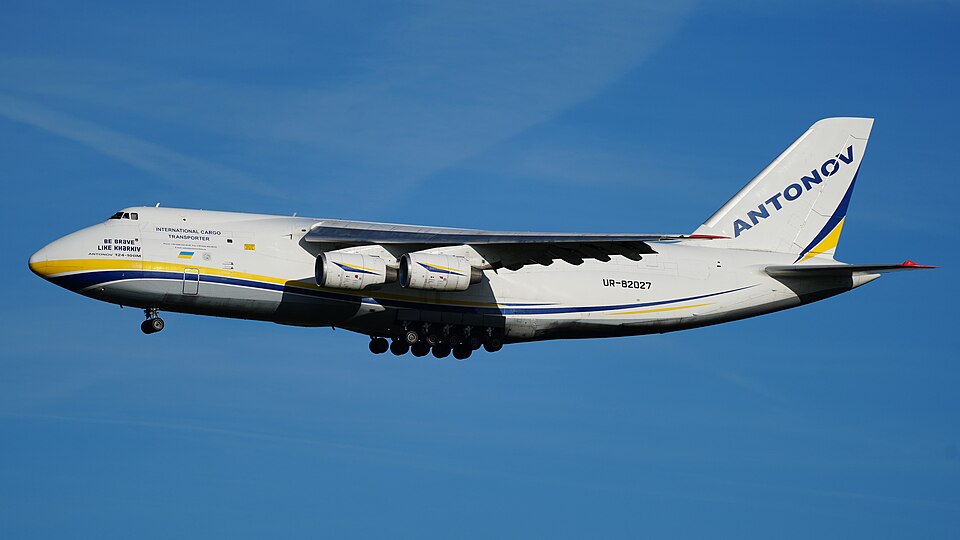
UR-82007, the aircraft involved in the Nagoya incident, is almost 41 years old, according to Planespotters. Antonov built the aircraft at Gostomel, near Kyiv, and it joined Aeroflot as CCCP-82007 in 1987.
British operator Air Foyle then leased the freighter for part of 1992. Afterwards, it returned to Aeroflot before Antonov Airlines took it over in 1993.
The aircraft also has a remarkable wartime story. It took off on a commercial flight about an hour before Russia’s invasion began on 24 February 2022. That timing kept it clear of the fighting, and it later received “Be brave like Mykolaiv” titles.
More recently, UR-82007 spent five months in storage at Leipzig before it returned to service on 13 January 2026. The freighter also overran the runway on landing at Sao Paulo Guarulhos in May 2021.
What Happens Next
Engineers will now need to identify the missing part and inspect the airframe before UR-82007 flies again. For now, Planespotters lists the An-124 as parked at Clark.
The Aviation Hub will update this story if Antonov Airlines or Japanese authorities release further details about the Nagoya incident. For more breaking coverage, visit our Squawk 7700 hub.
Continue to follow The Aviation Hub for more analysis and insight.
Advertise with us Your brand, in front of an aviation audience Home page and in-article placements, sold directly, one advertiser per slot. From £250 a year. See the rates