Norse Atlantic Axes New York: Is The US Experiment Over?
 By The Aviation Hub
6 min read
Updated September 30, 2026
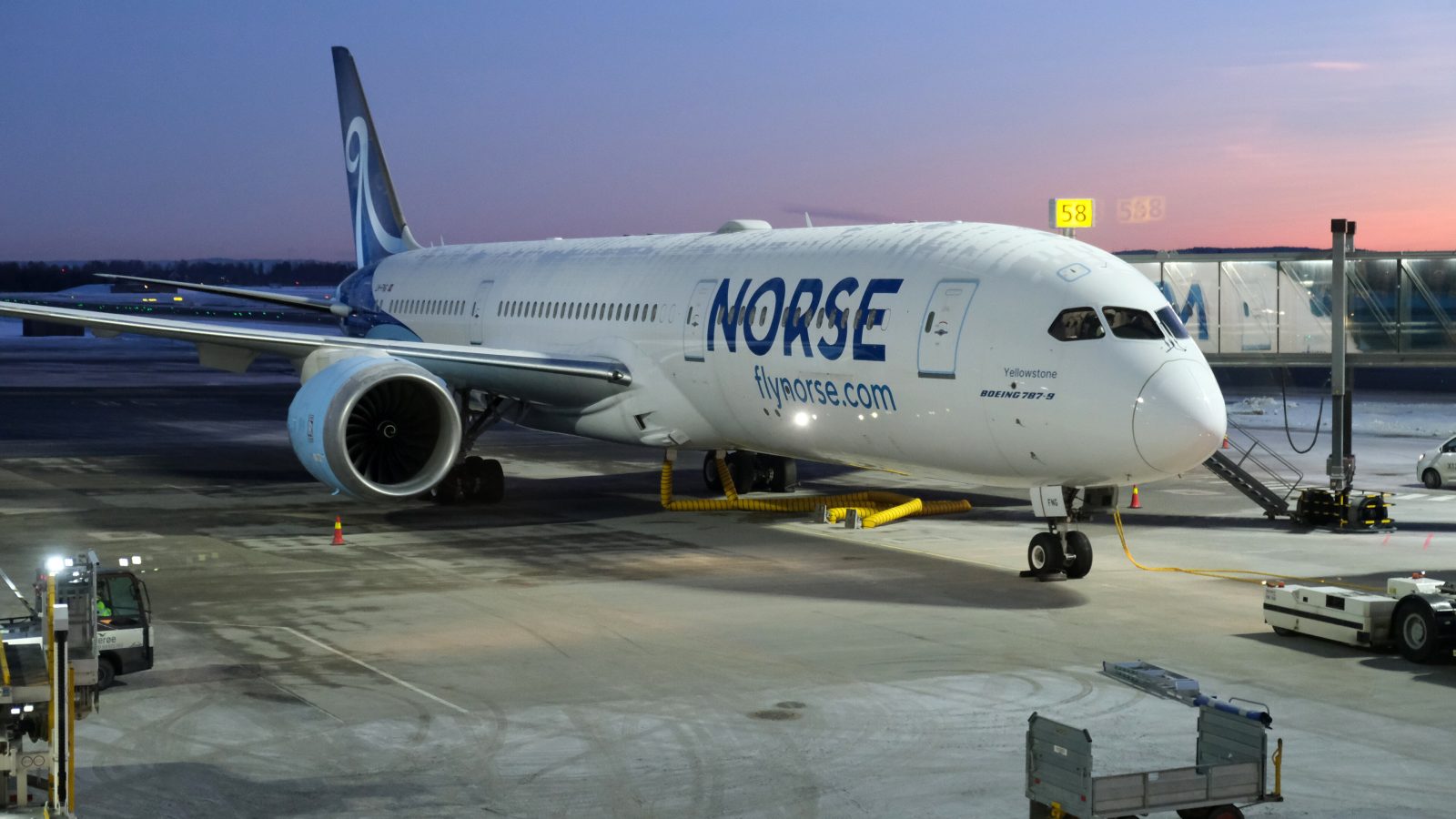
Norse Atlantic Airways has removed its planned New York flights from the winter schedule.
The decision leaves the Norwegian carrier with just one route to the United States this winter.
It is a remarkable retreat for an airline that launched with the promise of cheap transatlantic flying on brand new Boeing 787 Dreamliners.
The question now is whether the US is still a core market for Norse Atlantic Airways at all.
What Norse Atlantic Airways Has Cut New York
According to Aviation Week, the airline had planned to serve New York JFK from both London Gatwick and Rome Fiumicino during the winter season.
Each route was due to operate up to three times weekly with Boeing 787-9 aircraft.
Both routes have now gone.
Aviation Week, citing OAG data, reports that the two New York services account for roughly 83,200 of the seats removed.
The wider winter network has shrunk from about 552,000 seats in one filing to around 446,500 seats in the next.
That is a cut of close to one fifth in the space of a single week.
With New York gone, the airline’s winter presence in the United States falls to a single route.
A Long Run of Cuts
The New York decision is the latest in a long series of reductions.
Over the past year, Norse Atlantic Airways has steadily dismantled much of the US network it built after launch.
Simple Flying reported last year that the carrier was removing half of its US network, including New York to Paris, Berlin and Oslo, as well as its longest route between Athens and Los Angeles.
Miami disappeared in September 2025.
Los Angeles followed, with the airline closing bookings on planned 2026 services linking the city with London, Paris and Rome, according to Coinpaper.
The numbers tell the story.
Travel And Tour World calculated 840 Europe to US departures in the third quarter of 2025, compared with only 484 filed for the same quarter this year, even before the Los Angeles removal.
Full Aircraft, Weak Economics
One of the most revealing details came last year.
Norse Atlantic Airways reported record load factors of 97% in the second quarter of 2025, yet still cut half its US routes shortly afterwards.
Simple Flying argued at the time that this pointed to low fares being used to fill seats, which in turn suggested poor overall profitability.
Full aircraft do not mean profitable aircraft when yields are thin.
That is the central challenge of low cost long haul flying.
The Dreamliner is efficient, but ownership or lease costs are high, and the business depends on filling premium and economy cabins at fares that cover fuel, crew and airport charges.
On the North Atlantic, Norse competes with joint ventures such as British Airways and American, and Delta with Air France KLM and Virgin Atlantic.
Those groups can price aggressively on a single route and recover the revenue elsewhere in their networks. A point to point carrier cannot.
Why the Timing Is So Difficult
Two external pressures are making 2026 especially tough and causing cuts such as New York. The first is fuel.
Coinpaper notes that the Iran conflict pushed jet fuel from around $800 to roughly $1,300 per metric ton earlier this year.
On an eight hour transatlantic sector, that increase hits a low fare model particularly hard.
The second pressure is demand into the United States.
Coinpaper reports that the US received roughly 3.1 million overseas visitors in August 2026, down 11.8% on a year earlier, citing National Travel and Tourism Office data.
Norse is not the only airline responding.
The same report lists Air Canada, Air France and Lufthansa among carriers trimming US flights as inbound tourism weakens.
However, Norse Atlantic Airways is more exposed than most.
It lacks the connecting feed, corporate contracts and loyalty programmes that help larger airlines ride out a soft patch.
Six Dreamliners Coming Home
The New York cut is especially notable because of what happens on 1 November.
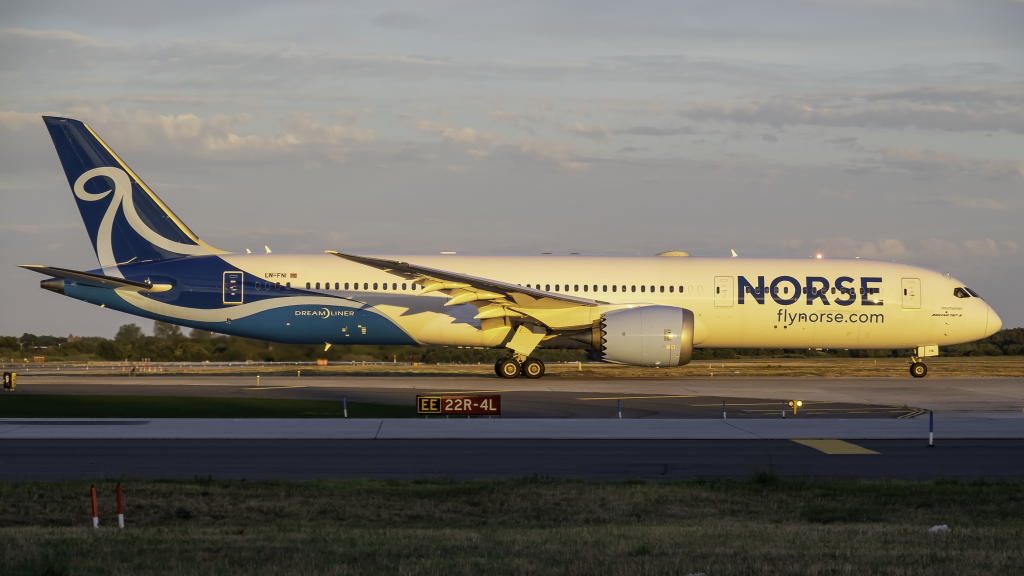
Aviation Week reports that six 787-9s are due to return from an ACMI agreement with IndiGo on that date.
Norse had previously said it planned to use some of that returning capacity in its own network.
The plan included expanding Europe to Thailand flying and adding New York and Orlando services.
Removing New York from the winter schedule suggests that plan has been rethought.
Those aircraft now need a home, and the options appear to be further Asian flying, new ACMI contracts, or a combination of the two.
The shift towards leasing is not new.
FlyMag noted earlier this year that the airline was placing more aircraft into ACMI flying, where utilisation and revenue are more predictable than on its own scheduled routes.
Thailand Becomes the Priority, New York Left Behind
While the US network has shrunk with the New York cuts, Asia has grown.
Simple Flying reported that the carrier launched five nonstop routes to Thailand last year, linking the United Kingdom, Sweden and Norway with Bangkok and Phuket.
These routes play to the airline’s strengths.
Scandinavian and British leisure demand for Thailand is strong in the northern winter, and there is less direct competition from joint venture giants.
Seasonality also works in its favour. Thailand peaks in the European winter, which is exactly when transatlantic leisure demand is at its weakest.
Is Norse Atlantic Airways Still a Transatlantic Airline Following New York Cut?
The brand still carries the word Atlantic, but the business looks increasingly different, especially following the New York cuts.
A single winter US route, a growing Thailand operation and a large ACMI book describe a flexible widebody operator, not a dedicated transatlantic disruptor.
That may be the right answer for shareholders and creditors alike.
A smaller, more flexible airline with predictable ACMI income is easier to finance than one exposed to every swing in transatlantic fares.
It also mirrors what other carriers have done.
Scheduled flying where the airline has an edge, and wet leasing where it does not, is a model that can keep expensive widebody aircraft productive through the quieter months.
Several low cost long haul airlines have failed on the North Atlantic, from Primera Air to WOW air and the original Norwegian long haul operation.
Norse has avoided that fate by adapting rather than doubling down.
The summer 2027 schedule will be the real test.
If New York and Orlando return in strength next summer, the winter cut is simply seasonal caution.
If they do not, Norse Atlantic Airways will have quietly completed its exit from the market it was created to serve.
Readers can follow the airline’s fleet and network changes using our Airline Search and Aircraft Search tools.
Continue to follow The Aviation Hub for more analysis and insight!
Advertise with us Your brand, in front of an aviation audience Home page and in-article placements, sold directly, one advertiser per slot. From £250 a year. See the rates