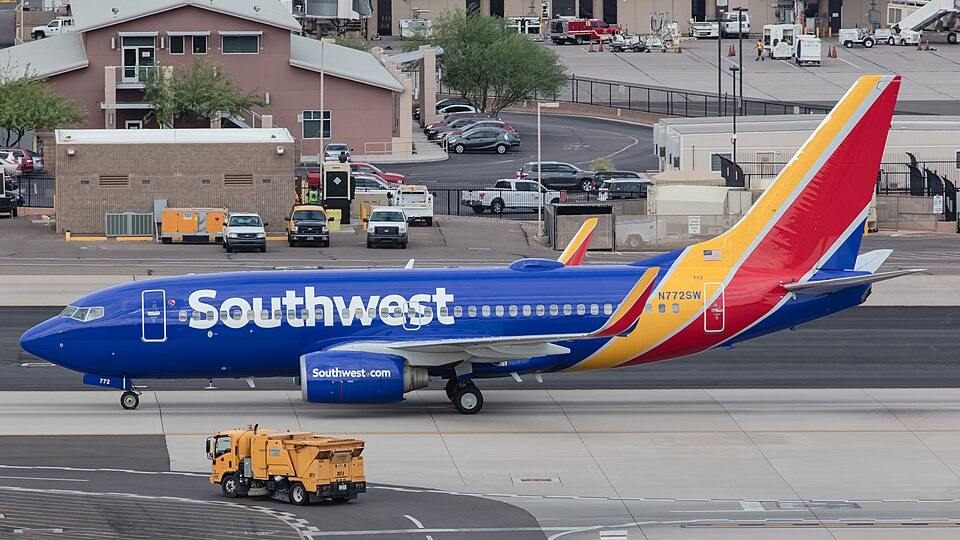
A Southwest Airlines Boeing 737-700 turned back to Orlando on Sunday afternoon after its crew reported a blown tyre during departure. Flight WN2879 was heading to Knoxville, Tennessee. Instead, the crew stopped the climb at 16,000 feet and brought the jet safely back to Orlando International Airport.
What Happened After Departure From Orlando
The aircraft, registered N926WN, left Orlando’s runway 36R on Sunday 15 November for the short flight north to Knoxville. During the initial climb, the crew became aware of a blown tyre.
Rather than continue to cruising altitude, the pilots levelled off at 16,000 feet. They then turned the 737 around and landed safely on runway 36L about 35 minutes after departure, according to The Aviation Herald.
You can replay the full track of the flight on Flightradar24.
Flightradar24 track of Southwest flight WN2879 returning to Orlando Source: Flightradar24
FAA Opens Investigation Into the Orlando Return
The Federal Aviation Administration confirmed the event in a short statement. It said:
“Southwest Airlines Flight 2879 returned to and landed safely at Orlando International Airport after the crew reported a blown tire during departure. The FAA is investigating the incident that occurred around 3:55 p.m. local time on Sunday, Nov. 15.”
However, the statement does not say which tyre failed or what caused it. It also makes no mention of any injuries on board.
Why a Blown Tyre Matters
On its own, a burst tyre seldom puts an aircraft in danger. Still, when a tyre fails at high speed, fragments of rubber can strike flaps, engines and hydraulic lines. A damaged tyre also reduces braking performance on landing.
For that reason, crews generally prefer to land at a major airport with long runways and fire crews on hand. Orlando offered exactly that, with four parallel runways just minutes away.
About N926WN
Boeing built N926WN at its Renton factory, where it flew under the test registration N1786B. The jet carries manufacturer serial number 36629 and line number 2663.
Southwest took delivery of the aircraft in July 2008, and it is now 18.4 years old, according to Planespotters. It seats 143 passengers in an all economy layout and flies with two CFM International CFM56-7B engines. Planespotters also shows that Southwest leased the jet between January 2009 and August 2020, and it still lists the airframe as active.
Not the First Tyre Failure at Orlando
Southwest has dealt with similar events at Orlando before. In August 2023, flight WN497 to Phoenix blew a nose wheel tyre on departure and returned, and the FAA reported two minor passenger injuries.
Similarly, in June 2017, a Southwest 737-300 bound for Pittsburgh suffered a hydraulic failure after a tyre burst on departure. That case shows why crews treat even a single tyre failure with caution.
For now, the FAA investigation will look at what caused the tyre on N926WN to fail. Until then, follow every live emergency on our Squawk 7700 desk.
Continue to follow The Aviation Hub for more analysis and insight.
Advertise with us Your brand, in front of an aviation audience Home page and in-article placements, sold directly, one advertiser per slot. From £250 a year. See the rates