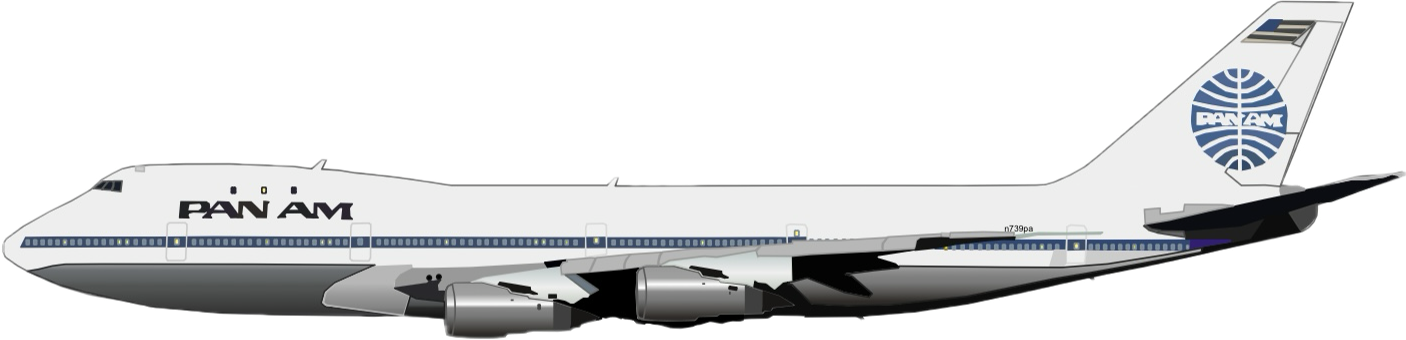
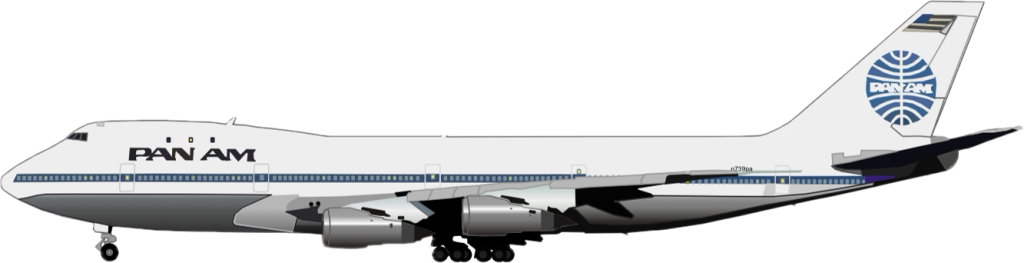
On 4 December 1991, Pan Am ceased operations and filed for bankruptcy, ending 64 years of an airline that had defined American aviation on the world stage. The structural reason for that collapse was not a single crisis. It was built in decades earlier, and parts of it are still visible in how airlines operate today.
Built for a World That No Longer Existed
Founded in 1927, Pan Am began life carrying airmail and passengers on routes linking Key West, Florida, with Havana, Cuba. Its ambitions expanded rapidly. According to Wikipedia, Juan Trippe established the Aviation Corporation of the Americas on 2 June 1927 with $250,000 in startup capital, and Wikipedia further notes that the three rival companies that would coalesce into Pan Am completed their merger on 23 June 1928.
Throughout much of the 20th century, US international routes were effectively Pan Am's domain, with little competition to speak of, as the Association for Diplomatic Studies and Training (ADST), Wikipedia and the Delta Flight Museum all record. That dominance was no accident. Donald Bliss, a former US ambassador and Pan Am's legal representative, told the Association for Diplomatic Studies and Training (ADST): "What happened was airline deregulation. Through his political connections, PanAm's founder Juan Tripp created a U.S. monopoly on most international routes."
The Civil Aeronautics Board (CAB) regulated US airline routes and fares before deregulation, and under that system Pan Am's international franchise was effectively protected by law. The airline had no need of a domestic network. The CAB ensured the passengers came to it.
Deregulation and the Feed Problem
Aviation Week reports that President Carter signed the Airline Deregulation Act on 24 October 1978. The Act eventually dissolved the CAB entirely, according to both ADST and Aviation Week. What it also did, immediately, was expose the structural gap at Pan Am's core: the airline had no domestic route network to feed its international hubs.
Aviation Week also reports that Southwest Airlines was, when deregulation arrived, a modest regional operator hemmed in by CAB rules that confined it to Texas. Once those restrictions fell away, carriers such as Southwest were able to expand domestically, while the established trunk carriers gained the freedom to push into international markets. According to ADST and Aviation Week, United, American and Delta all moved onto international routes following deregulation, routes that Pan Am had previously held without challenge.
Pan Am's response was to acquire National Airlines in 1979 and 1980, buying a domestic network it had never built, according to ADST and the Delta Flight Museum. It was an expensive solution to a structural problem, and it came too late. The integration was costly, the timing was poor, and the competitive environment was now moving against Pan Am on every front.
You can explore the carriers that inherited Pan Am's network using our Airline Search.
The Asset Sales That Sealed Pan Am's Fate
By the mid-1980s, the sale of core assets had become Pan Am's means of keeping itself afloat. The Delta Flight Museum, an official Delta heritage institution, reports that in 1985 Pan Am offloaded its Heathrow landing rights and transpacific route network to United Airlines. These were the routes Trippe had spent decades building. The cash they raised offered short-term relief but stripped away the network density on which the entire international operation depended.
The collapse unfolded in stages. Delta Air Lines' corporate newsroom states that Delta acquired substantially all of Pan Am's transatlantic routes and the Pan Am Shuttle in 1991. The Delta Flight Museum records that Delta took over Pan Am's transatlantic route operations on 1 November 1991, while Delta Shuttle services between New York and Boston, and New York and Washington DC, got under way on 1 September 1991. Pan Am declared bankruptcy and ceased all operations on 4 December 1991, little more than a month after the routes that had once defined the airline passed to Delta.
The Structural Lesson
The collapse reveals a flaw that was not unique to Pan Am. An airline whose network is structured around a regulatory environment can find itself entirely exposed when that environment changes. Pan Am had optimised for a world in which international routes were protected franchises and domestic feed was irrelevant. Deregulation made domestic feed essential.
The airlines that survived and grew in the post-deregulation era were, almost without exception, those with strong domestic networks that could channel passengers onto long-haul services. United and American had that base already. Delta built it systematically. Pan Am never had it organically and could not acquire it in time.
The logic holds today. Carriers that depend heavily on a single market segment or a single regulatory protection are exposed when conditions shift. Long-haul, point-to-point models without domestic feed have repeatedly struggled to sustain yields across a full network cycle, and the difficulty of building domestic scale from scratch remains as real now as it was for Pan Am in 1979.
The Bottom Line
Pan Am's story is sometimes told as a tale of bad luck or bad management. The facts suggest something more structural. The airline was built for a regulated world and never fully rebuilt for a deregulated one. The acquisition of National Airlines was an attempt to solve that problem, but the feed network it bought was never properly integrated before the asset sales began. By the time Delta took on the transatlantic routes in November 1991, the outcome had been determined years earlier.
For readers watching how today's airlines structure their networks, Pan Am's 35th anniversary is a useful moment to ask which carriers are most dependent on conditions they do not control. The feed question that ended Pan Am has never gone away.
This article draws on information from Delta Air Lines (corporate newsroom) and reporting by Association for Diplomatic Studies and Training (ADST), Wikipedia, Delta Flight Museum (official Delta heritage institution) and Aviation Week.
Continue to follow The Aviation Hub for more analysis and insight.
Advertise with us Your brand, in front of an aviation audience Home page and in-article placements, sold directly, one advertiser per slot. From £250 a year. See the rates