Commercial drone work is growing in the US, from real estate photography to inspections, and every paid flight needs an FAA certificate. Here is how to get a Part 107 drone license, what it costs and what it still does not allow.
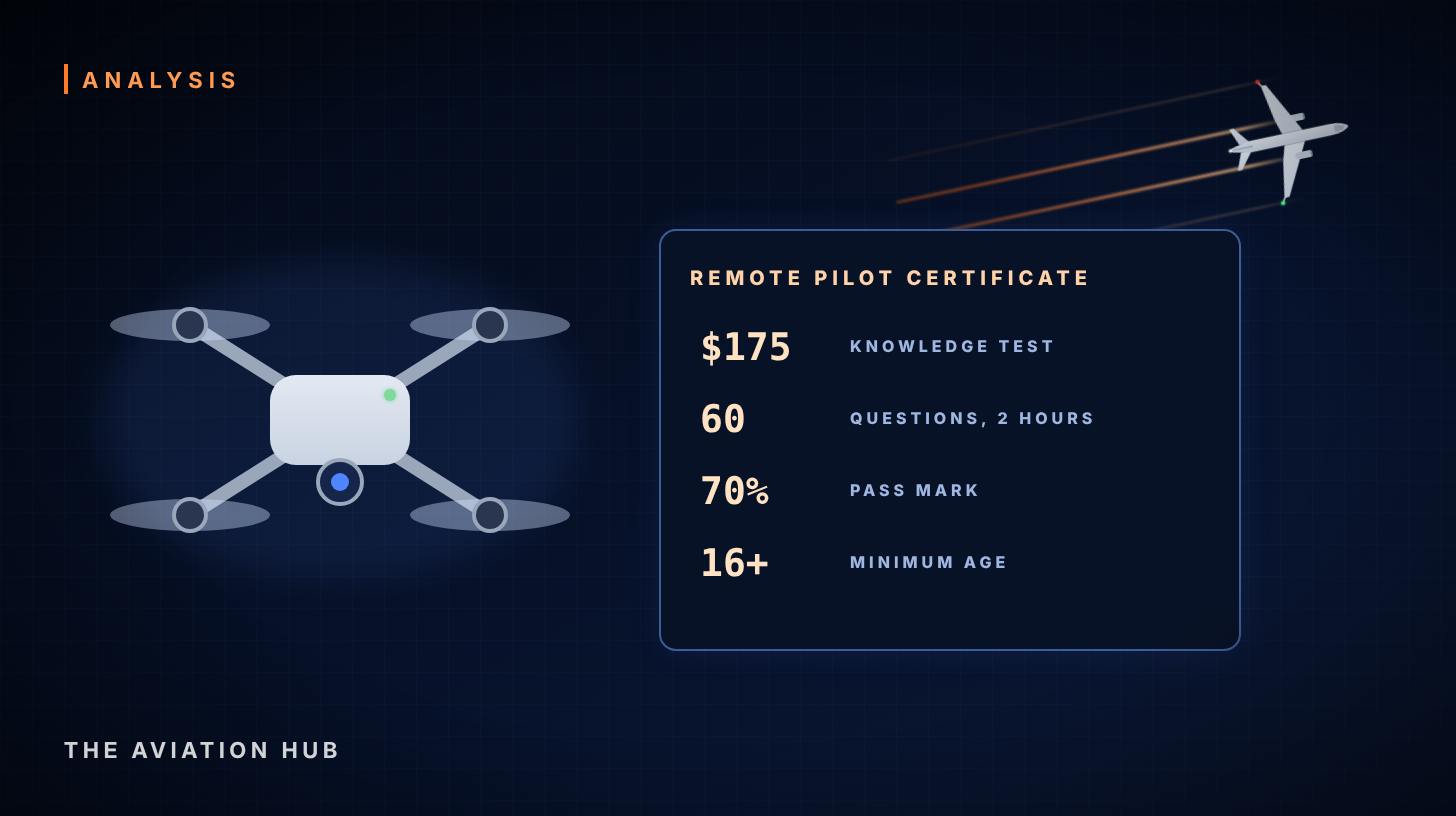
A Part 107 drone license, officially called a remote pilot certificate, is required for anyone flying a drone for work in the US. The main cost is the knowledge test, which testing centres charge approximately $175 to take, according to the Federal Aviation Administration.
The certificate is named after Part 107 of the FAA’s rules, which covers small drones under 55 pounds.
Who Can Apply
To qualify, you must be at least 16 years old, be able to read, speak, write and understand English, and be in a fit physical and mental condition to fly safely, the FAA says.
Step One: Create an IACRA Profile
Start by creating a profile on IACRA, the FAA’s online certification system, to get an FAA Tracking Number. You need this before you can register for the test.
Step Two: Pass the Knowledge Test
The test is taken in person at an FAA approved knowledge testing centre, and you must bring government issued photo ID. It has 60 multiple choice questions, you have two hours to complete it and the pass mark is 70%, or 42 correct answers, DroneXL reports.
Questions cover airspace, weather, regulations, drone performance and emergency procedures. Many people use online courses or free FAA study materials to prepare.
Step Three: Apply and Pass Security Checks
After passing the test, you complete the remote pilot application in IACRA using your knowledge test exam ID. It can take up to 48 hours for your result to appear in the system.
The TSA then carries out a security background check. Once it is complete, you receive an email with instructions to print a temporary certificate, and the permanent certificate is posted to you.
Keeping It Current
The certificate does not expire, but you must complete recurrent training every 24 calendar months to keep flying commercially. The FAA’s online recurrent course is free, and there is no exam fee.
What Part 107 Does Not Allow
Flying beyond visual line of sight generally needs a waiver from the FAA, granted case by case. Some flights over people and from moving vehicles also need waivers.
That could change. The FAA proposed a new rule for routine flights beyond visual line of sight, known as Part 108, in August 2025, and the final rule has been under White House review, DroneXL reports. When it is published, it could open up deliveries and long range inspections.
Other Rules to Know
Most drones also need to be registered with the FAA and must broadcast Remote ID, which identifies the drone in flight, either through built in equipment, an add on module or by flying in a recognised area.
Visitors from the UK should note that UK drone rules are different, and a Part 107 certificate is not valid for flying in Britain.
The Bottom Line
A Part 107 drone license costs about $175 for the test, involves a security check and never expires as long as you complete free recurrent training every two years.
If you plan to earn money from drone flying in the US, it is the essential first step, and the coming Part 108 rule could make it even more valuable.
Continue to follow The Aviation Hub for more analysis and insight.
Advertise with us Your brand, in front of an aviation audience Home page and in-article placements, sold directly, one advertiser per slot. From £250 a year. See the rates