A light jet from London to Paris can cost less than many people expect, while a heavy jet to New York runs to tens of thousands. Here is what private jet charter costs in 2026, the extra charges brokers do not always mention and why UK tax rules are about to make it dearer.
Private aviation is no longer only for billionaires. Empty leg deals are advertised online, and groups often split the private jet charter cost between them.
But the final price depends on far more than the hourly rate. The type of aircraft, the route, the time of year and a list of extra fees can double the price of a trip.
The Hourly Rates
Charter is usually priced by the hour, and the size of the aircraft is the biggest factor. In Europe, light jets cost around €2,800 to €4,200 an hour, midsize jets €4,200 to €6,500 and heavy jets €8,000 to €13,000 or more, according to broker Fast Private Jet.
Turboprops and very light jets are the cheapest option, at €1,800 to €2,800 an hour for short hops of up to six passengers. Super midsize jets, which can cross the Atlantic, cost €6,000 to €8,500.
Prices in US dollars follow a similar pattern. Broker Villiers puts light jets at $2,500 to $4,500 an hour and heavy jets at $8,000 to $15,000 or more.
What Popular Routes Cost
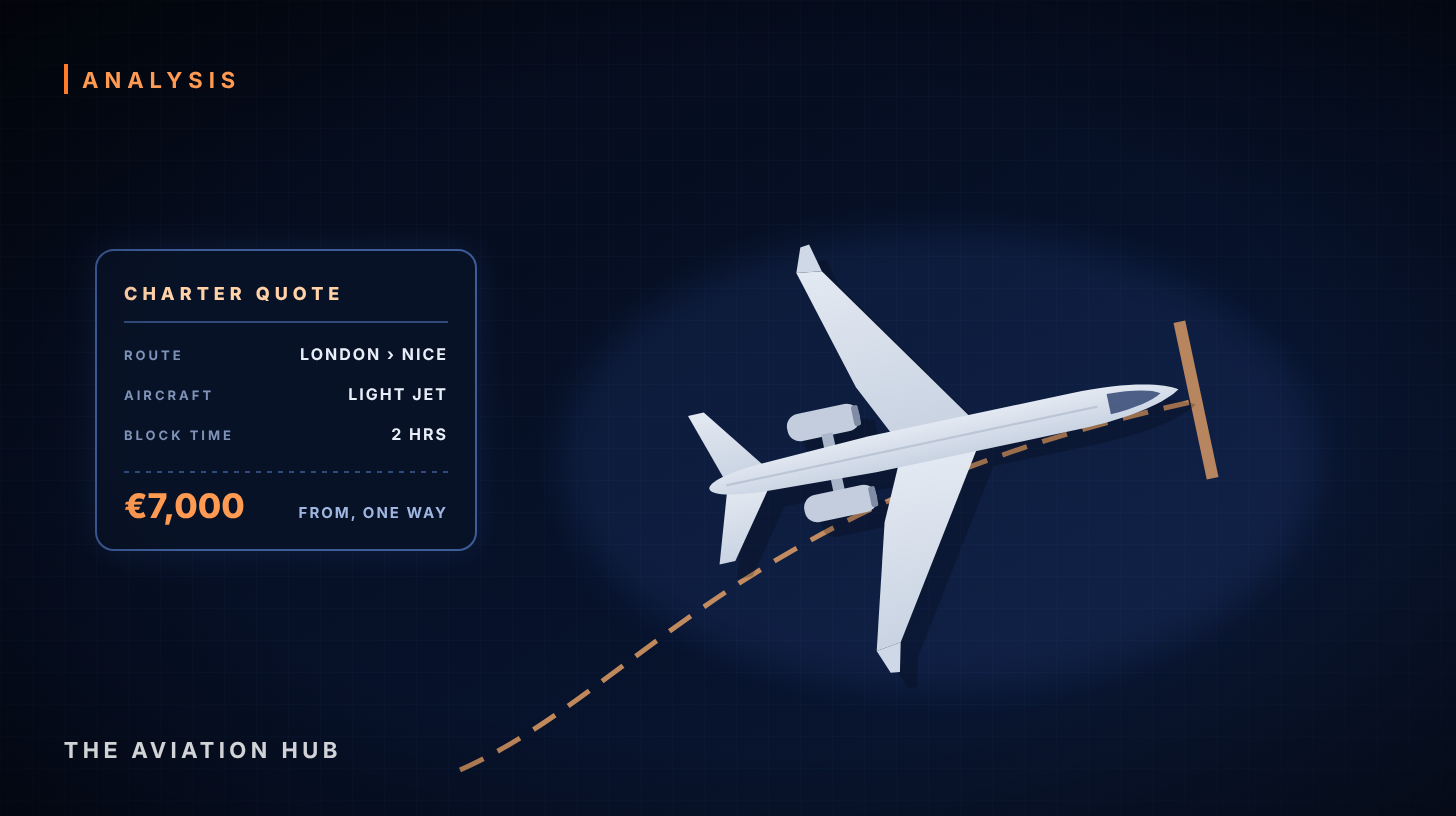
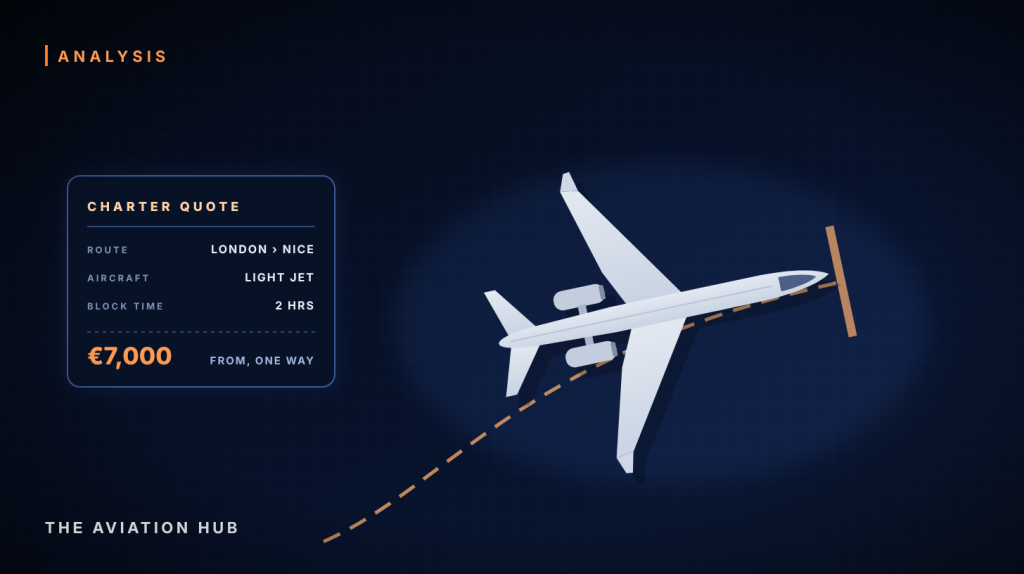
Short European flights are the most accessible. A light jet from London to Paris costs around €5,500 to €8,000, and London to Nice in a light or midsize jet around €7,000 to €10,500, according to Fast Private Jet. A heavy jet from London to New York costs around €35,000 to €55,000.
Quotes vary widely between brokers. Villiers puts London to Nice at $25,000 to $50,000, which reflects how much aircraft choice, timing and positioning can change the price.
Split between passengers, the numbers look different. A €9,000 flight to Nice shared by six people works out at €1,500 each. That is still far more than a scheduled fare, but within reach for some groups.
The Costs Behind the Quote
The hourly rate is only the starting point. Operators bill block time, from when the aircraft leaves its parking stand to when it arrives at the gate, and many apply a minimum of two hours a day, according to Fast Private Jet.
Other charges include landing and handling fees, overnight costs for the crew, catering and fuel surcharges. In winter, de icing can add several hundred euros to a departure.
Repositioning can be the biggest hidden cost. If the aircraft is not based at your departure airport, you may have to pay for the time it takes to fly there empty, as Villiers notes.
Empty Legs
Empty legs are the main way to fly private for less. These are flights where an aircraft needs to reposition without passengers, and operators sell the seats at a discount.
Savings can be up to 50%, according to Villiers, or as much as 75%, according to Fast Private Jet. The catch is flexibility. Empty legs run on fixed routes and dates, and they can be cancelled if the original booking changes.
The UK Tax Rise
Flying private from the UK has become more expensive. Since April 2026, passengers on private jets of 20 tonnes or more with fewer than 19 seats have paid a higher rate of Air Passenger Duty of £142 per person on flights of up to 2,000 miles, and £1,097 on flights to destinations such as New York, according to GOV.UK.
That compares with £15 in economy and £32 in premium cabins on short haul flights. On long haul, the higher rate is more than four times the standard premium rate.
A bigger change is coming. From 1 April 2027, the higher rate will extend to all business jets weighing 5.7 tonnes or more, according to aviation services firm Universal Weather. That brings many light jets and most midsize jets into the top band for the first time.
When Charter Makes Sense
Charter works best for groups, short notice trips and routes that airlines do not serve directly. For a group of six flying to a smaller airport near a ski resort or villa, it can save hours of connections and queues.
For frequent flyers, jet cards and fractional ownership offer fixed hourly rates and guaranteed availability, but they require a large upfront commitment.
The Bottom Line
The private jet charter cost in 2026 starts at a few thousand euros for a short turboprop hop and rises to more than €50,000 for a heavy jet across the Atlantic. Hidden fees, repositioning and peak season demand can add significantly to the quote.
Empty legs and shared costs can make private flying surprisingly affordable for groups. But with the UK’s higher rate of Air Passenger Duty set to cover most business jets from April 2027, flying private from Britain is about to cost more.
Continue to follow The Aviation Hub for more analysis and insight.
Advertise with us Your brand, in front of an aviation audience Home page and in-article placements, sold directly, one advertiser per slot. From £250 a year. See the rates