
Riyadh Airport Attacks: What the Escalating Houthi Campaign Means for Gulf Aviation
Repeated Houthi missile strikes on Riyadh's King Khalid International Airport have killed multiple people and triggered widespread flight cancellations across the Gulf region.
 By The Aviation Hub
6 min read
By The Aviation Hub
6 min read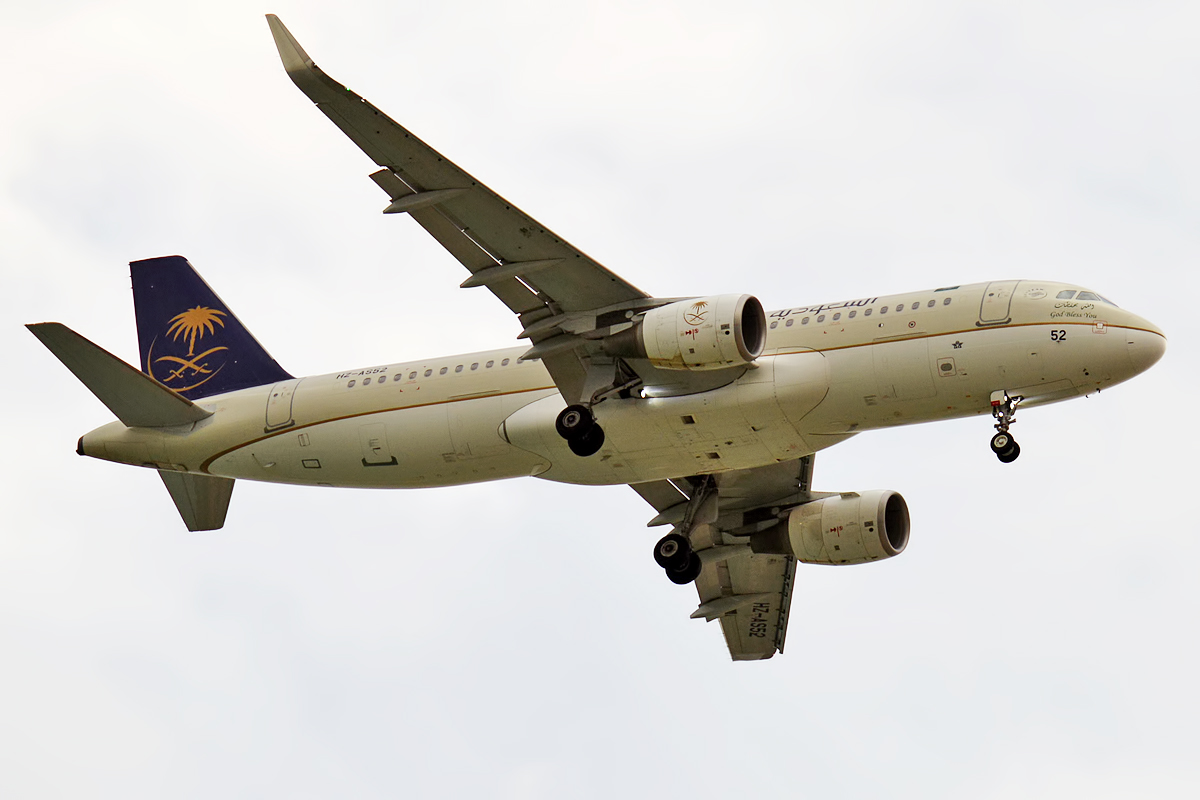
The Riyadh airport attacks, a series of Houthi missile strikes on King Khalid International Airport (RUH), have killed at least three people, destroyed a parked Saudia Airbus A320, and forced hundreds of flight cancellations across the region. A further attack on 10 October killed at least 12 people and injured 50 more, according to The New York Times as cited by Aviation24.be, though Saudi Arabia's General Authority of Civil Aviation (GACA) has not publicly confirmed that higher toll.
These are not isolated incidents. They are part of a sustained, escalating campaign against civil aviation infrastructure, and the implications for Gulf connectivity are significant.
What the Timeline of Attacks Reveals
The pace of the strikes matters as much as their scale. According to Paddle Your Own Kanoo, a fuel storage tank at King Khalid Airport was struck on 19 September. Abha International Airport (AHB) was attacked on 6 October, killing two people and injuring 28. King Khalid Airport was then struck on 7 October, killing one person and injuring eight. The 8 October attack followed within hours, and a fourth strike came on 10 October.
Four attacks on Saudi airport infrastructure in roughly three weeks is not a sporadic disruption. It is a pattern that airport operators, airlines and regulators are now having to treat as a persistent operational threat rather than an exceptional event.
The Human and Material Cost of the Riyadh Airport Attacks
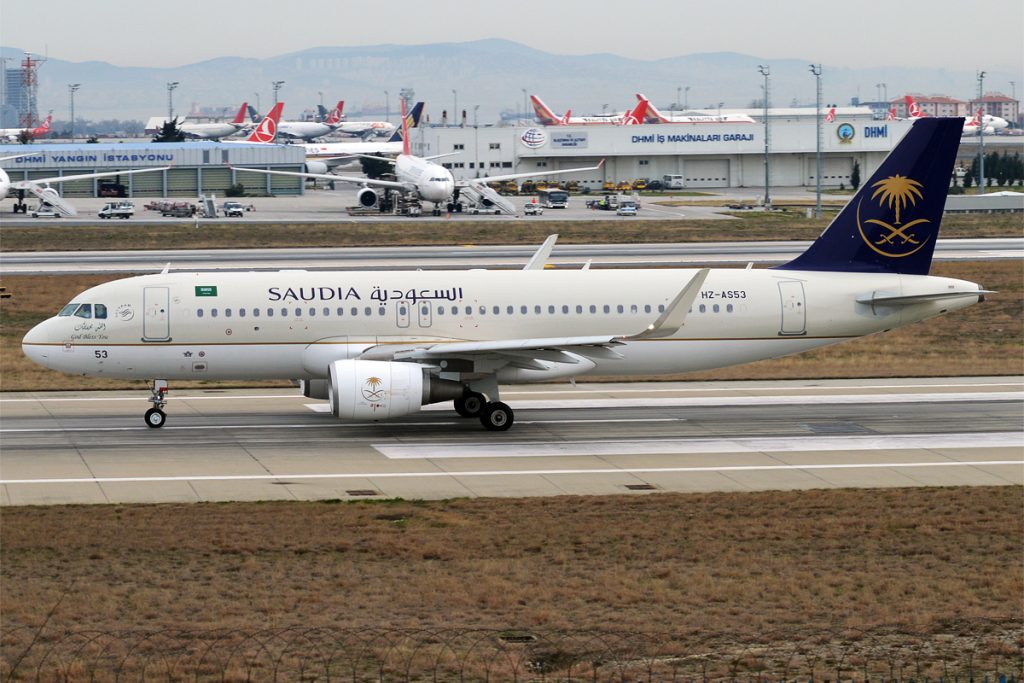
Live and Let's Fly reports that Saudi authorities confirmed three Saudi citizens were killed and several people of different nationalities were injured in the 8 October attacks. Among the dead was Captain Hamoud Ali Alkalthami, identified by Saudia. The destroyed aircraft was a Saudia Airbus A320 parked at a gate with no passengers onboard. Images described by Live and Let's Fly show a burned-out fuselage with remnants of the wings and tail.
Crucially, authorities have not clarified whether the aircraft suffered a direct missile hit or was struck by debris from an interception attempt. That distinction matters for understanding the precision and intent of the campaign, but it does not change the outcome: a commercial aircraft has been destroyed at a major international hub. Readers tracking the specific airframe can use our Aircraft Search to find further details on Saudia's A320 fleet.
The Immediate Operational Impact on Airlines
The network disruption has been swift and broad. The Straits Times reports that the Lufthansa Group suspended Riyadh services through 16 October, and that Air India cancelled all flights to Riyadh until 10 October. According to aviation analytics company Cirium, as cited by The Straits Times, 49.7 per cent of departures from Riyadh airport had been cancelled by 1500 GMT on 8 October, with 31 further cancellations expected across Saudi airports on the Friday.
Live and Let's Fly adds that Etihad and Emirates cancelled Riyadh flights on 9 and 10 October, and that IndiGo and Akasa Air also suspended service. The disruption extends well beyond Riyadh. Gulf News reports that flights to Baghdad, Najaf, Erbil and Sulaimaniyah have been halted, and that the UAE has suspended all Iranian airline flights until further notice following US sanctions. Air Arabia cancelled multiple services to Kuwait and Bahrain on Thursday morning alone.
What the Regulator and Government Warnings Signal
The regulatory posture around Gulf airspace has shifted considerably. Gulf News notes that EASA's conflict-zone information bulletin has been extended until 16 November 2026, covering the UAE, Bahrain, Qatar, Oman, Kuwait and Saudi Arabia. The US State Department lists the UAE at Level 3 ("Reconsider Travel") and has issued a specific security alert for Saudi Arabia warning of potential aerial drone or missile attacks. Australia and Canada have both issued elevated travel advisories for the region.
These are not precautionary boilerplate warnings. A Level 3 US advisory and an EASA bulletin extended by more than a year represent formal, considered assessments of sustained risk. Airlines making network decisions will treat those advisories as operational constraints, not background noise.
The Knock-On Effect for Route Planning
The longer-term network consequences are beginning to crystallise. Wizz Air has already postponed selected Abu Dhabi route launches from late October to 10 January 2027, citing EASA's security update, longer routings caused by the Iraqi airspace closure and higher fuel costs, according to Gulf News. Cathay Pacific has cancelled Dubai and Riyadh passenger flights through 31 January 2027. British Airways is resuming Dubai services on 3 November but has suspended Abu Dhabi services until winter 2027 to 2028.
The case of Delta Air Lines is instructive. As we reported, Delta delayed its Atlanta to Riyadh launch to March 2027 in the wake of these events. Live and Let's Fly argues the attacks provide Delta with grounds to reconsider a route that was already commercially uncertain. Whether Delta ultimately operates that service will be a useful indicator of how quickly the market believes the security environment can stabilise.
Against that, some carriers are moving back in the opposite direction. The Lufthansa Group is planning to restore Dubai services from late October with up to 36 weekly flights at peak operation, and Philippine Airlines has resumed Dubai to Manila bookings from 5 October, per Gulf News. The divergence between carriers restoring Dubai services and those extending Riyadh suspensions reflects a market beginning to distinguish between individual airports and the region as a whole.
What Remains Unknown
Several material facts remain unconfirmed. Saudi authorities have not stated whether the Saudia A320 was struck directly or by interceptor debris, as Live and Let's Fly notes. The higher casualty figure from the 10 October attack, 12 killed and 50 injured, has not been confirmed by GACA, only by officials cited anonymously to The New York Times and reported by Aviation24.be. No reopening timeline for King Khalid Airport has been announced. The full extent of damage to airport infrastructure has not been publicly assessed.
Any incident updates related to the strikes on airport facilities will be tracked on our Squawk 7700 hub, the live emergency board and incident archive, and we will update our coverage if the airline or investigators release further information.
The Bottom Line
The Riyadh airport attacks represent something the Gulf aviation industry has not faced at this scale before: a sustained, repeated targeting of a major international hub, resulting in the confirmed destruction of a commercial aircraft and the deaths of airline personnel on the ground. The immediate disruption is measurable. The longer question is whether the attacks continue at this tempo and whether GACA can demonstrate that ramp and terminal areas at King Khalid Airport are safe for resuming full operations.
Airlines face a genuine dilemma. Suspending Riyadh services protects crews and aircraft but surrenders revenue on one of the world's most commercially active aviation corridors. Returning too quickly carries obvious risks. The divergence in airline responses seen this week suggests there is no consensus answer yet, and the situation remains fluid enough that any schedule published today may not reflect what actually operates tomorrow.
Continue to follow The Aviation Hub for more analysis and insight.
Advertise with us Your brand, in front of an aviation audience Home page and in-article placements, sold directly, one advertiser per slot. From £250 a year. See the rates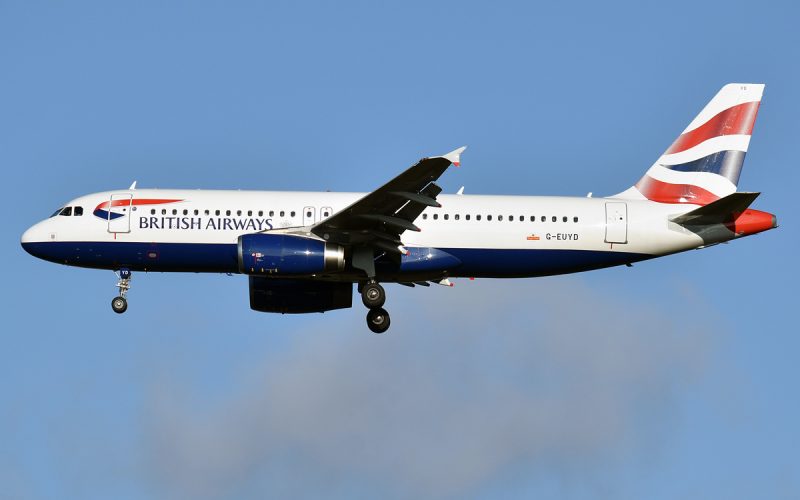

.jpg)