
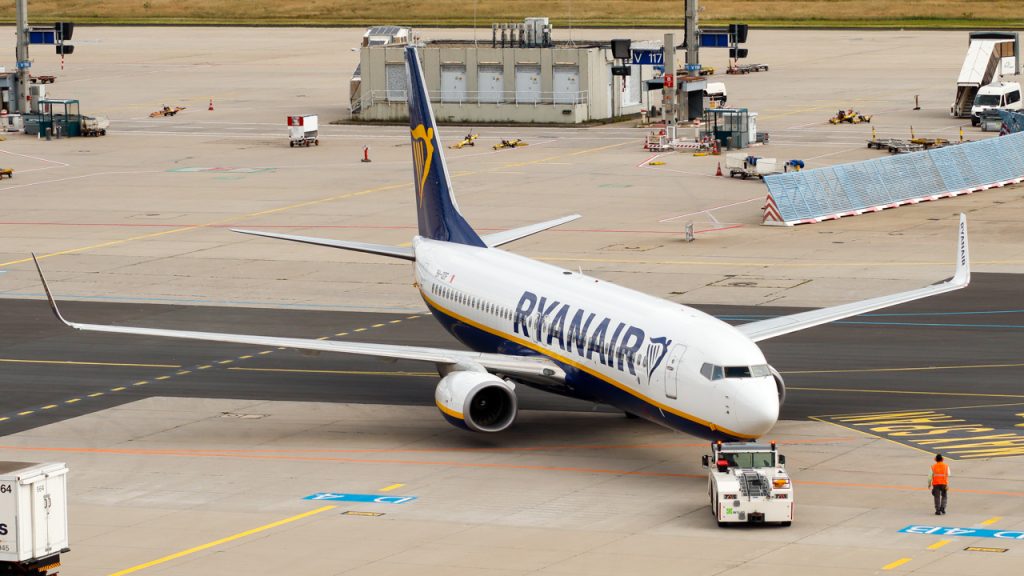
Ryanair has launched a group-wide cost review after forecasting a roughly €2bn increase in its fuel bill, with chief executive Michael O'Leary warning that elevated jet fuel prices could persist well into 2027 if the Middle East conflict is not resolved. The airline is considering measures ranging from pay freezes to changes in crew numbers as it looks to limit the financial damage.
How Bad Is the Fuel Exposure?
The scale of the problem depends heavily on how long current prices last. The BBC reports that pre-tax profits fell 16% to €2.4bn in the six months to the end of September, and that the unhedged portion of Ryanair's fuel costs has already doubled.
The airline has some protection for the near term. According to the BBC and The Guardian, 80% of Ryanair's fuel requirements through to the end of March are hedged at $67 a barrel. Beyond that, the cover thins out sharply: The Guardian reports that only 25% of the following 12 months' requirements are hedged, at $95 a barrel.
That gap in cover is what gives the €2bn figure its weight. The airline has said it expects jet fuel prices to remain elevated well into 2027 without a resolution of the Middle East conflict, and O'Leary has been direct about the limits of what fare increases can do: "While we believe European short-haul fares will increase materially to reflect these much higher jet-fuel prices and competitor capacity reductions, this is unlikely to provide a full offset for an estimated €2bn increase in our fuel bill."
What Ryanair Is Doing About It
The airline's response is a broad cost review across all of its group carriers. O'Leary has said the focus is on "airport churn negotiations, maturing labour agreements (which may require temporary pay freezes), lower crew ratios and increased use of AI," according to The Guardian.
Two measures are being reported specifically by The Guardian. The Guardian says the airline is considering reducing crew numbers on flights as a cost-cutting step. It also reports that Ryanair is looking at increased use of artificial intelligence across its operations and back-office functions. Both items have been attributed by The Guardian to O'Leary's own statement.
The BBC and The Guardian both confirm that possible temporary pay freezes are part of the review, in line with O'Leary's published remarks.
What Passengers Can Expect
Ryanair expects European short-haul fares to rise by up to 20% as carriers pass higher fuel costs on to travellers. That would represent a significant shift for an airline whose low-fare model has long been its central selling point.
O'Leary has been clear, however, that even a 20% fare increase would not close the gap entirely. The €2bn shortfall is simply too large for revenue alone to absorb, which is why the cost side of the equation is now receiving equal attention.
For passengers planning travel on Ryanair routes, our Airline Search tool lets you explore the carrier's network and current route information in one place.
The Bottom Line
Ryanair is dealing with a fuel cost problem that is both large and, in its own assessment, likely to last. The hedging book provides a degree of shelter through the winter, but the exposure from April onwards is substantial, and the airline is not waiting to see how prices move before acting.
The combination of possible pay freezes, crew ratio changes and fare increases signals that management is treating this as a structural challenge rather than a short-term fluctuation. Whether the cost review produces savings that meaningfully offset the €2bn figure will become clearer when the airline reports its next set of results.
"Unless there is a swift resolution of the Middle East conflict we expect jet fuel prices to remain elevated well into 2027," O'Leary told The Guardian. That sentence is, in effect, the entire context for everything Ryanair is now doing.
This article draws on reporting by BBC and The Guardian.
Continue to follow The Aviation Hub for more analysis and insight.
Advertise with us Your brand, in front of an aviation audience Home page and in-article placements, sold directly, one advertiser per slot. From £250 a year. See the rates