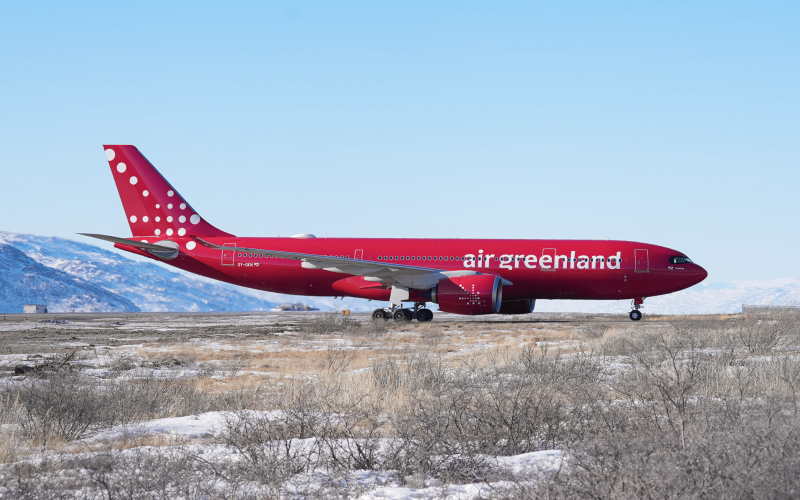
Santiago de Compostela Airport sits on a plateau at Lavacolla, east of the pilgrim city whose cathedral marks the end of the Camino de Santiago. It is the biggest and busiest airport in Galicia and the second busiest in northern Spain after Bilbao. Just over three million passengers used it in 2025. Pilgrims, students, business travellers and Galician families abroad all pass through its 2011 terminal, often in thick Atlantic fog.
Santiago de Compostela Airport at a Glance
The IATA code is SCQ and the ICAO code is LEST. The airport lies in the parish of Lavacolla, about 7.5 miles (12 km) east of the city centre, at an elevation of 1,213 feet (370 m). It has one runway and one terminal. Santiago de Compostela Airport handled 3,120,759 passengers and 24,837 aircraft movements in 2025, down from a record 3,640,664 passengers in 2024.
The state airports company Aena operates the field. Vueling uses it as a focus city for north west Iberia, and Iberia, Ryanair, easyJet and other airlines also fly here. Timetables and transport information are on the airport’s official website.

How Santiago’s Airport Came to Be
Local aviation enthusiasts set up the first airfield in October 1932, and construction of a proper airport began in 1935. The first scheduled flight from Santiago took place on 27 September 1937. After the Spanish Civil War, political prisoners held at the Lavacolla concentration camp were forced to work on the construction, a dark chapter that is now openly acknowledged.
A terminal opened in 1969 and a cargo terminal followed in 1981. Galician emigration shaped early long haul flying: Iberia started seasonal New York flights in June 1980, Viasa flew to Caracas from October 1980 until 1997, and Avensa launched Caracas flights in March 1999. Traffic reached 2,464,330 passengers in 2011 before falling to about 2.1 million in 2014 during the financial crisis.
Santiago de Compostela Airport’s present terminal opened on 13 October 2011, with passenger operations moving there the next day. On 12 March 2020 the airport took the name of Rosalia de Castro, the nineteenth century poet who wrote in Galician. Traffic passed three million for the first time in 2022.
Runways at Santiago de Compostela Airport
There is one runway, 17/35, with an asphalt surface measuring 3,200 metres (10,499 feet) long and 45 metres wide. The length handles everything from turboprops to long haul wide bodies. A major runway renovation closed the airport entirely from 23 April to 27 May 2026.
Fog is the defining operational challenge. The plateau setting at 370 metres catches Atlantic weather, and low cloud can close in fast. On 7 June 2001 a Beechcraft cargo flight from Le Mans, whose crew had asked for a visual approach to runway 17 while runway 35 was active, ran into an unexpected fog patch and struck trees. On 3 March 1978 an Iberia DC-8-63 landed long, aquaplaned and dropped into a hollow, injuring 70 people but killing none.
Terminals and Airlines
The 2011 terminal covers 74,000 square metres, with 22 check in desks, three security checkpoints, four baggage carousels and 13 gates, five of them with jet bridges. It was built for about four million passengers a year. Plans include five more jet bridges, three more carousels and a larger shopping area. More than 5,000 covered parking spaces sit within the terminal complex.
Vueling, the focus carrier, runs a wide network from Santiago de Compostela Airport, focused on Barcelona and other Spanish and European cities. Iberia and Air Europa link Madrid, and Binter flies to the Canary Islands. Ryanair and easyJet offer low cost routes across Europe, while United launched seasonal flights to Newark at the end of May 2026, reviving transatlantic flying after many years.
Routes and Destinations
Madrid and Barcelona are among the busiest routes, carrying business travellers and passengers connecting onwards. The Canary and Balearic Islands, Seville, Malaga and Valencia are strong domestic leisure markets. Internationally, London, Paris, Switzerland and Germany stand out, reflecting both tourism and the large Galician communities abroad.
Traffic at Santiago de Compostela Airport dropped in 2025 as Ryanair cut capacity at several Spanish regional airports in a dispute over Aena’s charges. The spring closure then pushed 2026 figures lower still. Pilgrims add a distinctive layer of demand, especially in summer and in Holy Years, when the feast of Saint James on 25 July falls on a Sunday. The next one is 2027. Cargo is modest.
Getting to and from Santiago de Compostela Airport
There is no rail station at the airport. A city bus runs every 30 minutes to central Santiago and to the bus and train stations, and it is the cheapest sensible option. Combined bus and train tickets are available for onward rail travel. Regional coaches serve A Coruna, Lugo and the A Marina coast.
By road, the A54 motorway links the airport with Santiago in about 15 minutes and with Lugo, where it meets the A6. The AP9 serves A Coruna, Ferrol, Pontevedra, Vigo and the Portuguese border. Taxis take around 20 minutes to the old town. Car hire firms operate from the terminal, and private long term car parks supplement the covered spaces.
Spotting and Photography
Santiago de Compostela Airport has a unique companion: the Camino de Santiago runs right alongside the runway. Pilgrims walking the final stretch pass close to the airfield, and the walk from the runway to the cathedral is estimated at about 6.8 miles (10.9 km). Paths and lanes around the perimeter give views of both ends of runway 17/35.
The weather is the main obstacle. Fog and drizzle are common, so pick a clear day and be patient. Expect Vueling A320s, Ryanair 737s, Binter Embraers and the occasional wide body. Keep off airport land, stay away from fences and respect pilgrims using the paths.
What Comes Next
Rebuilding traffic after the 2025 cuts and the 2026 runway closure is the immediate task. The planned terminal expansion will add jet bridges and space, and the United service to Newark is a welcome test of transatlantic demand. The 2027 Holy Year should give a sharp boost.
Competition with Vigo and A Coruna remains intense, and coordination between Galicia’s three airports is a recurring debate. The verdict: Santiago de Compostela Airport will stay the region’s main gateway, but recovering lost low cost capacity is now the priority. Compare it with other Spanish airports on the Airports of the World map.
Continue to follow The Aviation Hub for more analysis and insight.
Advertise with us Your brand, in front of an aviation audience Home page and in-article placements, sold directly, one advertiser per slot. From £250 a year. See the rates