The figure that best frames the emerging story of secondary-city transatlantic routes in summer 2027 is not a frequency or a seat count: it is 38. That is the number of German-headquartered companies that have set up operations in the Columbus region alone, while across Ohio as a whole, according to JobsOhio, Ohio's state economic development body, more than 750 establishments with German ownership have been recorded statewide. It is that corporate footprint, far more than any stated appetite for leisure travel, that explains why new transatlantic routes to secondary cities are being filed at all, and why the Columbus example in particular warrants closer examination than a headline allows.
The Columbus Announcement in Detail
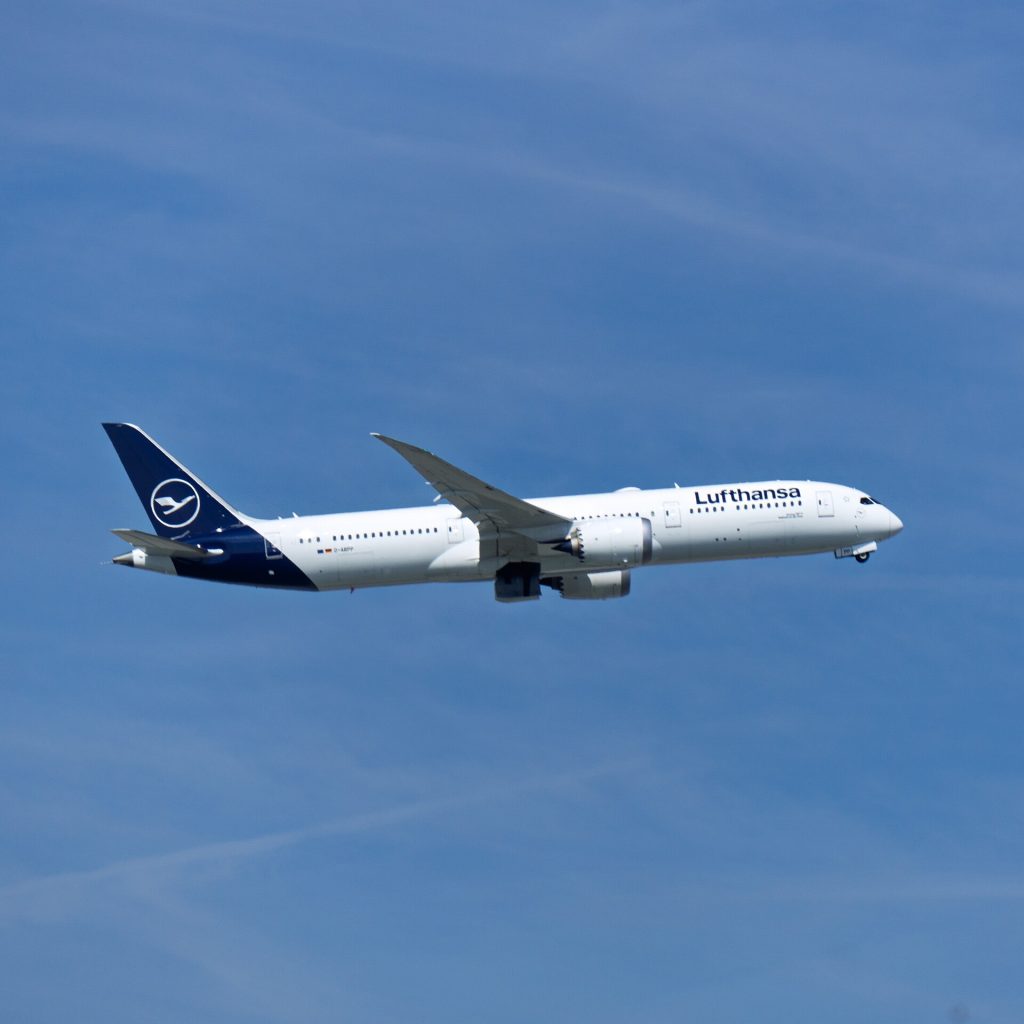
JobsOhio confirmed that Lufthansa will launch nonstop service between Columbus (CMH) and Frankfurt (FRA) from 5 May 2027. The route will operate three times weekly, on Wednesdays, Fridays and Sundays, with Columbus departures in the afternoon and arrivals into Frankfurt the following morning. It is the first-ever nonstop flight between Columbus and Europe, and Ohio's first nonstop to Germany.
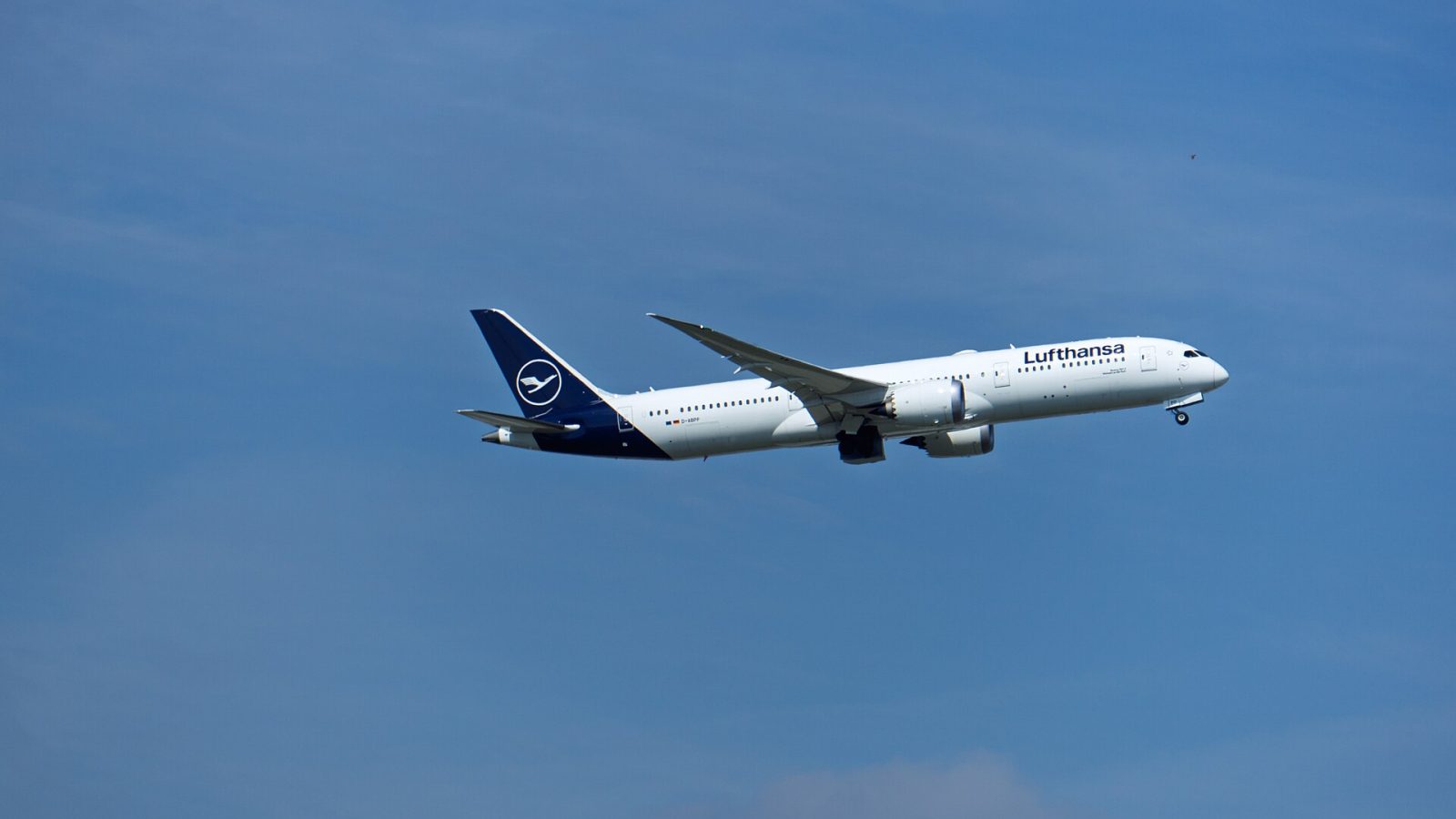
Lufthansa has assigned a Boeing 787-9 in its Allegris cabin configuration to the route, as confirmed by both JobsOhio and Europe Says, citing US DOT T-100 segment data. In that configuration, Europe Says reports, the aircraft is fitted with 28 business class suites, 28 premium economy seats and 231 economy seats, giving a combined total of 287 seats. Drawing on US DOT T-100 segment data, Europe Says puts the distance in each direction at roughly 4,248 miles (6,837 km), with a westbound sector of approximately 8 hours 45 minutes and an eastbound sector of 7 hours 55 minutes.
A revenue guarantee for the route has been confirmed to exist, though Europe Says notes that its specific value has not been disclosed.
Aircraft Search carries details on the Boeing 787-9 and other widebody types appearing in this season's filings.
The Hub Is Still in the Room
Whether these are purely origin-and-destination services is a question that merits an honest answer: not entirely. JobsOhio notes that onward connections through Frankfurt open up more than 130 destinations across Europe, the Middle East, Africa and India to Columbus passengers. That hub logic runs through Lufthansa's own public positioning, expressed by Dirk Janzen, Vice President, Passenger Sales, the Americas, Lufthansa Group: "We are very pleased to connect Columbus and the state of Ohio directly with our Frankfurt hub, the first intercontinental flight from this great city."
That word, hub, matters. A 287-seat Boeing 787-9 operating three times weekly on a route that has never before seen transatlantic nonstop service is not a bet on point-to-point demand alone. The aircraft needs to fill seats from both ends, and Frankfurt's network depth is part of what makes that viable. The route is as much an extension of Lufthansa's hub spoke model into a new catchment area as it is a pure secondary-city play.
That tension is not unique to Columbus. Simple Flying reported that approximately 37 new transatlantic routes were launched by around 14 airlines in summer 2026, the largest single-year burst on record according to MiGFlug. Many of those routes shared the same logic: a secondary city with identifiable corporate or ethnic travel demand, paired with a major European hub that absorbs connecting traffic from both directions.
Phoenix and the Wider Pattern of Secondary-City Transatlantic Routes
ETurboNews reported that Lufthansa has also announced a new nonstop Munich–Phoenix route beginning 3 August 2027, operating three times weekly on a 293-seat Airbus A350-900. Phoenix, like Columbus, is a large American city with established corporate links to German industry. The pattern Lufthansa is tracing across both announcements is consistent: secondary cities with specific bilateral economic relationships, served at frequencies that limit the carrier's exposure while still generating a network presence.
The wider demand picture complicates the case for new capacity. ETurboNews reported that, measured against the same period in 2024, German arrivals to the United States dropped 23.9% across January through August 2026, arriving at a total of 983,296. ETurboNews also reported that, in July 2026, departures by US citizens to Europe were down 1.2% year on year, a contraction that sat alongside a 2.3% rise in total US citizen international departures during the same month. Neither of those trends makes a simple argument for adding transatlantic seats, which is precisely why the corporate-travel anchor matters so much to both routes.
Why the Corporate Argument Holds
The economic data around the Columbus route is unusually specific. JobsOhio states that German companies support approximately 41,000 jobs across Ohio. In the same month as the Lufthansa route announcement, Bayer announced a new pharmaceutical plant in New Albany, Ohio. These are not soft indicators. They are the kind of verifiable, recurring travel demand, management visits, supply-chain meetings, regulatory consultations, that fills business class cabins on thin-frequency services.
Daren Griffin, President of the Columbus Regional Airport Authority, set out what the announcement means in his own words: "Today's announcement is a tremendous milestone for the Columbus Region and Ohio. At a time of extraordinary transformation for our airports and our region, this new service strengthens our state's connections to the global economy and creates new opportunities for communities across Ohio."
The 28 business class suites on the configured 787-9 are not coincidental. They reflect a deliberate revenue calculus: a compact premium cabin selling high-yield fares to corporate travellers, underwritten by a larger economy section that benefits from Frankfurt connectivity to fill from across the network.
What the A321XLR Changes, and What It Does Not
One aircraft type that keeps appearing in the broader secondary-city discussion is the Airbus A321XLR. Simple Flying reported that the manufacturer quotes a range of up to 4,700 nautical miles for the type, together with a maximum flight time of approximately 11 hours. Those performance figures bring a large number of secondary-city city pairs within reach that previously demanded either a widebody or an intermediate stop. On thinner routes, a narrowbody operating with fewer seats and a lower cost base could fundamentally alter the viability calculation.
The Columbus route, however, is served by a 287-seat widebody, not a narrowbody. At three weekly frequencies, the carrier is committing meaningful capacity. That choice suggests Lufthansa sees enough demand to justify a widebody rather than waiting for a smaller, more efficient alternative.
The Bottom Line
Summer 2027 route filings do show airlines reaching into secondary cities, and the Columbus announcement is a genuine first: no European carrier has ever flown nonstop from that city. But the routing logic remains hub-dependent. Frankfurt's 130-plus onward connections are not a footnote to the Columbus service: they are part of its commercial foundation. Secondary-city ambitions, in 2027 as in previous cycles, still lean heavily on the connecting networks of major hubs to make the numbers work. For passengers in Columbus and Phoenix, that is good news: the nonstop is real, and the access it provides is genuine. The question of whether these routes eventually stand on local demand alone will take several seasons to answer.
This article draws on information from JobsOhio (Ohio state economic development body) and reporting by Europe Says (citing US DOT T-100 segment data), Simple Flying and eTurboNews.
Continue to follow The Aviation Hub for more analysis and insight.
Advertise with us Your brand, in front of an aviation audience Home page and in-article placements, sold directly, one advertiser per slot. From £250 a year. See the rates