Singapore Airlines Turbulence Accident: Final Report Released
 By The Aviation Hub
7 min read
Updated October 12, 2026
By The Aviation Hub
7 min read
Updated October 12, 2026 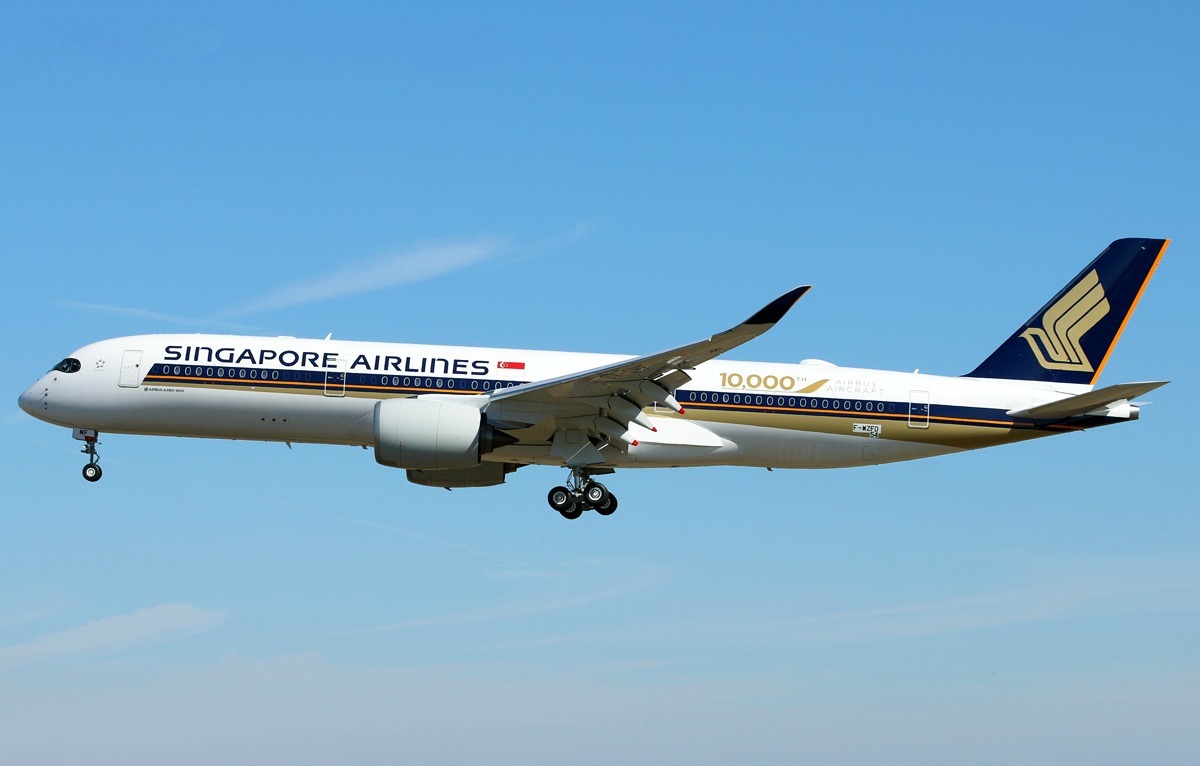
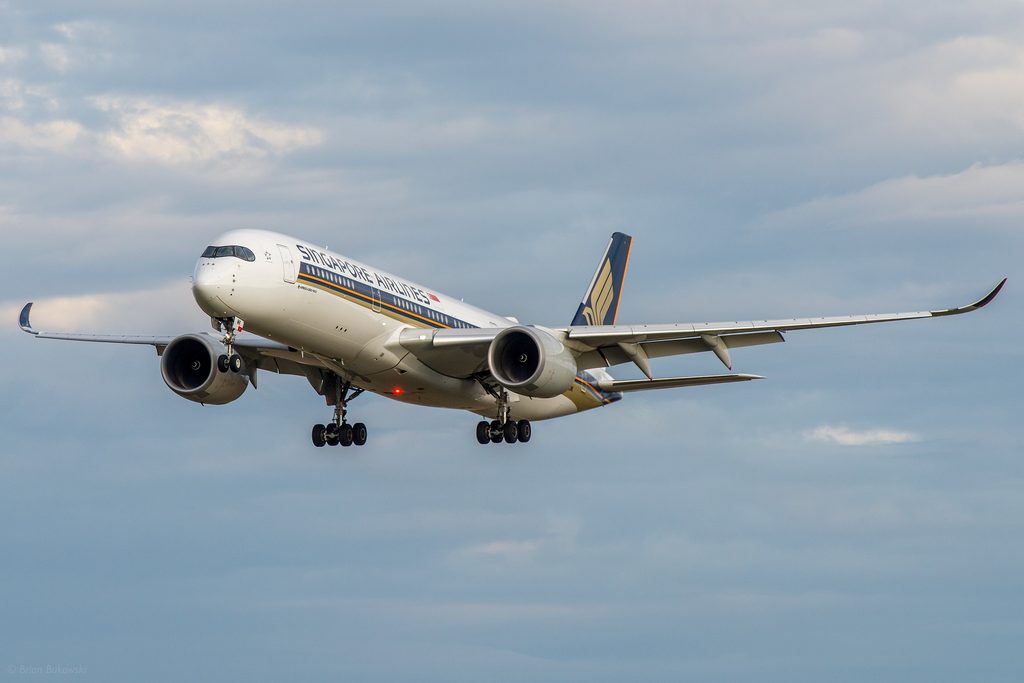
Singapore investigators have released their final report into a turbulence accident that injured a Singapore Airlines cabin crew member. The accident happened on 14 November 2025, aboard an Airbus A350-900 flying from Manila to Singapore.
The Transport Safety Investigation Bureau of Singapore (TSIB) dated its final report 5 October 2026. Notably, it describes a flight crew that followed the recommended weather avoidance margins and still could not escape the turbulence. As a result, the findings raise an uncomfortable question about how much protection those margins truly offer.
Five cabin crew members suffered injuries, including one who fractured an ankle. However, all 286 passengers escaped unhurt, and the aircraft landed safely without any damage.
An Evening Sector From Manila to Singapore
The A350, registered 9V-SHJ, departed Manila at about 0927 UTC as flight SQ919. On board were 286 passengers and 14 crew, with a planned flight time of 2 hours 55 minutes.
The captain, who held the role of Pilot in Command, flew the aircraft as Pilot Flying. Meanwhile, a Senior First Officer acted as Pilot Monitoring. Between them, the two pilots had more than 23,500 flying hours, including over 10,700 hours on the A350.
Because the encounter came at around 1952 local time, the final stage of the flight took place in darkness. That detail matters later in the story.
Storms on the Briefing Charts
Before departure, the crew reviewed the weather in their briefing package. The prognostic chart forecast occasional cumulonimbus clouds along the entire route, with tops reaching up to 51,000 feet.
In forecasting terms, “occasional” means storm clouds could cover between 50% and 75% of the marked area. However, the chart did not show exactly where individual cells would form. Instead, crews rely on onboard weather radar to find and avoid them.
Additionally, an electronic weather tool on the pilots’ tablets flagged likely weather in the second half of the flight, from about 1120 UTC. The pilots shared this with the Cabin Crew in Charge during the briefing. So the whole crew knew to expect weather near the end of the trip.
The Crew’s Assessment at 40,000 Feet
At about 1140 UTC, the aircraft was cruising at 40,000 feet when the pilots spotted weather around 80 nautical miles ahead. Their navigation displays showed it as striped green returns.
On the Singapore A350, that striped pattern indicates weather lying more than 4,000 feet above or below the aircraft. Using the radar’s elevation function, the crew estimated the tops at roughly 30,000 feet.
That left a buffer of 10,000 feet above the weather. Since Airbus and the operator recommend at least 5,000 feet of clearance above the “area of greatest threat”, the pilots saw no need to deviate.
Even so, they switched on the seat belt signs as a precaution. They also made an announcement to passengers and asked the cabin crew to continue their service with caution. The flight then held its planned track.
A Gentle Descent Over the Weather

At about 1151 UTC, air traffic control told the crew to descend from 40,000 feet to 34,000 feet. By then, the aircraft sat roughly 20 nautical miles short of the radar returns. The pilots checked the weather again and reached the same conclusion about the tops.
To protect their margin, the captain set a shallow descent rate of 700 feet per minute. A typical rate of about 1,000 feet per minute would have brought the aircraft closer to the cloud sooner. Instead, the gentler profile meant the A350 would cross the weather at around 37,000 feet, still more than 5,000 feet above it.
According to the captain, the aircraft was not flying in cloud. Despite the darkness, he could see clouds below and stars above, with no cloud overhead at all.
What the Flight Data Recorder Captured
At about 1153 UTC, the Singapore A350 was descending through 38,450 feet, directly above the green returns, when the turbulence struck.
Flight data shows vertical acceleration falling from +1G to +0.7G in 1.34 seconds. It then spiked to +1.89G in just 0.34 seconds. For the next 1.25 seconds, it swung between +1.89G and +1.5G, before ending that period at +1.66G.
Next, the reading dropped sharply to +0.24G over another 1.25 seconds. It finally settled at +1G about two seconds later, so the whole sequence lasted roughly six seconds.
Throughout the encounter, the autopilot stayed engaged. The aircraft then continued to Singapore and landed at about 1241 UTC without further incident.
However, investigators could not hear what happened on the flight deck. By the time they retrieved the cockpit voice recorder, it had already recorded over the relevant period.
Cabin Crew Took the Brunt
One Singapore Airlines cabin crew member fractured their right ankle. Under international rules, that serious injury led the TSIB to classify the event as an accident rather than an incident. Four other cabin crew suffered minor injuries.
That split tells its own story. Passengers sat strapped in under the illuminated signs, while crew members were still on their feet in the aisles. Consequently, the people continuing to work in the cabin carried almost all of the risk.
This pattern repeats across turbulence accidents worldwide. For example, a 2021 study by the US National Transportation Safety Board found that flight attendants accounted for most serious turbulence injuries on US airlines.
What Singapore Investigators Concluded
Satellite images and the Changi ground weather radar both placed the Singapore A350 in the vicinity of convective activity at the time. Therefore, the data supports the crew’s account that they overflew an area of storms.
Crucially, the TSIB credits the pilots with prudence. It highlights three precautions: the seat belt signs, the warning to cabin crew, and the shallow descent. Unfortunately, none of these steps could prevent the encounter.
The central finding is that the aircraft met convectively induced turbulence despite flying more than 5,000 feet above the detected weather. In its analysis, the bureau warns that “the effects of convective activity may extend significantly beyond the top of the weather” that radar detects.
As always, the TSIB stresses that its findings do not apportion blame or liability to any individual or organisation.
The Limits of the 5,000 Feet Margin
For many crews, the 5,000 feet margin works as a reliable rule of thumb. Yet the operator’s own manual already treats vertical avoidance with caution. In fact, it advises against overflying convective cloud in general, because some storms build quickly and unpredictably. Instead, it prefers lateral avoidance of at least 20 nautical miles where possible.
This Singapore Airlines flight shows why. Weather radar detects moisture, not turbulence itself. At high altitude, storm tops often contain ice crystals that reflect radar energy poorly, so the displayed top may sit below the true top of the cloud. Moreover, the energy a storm releases can disturb the air well above its visible summit.
As a result, the TSIB suggests crews add further protection whenever they choose to overfly weather. For instance, they could stop the cabin service and seat the cabin crew, rather than continuing with caution.
Safety Action at Singapore Airlines
Singapore Airlines has already acted on the lessons. On 21 November 2025, it reminded flight crews to apply the Secure Cabin Procedure whenever the captain judges that weather may pose a risk. Under that procedure, the seat belt signs stay on and everyone in the cabin remains seated through the climb. On arrival, passengers and cabin crew stay seated from top of descent until chocks in.
Then, on 26 December 2025, the airline shared turbulence case studies with cabin crew. These reinforced advice for crew to protect themselves whenever conditions make it difficult to continue working.
Finally, on 4 June 2026, Singapore Airlines reminded pilots that significant turbulence can occur outside identifiable cloud. Although manufacturer guidance sets 20 nautical miles laterally or 5,000 feet vertically, crews must remain mindful of turbulence beyond those zones. Given these steps, the TSIB made no safety recommendations to the operator.
A Run of Singapore Turbulence Reports
This report joins a series of recent TSIB turbulence investigations. In May 2026, the bureau published its final report into SQ321, the Boeing 777-300ER that met severe turbulence over Myanmar on 21 May 2024. One passenger died and dozens suffered injuries on that London to Singapore flight.
Similarly, in June 2026, the TSIB released its report into another Singapore Airlines A350-900, 9V-SMB. That aircraft encountered turbulence at around 27,000 feet on a flight from Singapore to Shanghai Pudong in June 2025.
Together, these cases show how convective weather continues to challenge carriers across Asia. They also show how regularly turbulence now features in the bureau’s recent work.
Lessons for Passengers Beyond Singapore
For travellers, the lesson remains simple. Keep your seat belt fastened throughout the flight, even when the signs are off. On this flight, belted passengers walked away unhurt, while the crew standing in the aisles did not.
For airlines like Singapore, the message runs deeper. Pilots can follow every recommended margin and still find rough air above a storm. Therefore, the safest cabin is often one where everyone, including the crew, is sitting down.
You can follow more incident and accident coverage on our Squawk 7700 page.
Continue to follow The Aviation Hub for more analysis and insight.
Advertise with us Your brand, in front of an aviation audience Home page and in-article placements, sold directly, one advertiser per slot. From £250 a year. See the rates