Starlink Proves Popular in the Airline Industry
 By The Aviation Hub
5 min read
Updated September 28, 2026

Starlink has reached another European milestone.
SWISS has introduced satellite internet on its first aircraft, an Airbus A320neo registered HB-JDM and named “Iseltwald”, which entered service on 28 September 2026 on flight LX1852 from Zurich to Thessaloniki.
The first phase covers just three A320 family aircraft.
However, it forms part of a far larger shift, as airlines across Europe, North America, the Middle East and Asia choose Starlink over legacy connectivity providers.
SWISS Brings Starlink On Board
SWISS describes the new service as “gate to gate, always online”.
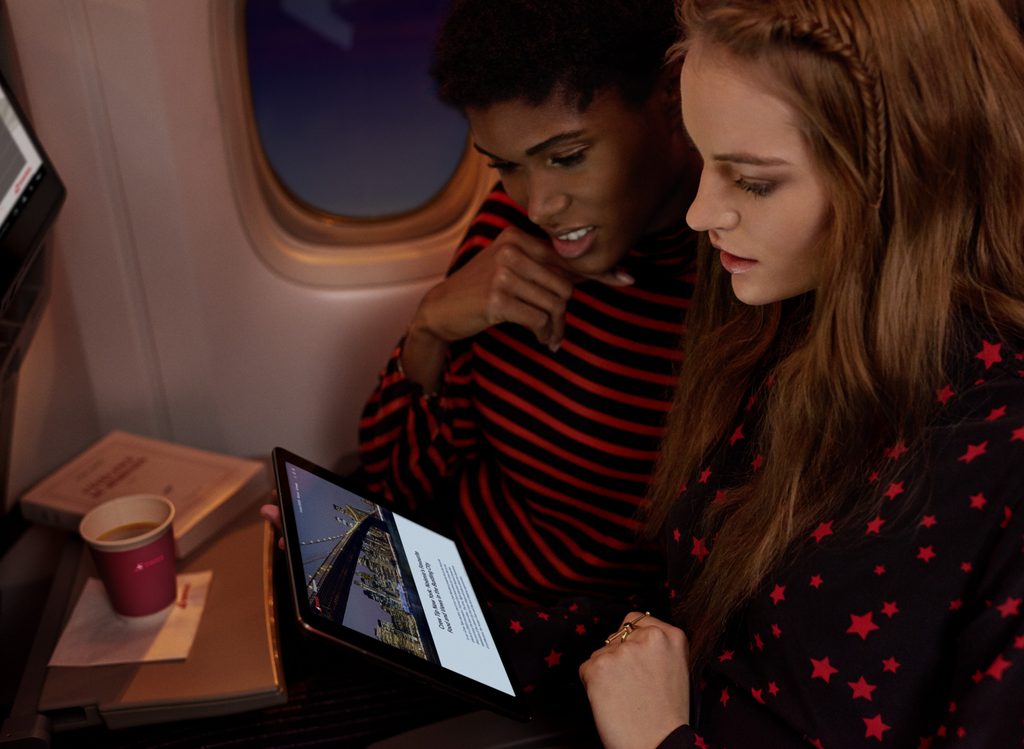
Passengers can connect from the moment they board until they reach the arrival gate, rather than waiting for the aircraft to climb above 10,000 feet.
Access is free for Miles & More members and Travel ID users in every cabin.
Passengers can message, share photos and use online services throughout the flight. SWISS has set some clear house rules, however.
Travellers must use headphones for audio and video, while voice calls, video calls and live streaming are not permitted.
The airline plans to complete the rollout across its entire fleet by the end of 2029.
That is a long runway, but it reflects the scale of the wider Lufthansa Group programme that SWISS now belongs to.
Lufthansa Group Commits to Starlink Across Its Airlines
SWISS is not acting alone.
The Lufthansa Group announced in January 2026 that it would install Starlink on approximately 850 aircraft across its airlines by 2029.
Lufthansa itself launched the service on an A320neo in August, and the programme now carries a single group brand.
The group rollout covers Lufthansa, SWISS, Austrian Airlines, Brussels Airlines, ITA Airways, Eurowings, Edelweiss, Discover Airlines, Air Dolomiti and Lufthansa City Airlines.
Mastercard sponsors the free access for loyalty members.
Dieter Vranckx, Chief Commercial Officer of the Lufthansa Group, said that with Starlink the group is “investing in the best product on the market”.
That is a notable statement from a group that previously relied on Panasonic Avionics and Viasat, including the European Aviation Network on short haul flights.
The decision makes it the largest European airline group to commit to the technology, and it replaces a patchwork of connectivity products with one consistent experience.
Why Airlines Are Choosing Starlink
The appeal comes down to physics.
Traditional geostationary satellites orbit roughly 35,800 kilometres above the Earth. Starlink satellites operate in low Earth orbit at around 550 kilometres, and SpaceX now has more than 11,000 in space.
That shorter distance transforms the passenger experience.
Latency typically sits between 20 and 50 milliseconds, compared with 600 milliseconds or more on geostationary systems.
In practical terms, video streaming, cloud working and online gaming behave much as they would on the ground.
Bandwidth is the second major factor.
American Airlines says each antenna can deliver up to 1 Gbps, while Virgin Atlantic quotes speeds above 100 Mbps per passenger device.
For many travellers, that outperforms their home broadband.
The final factor is commercial.
Starlink has helped push the industry towards free connectivity.
Rather than selling hourly passes, most operators now offer the service for free or in exchange for a loyalty sign up. That gives carriers a powerful tool to grow their frequent flyer databases.
British Carriers Join the Race
The United Kingdom has become a battleground for Starlink.
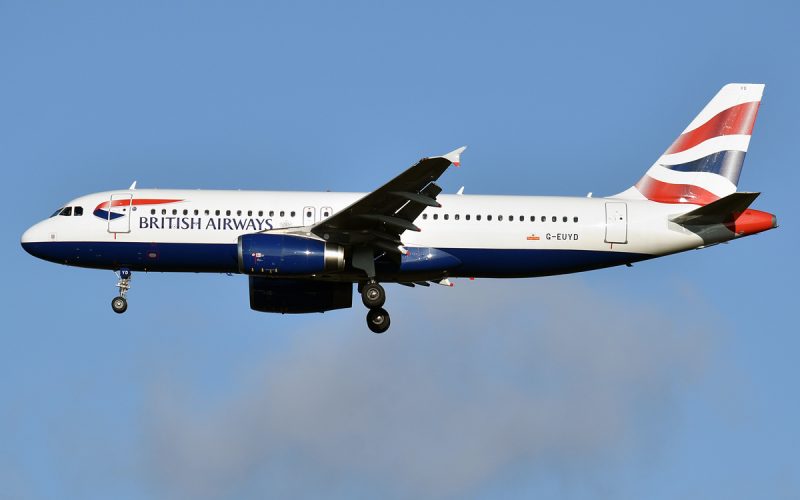
British Airways signed a deal in November 2025 to provide free WiFi to every customer in every cabin, and its first equipped flight operated in March 2026.
BA became the first UK airline to launch the service, beginning with its Boeing 787 fleet.
Virgin Atlantic responded quickly.
The airline brought its launch forward to May 2026, starting on the flagship VS153 service between London Heathrow and New York JFK.
Virgin plans to equip all 12 Airbus A350-1000 aircraft first, followed by its Boeing 787-9 fleet and then its Airbus A330neo aircraft, with full fleet coverage in 2027.
Juha Järvinen, Chief Customer Officer at Virgin Atlantic, has stressed that Virgin was the first airline to announce free WiFi across its whole fleet.
Competition between the two London carriers will likely speed up installations on both sides.
United and American Place Big Bets on This Technology
In the United States, United Airlines has moved faster than any other carrier. United began with its regional jets and has since moved on to its mainline fleet.
Independent trackers show more than 500 United aircraft now carry the system, with the airline targeting around 1,000 aircraft by the end of 2026.
American Airlines joined the list in May 2026.
The carrier will equip more than 500 narrowbody aircraft, including new Airbus A321neo and A321XLR deliveries, with installations starting in the first quarter of 2027.
Heather Garboden, American’s Chief Customer Officer, said the addition of Starlink “solidifies American as a leading airline in keeping passengers connected in flight”.
Southwest Airlines, Alaska Airlines and Hawaiian Airlines have also committed to the technology.
Hawaiian was one of the earliest adopters and proved the system on long transpacific sectors.
A Global Starlink Network Takes Shape
Beyond Europe and North America, the customer list keeps growing.
Qatar Airways, Emirates, Korean Air, Singapore Airlines, WestJet and ZIPAIR have all signed up. airBaltic now offers the service across its entire Airbus A220-300 fleet.
The low cost sector is also moving. Indigo Partners has agreed a deal covering more than 1,000 aircraft across Wizz Air, Frontier, Volaris, JetSMART and Cebu Pacific.
That shows the service is no longer a premium differentiator reserved for flag carriers.
What Comes Next for Starlink
There are still challenges ahead. Installation requires aircraft downtime, and airlines must balance retrofits against peak summer schedules.
Certification for each aircraft type also takes time, which explains why rollouts such as the SWISS programme stretch to 2029.
Some airlines also remain wary of relying on a single supplier.
Rival providers, including Viasat, Intelsat and Eutelsat OneWeb, continue to invest heavily in their own low Earth orbit and multi orbit networks.
Even so, the direction of travel is clear.
With the Lufthansa Group, British Airways, Virgin Atlantic, United and American all on board, Starlink has become the benchmark for inflight connectivity.
The arrival of HB-JDM at SWISS is one more aircraft in a fast expanding fleet, and passengers will soon expect this level of service on every flight.
Continue to follow The Aviation Hub for more analysis and insight!
Advertise with us Your brand, in front of an aviation audience Home page and in-article placements, sold directly, one advertiser per slot. From £250 a year. See the rates