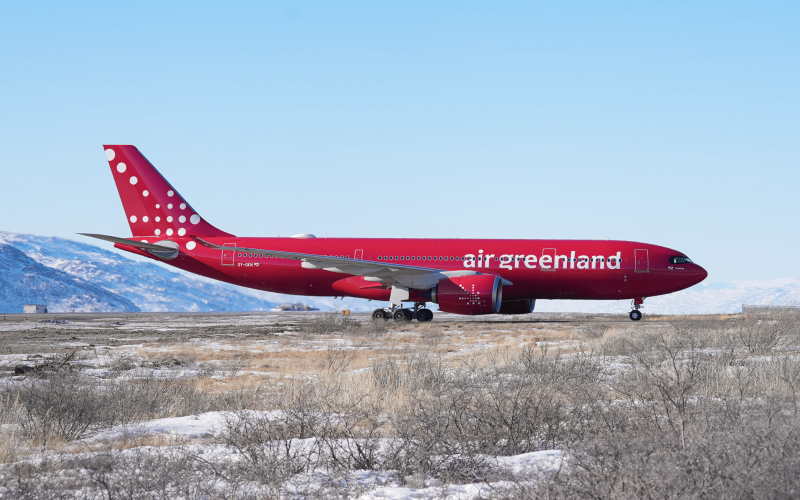
Stuttgart’s airport sits on the Filder plateau south of the city, beside the A8 motorway and the Messe Stuttgart exhibition centre. Stuttgart Airport handled close to 9.6 million passengers in 2025 and serves one of Germany’s richest industrial regions, home to Mercedes Benz, Porsche and Bosch. It is a point to point airport rather than a hub, built around Eurowings, holiday carriers and a heavy flow of traffic to Turkey.
Stuttgart Airport at a Glance
The IATA code is STR and the ICAO code is EDDS. Stuttgart Airport lies about 6 miles (10 km) south of the city centre in a straight line, or around 8 miles (13 km) by road, at an elevation of 389 metres (1,276 feet). It has a single runway and four passenger terminals, numbered 1 to 4.
Traffic reached about 9.6 million passengers in 2025, up almost 5 per cent on the year before but still below the 2019 peak of 12.7 million. Eurowings carries around 40 per cent of passengers, with SunExpress, Condor and TUIfly also basing aircraft here. Flughafen Stuttgart GmbH runs the airport and is owned 65 per cent by the state of Baden Wurttemberg and 35 per cent by the city. Terminal guides and parking are on the airport’s official website.

How Stuttgart’s Airport Came to Be
Stuttgart’s first airport was at Boblingen, west of the city, which served the region from the 1920s. The operating company traces its roots to Luftverkehr Wurttemberg AG, founded in 1924. As aircraft grew, Boblingen became too small, and work began on the Filder site in 1939.
The war intervened, and the new field opened for civil flights in 1948, the same year its runway was extended to 1,800 metres. Further extensions took it to 2,250 metres in 1961 and to its current length in 1996. During the Cold War the United States Army shared the airfield, and it still runs a small helicopter base on the site.
In 2014 the airport added the name of Manfred Rommel, a popular former mayor of Stuttgart and son of the wartime field marshal. In 2016 the airport rebranded simply as Stuttgart Airport. The terminals have grown in stages, and the newest buildings now sit in a row facing the apron.
Runways at Stuttgart Airport
Stuttgart Airport has one runway, 07/25, which is 3,345 metres (10,974 feet) long and 45 metres wide with a concrete surface. That length handles any type the airport is likely to see, from regional turboprops to wide bodies on charter or diversion flights.
Prevailing westerly winds mean runway 25 is in use most of the time, with arrivals approaching from the east over the Neckar valley and departures climbing out towards the west. A single runway limits peak capacity, but current traffic is well below what it can handle.
A second runway has been ruled out for the foreseeable future. Night restrictions are strict, with most scheduled flights barred in the late evening and early morning to protect surrounding towns. The runway was renovated in 2020, when the full closure phase was brought forward to April during the pandemic lockdown.
Terminals and Airlines
The four terminals at Stuttgart Airport stand side by side and share a single landside area, so walking between them is easy. Terminal 1 mainly handles Eurowings and Turkish Airlines. Terminal 2 serves Lufthansa and its Star Alliance partners, while Terminal 3 hosts TUIfly, KLM and others. Terminal 4 is a basic building used mostly for holiday charters and is due to be rebuilt.
Eurowings dominates the schedule with Airbus A319 and A320 aircraft on domestic and European routes. SunExpress flies Boeing 737-800 and 737 MAX 8 jets to Turkey, and Condor and TUIfly serve holiday markets around the Mediterranean and the Canary Islands. Turkish Airlines, Pegasus and AJet add further Turkish capacity.
Network carriers link Stuttgart with their hubs. Lufthansa flies to Munich, KLM to Amsterdam, Swiss to Zurich, Austrian to Vienna and Turkish Airlines to Istanbul. Lounges are modest, reflecting a passenger mix dominated by short business trips and holidays.
Routes and Destinations
In 2023 Berlin was the busiest domestic route, followed by Hamburg and Frankfurt, although Lufthansa has since dropped its Frankfurt flights. Business travel from the region’s car and engineering firms keeps these routes strong, although rail competes hard on shorter trips. Internationally, Palma de Mallorca, Istanbul and London have long ranked among the leaders.
Turkey is a market in its own right. Baden Wurttemberg has a large Turkish community, and flights to Istanbul, Antalya, Izmir, Ankara and many smaller cities run year round. Summer adds a full spread of Spanish, Greek and Italian beach destinations, while winter shifts towards the Canary Islands and Egypt.
Long haul service ended in 2024, when Delta stopped its route to Atlanta. That leaves Stuttgart Airport without a direct intercontinental link, so passengers connect through Munich, Amsterdam, Zurich, Vienna or Istanbul, or take the train to Frankfurt.
Getting to and from Stuttgart Airport
S Bahn lines S2 and S3 run from the station beneath the terminals to Stuttgart Hauptbahnhof in about 30 minutes. That is the quickest public option and costs only a few euros, making it the cheapest sensible choice for most travellers. Since 2021 the U6 Stadtbahn line has also served the airport and the trade fair.
A new long distance station is part of the Stuttgart 21 and Wendlingen to Ulm rail projects. Once complete, it will put Stuttgart Airport on the high speed network, but the airport section has suffered long delays and a firm opening date is still awaited.
By road, the A8 motorway runs along the northern edge of the site, with the B27 linking to the city centre. Taxis take 20 to 30 minutes to the centre and cost roughly €40 (about £35). Several multi storey car parks sit next to the terminals, and FlixBus coaches stop on the airport grounds.
Spotting and Photography
Stuttgart Airport has a loyal spotting community. The fields and footpaths along the south side of the runway can give open views, with the sun behind the camera for much of the day. With runway 25 in use, aircraft on approach pass over open countryside east of the field, which suits shots of arrivals.
Traffic is dominated by Eurowings and SunExpress narrow bodies, but variety comes from the Turkish carriers, the occasional wide body charter and the military and police helicopters based on site. Big trade fairs at the neighbouring Messe can also bring a stream of business jets.
German police take security seriously. Stay on public land, keep clear of fences and access roads, and do not use drones anywhere near the airport.
What Comes Next
The main project is the rebuild of Terminal 4, which will replace the basic charter building with a modern facility. The long awaited rail station will matter more, giving the airport direct high speed links across southern Germany once it finally opens.
Growth is constrained by politics rather than concrete. A second runway is off the table, night rules are strict, and climate pressure weighs on short domestic flights. Traffic is recovering steadily, but Stuttgart Airport may not regain its 2019 peak for several years. The verdict is a well located, efficient regional airport with room to grow inside its current footprint. See how it fits into the German network on the Airports of the World map.
Continue to follow The Aviation Hub for more analysis and insight.
Advertise with us Your brand, in front of an aviation audience Home page and in-article placements, sold directly, one advertiser per slot. From £250 a year. See the rates