
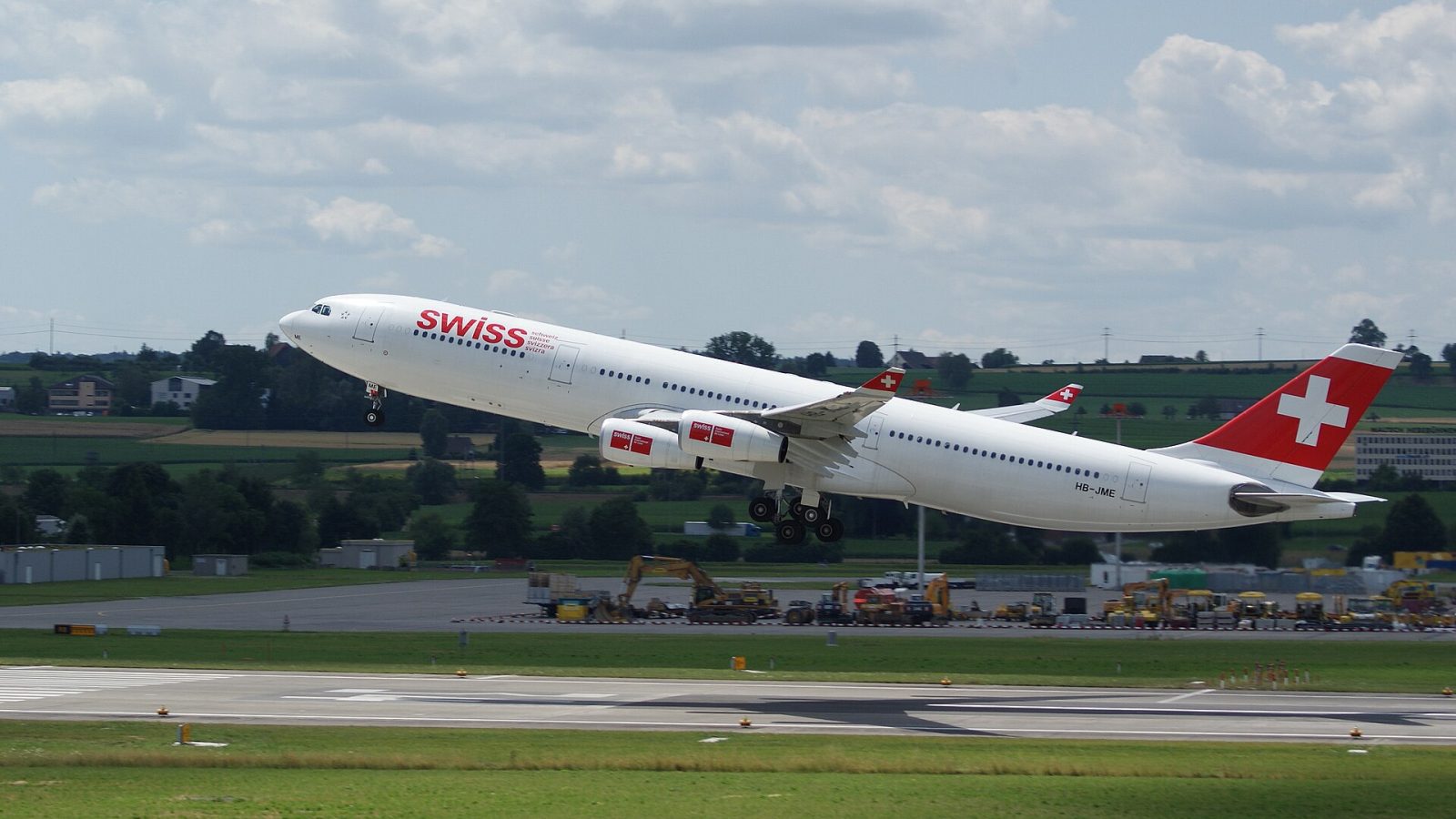
The SWISS Airbus A340 fleet is being retired after 23 years, with the first of four aircraft standing down on 14 October 2026. The move marks the end of four-engine, long-haul operations at the Swiss carrier.

What Is Happening to the SWISS Airbus A340 Fleet
Aviacionline reports that SWISS is beginning the definitive retirement of its four Airbus A340-300s. The first to go was HB-JMB, which operated its final flight from Zurich Airport (ZRH) to Enschede in the Netherlands on 14 October.
The three remaining aircraft, HB-IFA, HB-IFB and HB-IFC, are still flying as of the time of writing. According to Aviacionline, SWISS has not yet announced official retirement dates for these three aircraft, as their withdrawal depends on the delivery of new jets.
Where the Remaining A340-300s Still Fly
The three active A340-300s are operating routes to Chicago, Montreal, Johannesburg, Dubai, Mumbai, Shanghai and Málaga. These are some of SWISS's most demanding long-haul destinations, which explains why the carrier has kept the type in service while awaiting replacements.
The A340-300s were configured with First, Business, Premium Economy and Economy cabins. Power came from four CFM56-5C turbofan engines, the same generation of powerplant that the wider industry is now moving away from in favour of more efficient options.
The Wider Lufthansa Group Strategy
The retirement is part of a group-wide move. As Aviacionline notes, the Lufthansa Group is replacing its older four-engine jets with more fuel-efficient twin-engine aircraft, principally the Airbus A350 and the Boeing 787 Dreamliner.
Lufthansa itself is also in the middle of its own A340 wind-down. One Mile at a Time reports that the parent airline operated its final passenger flight with the Airbus A340-600 on 18 October 2026, with flight LH419 from Washington Dulles (IAD) to Frankfurt (FRA) marking the occasion. Lufthansa still operates a number of A340-300s, which are expected to retire at some point in 2027.
One Mile at a Time notes that Lufthansa had originally intended to retire its A340-600s at the start of the pandemic, but brought them back as demand recovered and delivery delays mounted. The A340-600 retirement was ultimately made possible by incoming Airbus A350-1000s joining the fleet.
What Replaces the A340s at SWISS
SWISS is standardising its long-haul fleet around twin-engine aircraft. The carrier currently operates 12 Boeing 777-300ERs and three Airbus A350-900s, with two more A350-900s pending. According to data from Cirium Fleets Analyzer, cited by Aviacionline, those two pending A350-900s were expected to arrive in November and December.
Alongside the fleet transition, SWISS is also modernising the cabins of its Airbus A330-300s and Boeing 777-300ERs. The broader fleet includes 25 Airbus A220-300s, 15 A320neos and seven A321neos among its short and medium-haul aircraft.
Why the A350 Is Taking Over
Aviacionline highlights that the aerodynamics of the A350 deliver better fuel efficiency and reduce both carbon emissions and the noise footprint compared with the A340. Running four engines instead of two carries a significant fuel penalty over long sectors, and that cost has become harder to justify as modern twins have grown more capable.
Readers who want to explore the full specifications of the Airbus A340-300 or any of the aircraft joining the SWISS fleet can use our Aircraft Search tool.
The Bottom Line
The retirement of the SWISS Airbus A340 fleet closes a 23-year chapter at the airline and reflects the direction of the whole Lufthansa Group. Four-engine widebody jets are disappearing from the European major carriers as deliveries of A350s and 787s gradually fill the gaps left by delays and pandemic-era groundings.
With three A340-300s still active and their retirement tied to incoming deliveries, the precise timeline remains open. What is clear is that the type's days at SWISS are numbered, and the A350-900 will carry the long-haul load going forward.
Continue to follow The Aviation Hub for more analysis and insight.
Advertise with us Your brand, in front of an aviation audience Home page and in-article placements, sold directly, one advertiser per slot. From £250 a year. See the rates


It’s bittersweet to see the A340 retire from the SWISS fleet. These aircraft have played a significant role in connecting travelers to destinations worldwide. Excited to see what the future holds for their fleet, but the A340 will surely be missed for its unique charm and reliability!
It’s a bittersweet moment to see the A340 retire from SWISS. This aircraft has been part of so many memorable journeys for passengers and crew alike. The end of an era definitely makes one nostalgic for all those long-haul flights. Looking forward to what the future holds for SWISS and their fleet!
It’s truly the end of an era! The Airbus A340 has been such a distinctive presence in SWISS’s fleet. I have great memories of flying on them, and it’s bittersweet to see them retired. Looking forward to what the future holds for the Swiss fleet, but the A340 will certainly be missed!
What a bittersweet moment for aviation enthusiasts! The retirement of the SWISS Airbus A340 fleet truly marks the end of an era. These aircraft have served beautifully, and it’s hard to imagine the skies without them. Excited to see what the future holds for SWISS and their next chapter!
What a significant moment in aviation history! The retirement of the SWISS Airbus A340 fleet truly marks the end of an era. I’ve always admired the A340 for its long-haul capabilities and unique four-engine design. It’ll be interesting to see how SWISS evolves its fleet moving forward. Thanks for sharing this insightful post!
What a bittersweet moment for aviation enthusiasts! The A340 has always been a favorite of mine due to its unique four-engine design and long-haul capabilities. It’s hard to believe that such an iconic aircraft is retiring from the SWISS fleet. Thanks for sharing the history and significance of this milestone!
What a bittersweet moment for aviation enthusiasts! The retirement of the SWISS Airbus A340 marks the end of an era filled with memorable flights and experiences. It’s incredible to think of all the passengers who have traveled the world on these iconic aircraft. Thank you for sharing the history and significance of this transition!