SWISS A340 Retirement: What the End of Four Engines Means
SWISS and Lufthansa are both retiring their Airbus A340 fleets, closing a 23-year chapter in four-engine long-haul flying across the group.
 By The Aviation Hub
5 min read
By The Aviation Hub
5 min read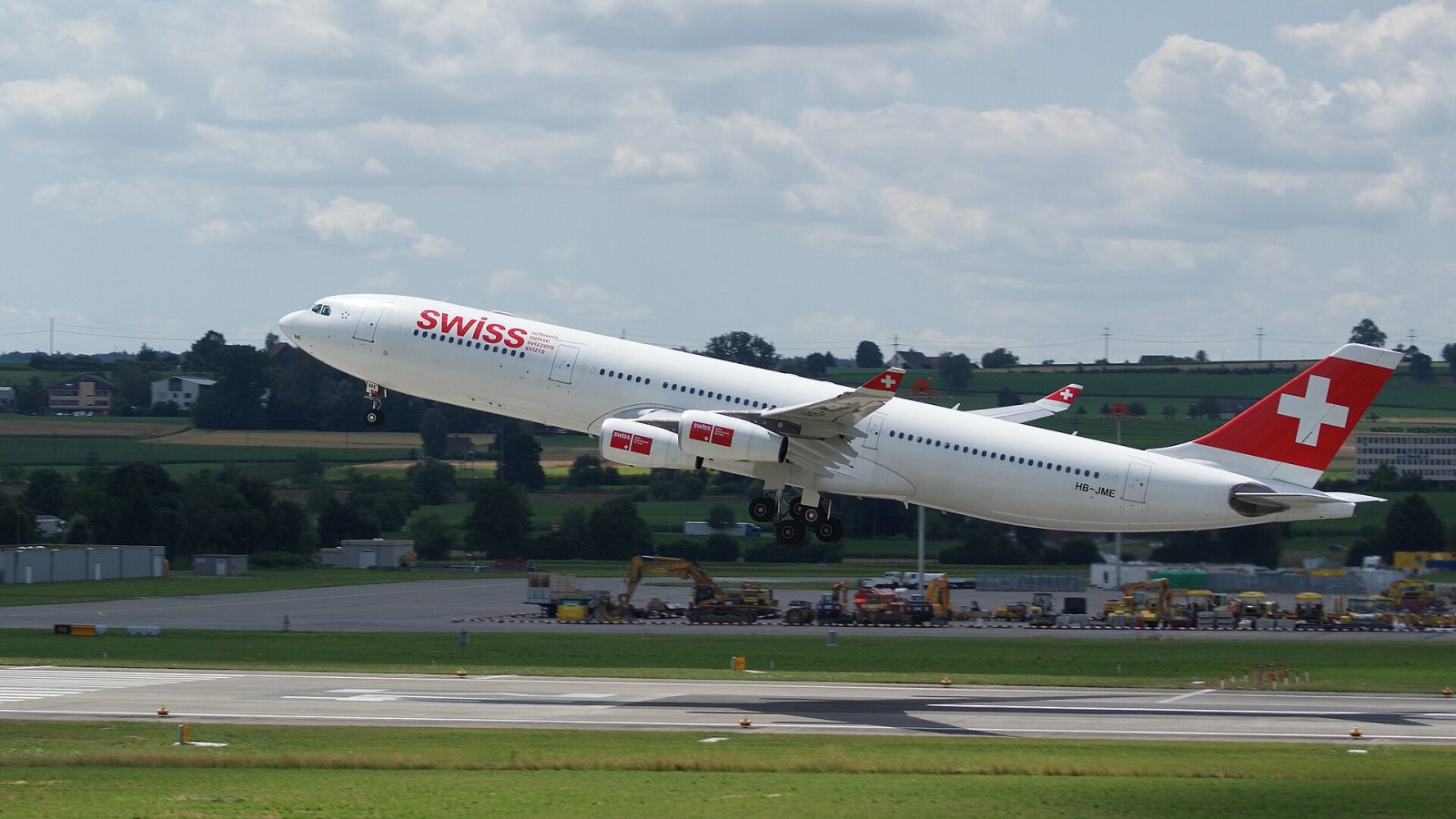
The Airbus A340's time at Lufthansa Group is almost up. Aviacionline reports that SWISS has begun the definitive retirement of its four remaining A340-300s, while Aviation24.be confirms that Lufthansa operated its last A340-600 passenger service on 18 October 2026, with flight LH419 from Washington Dulles (IAD) arriving in Frankfurt (FRA) the following morning.

Why the Airbus A340 Retirement Matters
The A340 was for many years the backbone of European long-haul flying. Its four CFM56-5C engines and exceptional range made it a staple on thinner routes that twin-engine aircraft could not serve under the extended-range rules of an earlier era. Its retirement at SWISS and Lufthansa is therefore not simply a fleet tidying exercise. It signals that the economics of four-engine flying have become impossible to defend against a new generation of twins.
Aviation24.be notes that the broader retirement programme forms part of a group-wide effort to reduce costs and simplify operations. Lufthansa Group cited higher fuel costs and financial pressure from industrial disputes as factors in accelerating its fleet and capacity measures. The A340, which burns fuel across four engines where a modern twin burns it across two, was always the most exposed type once that pressure intensified.
What the Fleet Figures Show
The scale of change at SWISS is striking when set against its current fleet. Aviacionline reports that SWISS now operates 12 Boeing 777-300ERs, three Airbus A350-900s with two more pending, and is standardising its long-haul operation around twin-engine types. The A340-300s being retired, registered HB-JMB (already departed on 14 October), HB-IFA, HB-IFB and HB-IFC, represent the last four-engine widebodies in the carrier's inventory.
Delivery timing is central to how fast the remaining three aircraft can follow HB-JMB out of service. According to data from Cirium Fleets Analyzer cited by Aviacionline, the two pending A350-900s were expected to arrive in November and December. Until those aircraft are in service, the three remaining A340-300s continue to operate routes to Chicago, Montreal, Johannesburg, Dubai, Mumbai, Shanghai and Málaga.
At Lufthansa, the picture for the A340-600 is cleaner. Aviation24.be reports that the airline took delivery of 24 A340-600s between 2003 and 2009, and that by the final weeks only four remained active on transatlantic services from Frankfurt to New York JFK and Washington Dulles. The retirement had been postponed repeatedly, first by the pandemic and then by delivery delays on replacement types including the Boeing 787-9.
A Retirement Delayed by Everyone Else's Problems
The story of the A340's extended life at Lufthansa Group is largely a story of supply chain failure elsewhere. One Mile at a Time notes that Lufthansa had intended to retire the A340-600 at the start of the pandemic, grounded them, then brought them back as demand recovered faster than new aircraft arrived. Delays to Boeing 777X deliveries, Airbus A350s and Boeing 787s, partly due to problems with Lufthansa's Allegris cabin product, all played a role in keeping the type flying longer than planned.
Aviation24.be confirms that it was only the arrival of additional Boeing 787-9s and Airbus A350-900s that finally allowed the group to proceed with its withdrawal. The A340 did not survive on its own merits. It survived because the alternatives were not ready.
What Is Still Not Known
SWISS has not scheduled an official date for the departure of its three remaining A340-300s. Aviacionline reports that the timing is subject to the delivery of new aircraft, which introduces real uncertainty. Aircraft delivery schedules across the industry have proved unreliable, and a further slip in A350 deliveries could extend the A340's service life at SWISS into 2027.
Lufthansa's smaller A340-300s also remain in service. One Mile at a Time reports that those aircraft are expected to be retired at some point in 2027, though no firm date has been set. The group therefore still operates four-engine passenger aircraft: the A340-300, Airbus A380 and Boeing 747 all remain in the fleet, as Aviation24.be notes.
The Broader Context for Four-Engine Jets
The A340's retirement at SWISS sits within a trend that has reshaped long-haul aviation across the past decade. The efficiency advantage of modern twins is well established. Aviacionline notes that the aerodynamics of the A350 deliver better fuel efficiency and reduce carbon emissions and noise compared with the A340. That gap has widened as fuel costs have risen and sustainability pressure on airlines has grown.
The A340-600 now flies in regular scheduled service only at Venezuela's Conviasa and Iran's Mahan Air, according to One Mile at a Time. For a type that was once the longest aircraft in the world before the Boeing 747-8 entered service, that is a remarkable contraction of relevance. You can track how operators across the industry are managing similar fleet transitions using our Aircraft Search tool.
What to Watch Next
The immediate question for SWISS is whether the two pending A350-900s arrive on schedule. If they do, the remaining three A340-300s should follow HB-JMB out of service before the end of the year. If deliveries slip, some of those routes to Chicago, Montreal and Johannesburg may need the old four-engine jets for longer than the airline would like.
For the Lufthansa Group as a whole, attention now shifts to the A340-300s at the parent carrier, which One Mile at a Time says are expected to retire in 2027, and to the pace of Boeing 777X deliveries that will eventually allow the 747 fleet to follow. The A340's departure is a milestone, but it is one chapter in a much longer modernisation story. April's group announcement, cited by Aviation24.be, made clear that fleet rationalisation is being driven by fuel costs and labour pressures as much as by any planned timetable.
The Bottom Line
The retirement of the Airbus A340 at SWISS and Lufthansa is the logical conclusion of an economics argument that was settled years ago. Four engines could not compete with two on fuel burn, and no amount of sentimentality changes that arithmetic. What makes this moment significant is not the retirement itself but the fact that it took supply chain delays, a pandemic, and years of deferred decisions to get here. The type leaves not because the airlines chose to move on, but because they finally had enough replacement aircraft to do so.
Continue to follow The Aviation Hub for more analysis and insight.
Advertise with us Your brand, in front of an aviation audience Home page and in-article placements, sold directly, one advertiser per slot. From £250 a year. See the rates