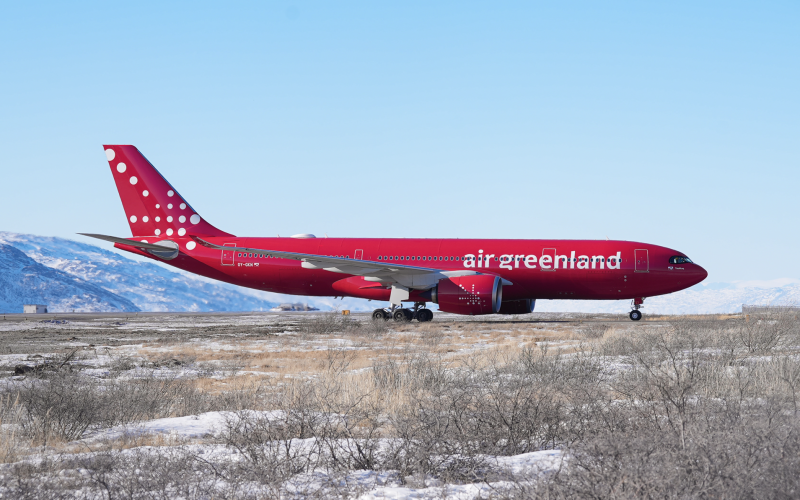
Few capital city airports sit as close to the centre as Estonia’s main gateway. Tallinn Airport lies on the eastern shore of Lake Ülemiste, a short tram ride from the medieval Old Town. It handled almost 3.5 million passengers in 2025. Officially named Lennart Meri Tallinn Airport, it has a reputation for short queues, quick transfers and a relaxed atmosphere that suits a small, digitally minded country.
Tallinn Airport at a Glance
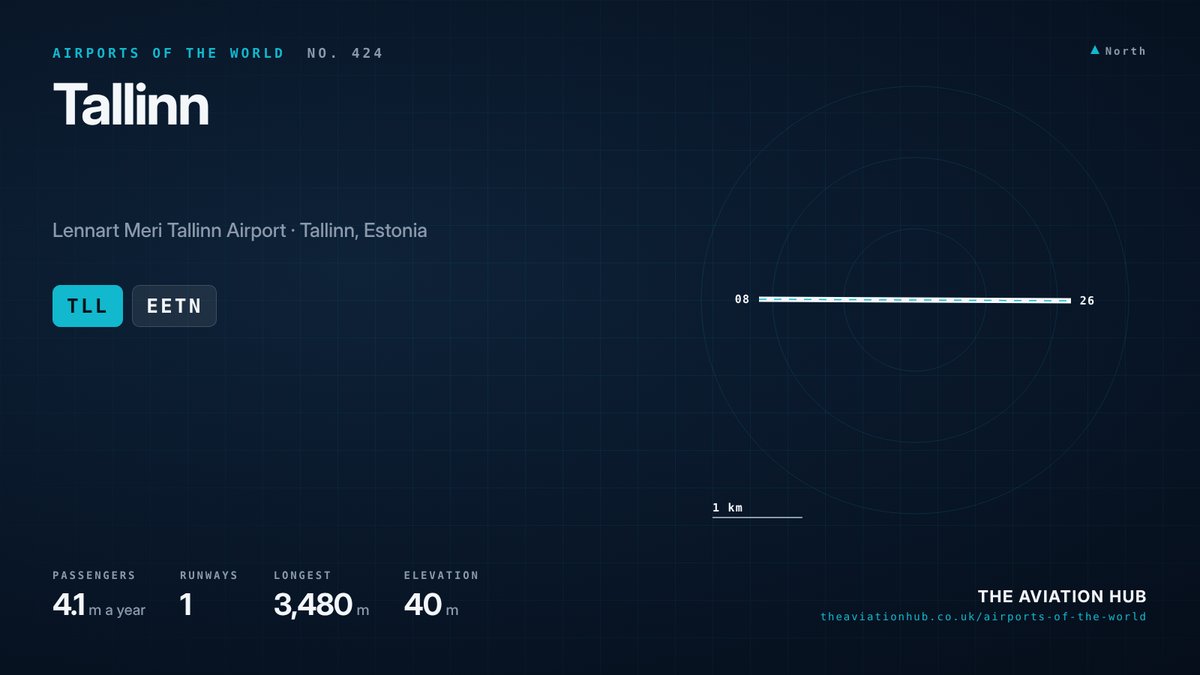
The IATA code is TLL and the ICAO code is EETN. Tallinn Airport sits about 3 miles (5 km) southeast of the city centre. Its elevation is 131 feet (40 metres). There is one runway and one passenger terminal with 17 gates, plus four cargo terminals used by operators including DHL, UPS and FedEx.
Traffic was about 3.49 million passengers in 2024 and slipped by around 4,000 in 2025. airBaltic, NyxAir and Airest use the field as a hub, with airBaltic carrying about 30 per cent of passengers. The state owned company Tallinn Airport Ltd operates the field. Flight information, parking and terminal maps are on the airport’s official website.
A Short History of Tallinn’s Airfield
Tallinn’s first main airport was Lasnamäe Airfield, where LOT Polish Airlines flew from 1932. A 1929 law allowed land to be taken for a public airport, and the current lakeside site was chosen. Flights began before the official opening on 20 September 1936. Early years brought colourful moments, including a Polish aerobatic aircraft that crashed into Lake Ülemiste during a 1938 display. The pilot survived.
Soviet rule shaped the next half century. In 1966 an Ilyushin Il-14 landed on the frozen lake short of the runway in near zero visibility, and passengers walked to the terminal across the ice. After independence, the 1990s brought several hijackings, including a 1993 Aeroflot flight that ended in Stockholm.
The field was known as Tallinn Ülemiste Airport until 2009. Lennart Meri, president from 1992 to 2001, had once given an interview in its toilets to highlight their poor state. After his death in 2006, a journalist proposed the airport be named after him. The change took effect in 2009, a year after a major terminal expansion.
Runways at Tallinn Airport
A single runway, 08/26, runs east to west. It measures 3,480 metres (11,417 feet) long and 45 metres (148 feet) wide, with an asphalt surface. An extension completed in 2016 made it the longest runway in the Baltic states. Six taxiways serve the strip.
Prevailing southwesterly winds mean runway 26 is the usual choice, with arrivals approaching from the east. Runway 08 takes over in easterly weather, bringing aircraft in over Lake Ülemiste and the southern edge of the city. Winter is the real test. Tallinn Airport runs a well drilled snow clearing and deicing operation, and it keeps schedules moving through conditions that would close many western European fields.
The runway length lets wide body jets operate with full loads, although most traffic is narrow body. With one strip, there is no parallel capacity, but movement levels remain well within limits.
Terminals and Airlines
The single passenger terminal was enlarged in 2008 and now handles almost 3.5 million passengers a year. Its interior is known for homely touches, such as armchairs, a small library and local design. Walking distances are short, and the Schengen layout keeps most flights free of passport checks.
The airline mix has changed often. Estonian Air, the former national carrier, collapsed in 2015, and state backed successors struggled to fill the gap. airBaltic stepped in with a large Tallinn base flying Airbus A220-300 aircraft. Ryanair and Wizz Air lead the low cost side. Lufthansa, Finnair, SAS, Swiss, Turkish Airlines and LOT connect the city to their hubs, so Star Alliance and oneworld travellers are well served at Tallinn Airport.
Routes and Destinations
Stockholm was the busiest route in 2024, with about 322,000 passengers. Riga and Helsinki followed closely, each around 303,000. Frankfurt came fourth with about 296,000, and London rounded out the top five with roughly 206,000. Helsinki has the most departures, at around 61 a week in late 2024, despite the fast ferries across the Gulf of Finland.
airBaltic serves the widest spread of destinations, mixing year round business routes with summer leisure flights to the Mediterranean. Low cost carriers link the city with the UK, Germany, Spain and Italy. Winter sun charters typically head south to the Canaries and Egypt, while Christmas markets bring inbound tourists from across Europe.
Cargo flows through the four cargo terminals. The integrators fly feeder services in and out, mostly at night.
Getting to and from Tallinn Airport
Trams are the simplest option. Lines T2 and T4 link the terminal with the city centre in roughly 18 to 19 minutes. Service was suspended in 2023 for works and restored on 1 August 2026. Fares are low, making the tram the cheapest sensible choice for most visitors.
City buses, including line 2, also serve the airport, and Lux Express intercity coaches to Tartu stop outside. Ülemiste railway station is about 800 metres away, with regional trains across Estonia. Taxis and ride hailing apps reach the Old Town in around 10 to 15 minutes. Drivers use the E263 expressway, which connects with the E20 and E67. Short and long stay parking sit beside the terminal.
Spotting and Photography
Tallinn Airport is easy to spot thanks to its compact layout and urban setting. The shores of Lake Ülemiste give views of runway 08 approaches, while open ground near the eastern end suits runway 26 arrivals. The nearby Ülemiste shopping district is useful for a break between movements.
Because the runway runs east to west at a northern latitude, the sun sits low in the south for much of the year. Positions on the southern side generally keep it behind the camera. Long summer evenings offer superb light, while winter brings snow scenes and very short days.
Respect the boundaries. Keep away from fences, stay on public paths and follow any instructions from airport security or police.
What Comes Next
A five stage development programme worth around €75 million runs from 2025 to 2030. It adds about 16,500 square metres of new space and renovates 18,000 square metres more. A new arrivals area, an automated baggage system and larger border control facilities form the core of the plan, with capacity rising to around 5 million passengers a year.
Sustainability is central. The operator targets carbon neutrality by 2030, and solar farms were reportedly supplying close to 40 per cent of the airport’s electricity by 2026. Rail Baltica, the new standard gauge line to Riga and beyond, will terminate at Ülemiste, putting Tallinn Airport next to a major international rail hub. Compare its growth with other Baltic fields on our Airports of the World map. The verdict: Tallinn Airport is small, efficient and well connected, and its next chapter depends on stable airline commitments and the arrival of Rail Baltica.
Continue to follow The Aviation Hub for more analysis and insight.
Advertise with us Your brand, in front of an aviation audience Home page and in-article placements, sold directly, one advertiser per slot. From £250 a year. See the rates