Two crashes killed 346 people, and five years later a door plug blew out of a brand new jet in flight. This analysis argues that the Boeing 737 MAX crisis grew from a neoliberal settlement. That settlement put shareholder value ahead of engineering, and asked a thinly resourced regulator to rely on the company it oversaw. It also sets out the strongest objections to that argument.
The Boeing 737 MAX crisis is usually told as a story about software. A system called MCAS read faulty data from a single sensor, pushed the nose of the aircraft down and overwhelmed two crews. Lion Air flight 610 crashed in October 2018, killing 189 people. Ethiopian Airlines flight 302 followed in March 2019, killing 157 more (Elias, 2021).
That account is accurate, but it is incomplete. Software does not design itself, and certification does not happen in a vacuum. Every decision that led to MCAS was made inside a company, and inside a regulatory system, shaped by decades of policy choices.
The stakes were enormous from the start. By the end of 2012, Boeing had booked more than 2,500 orders for the 737 MAX, worth an estimated $140 billion (Lazonick and Sakinç, 2019). This was not a niche product. It was the future of the company’s most important aircraft family.
This article argues that the choices behind the MAX were neoliberal in character. From the 1980s onwards, American corporate governance came to treat the share price as the main measure of success. At the same time, federal oversight was increasingly framed around efficiency, delegation and partnership with industry. Boeing sat at the meeting point of both trends.
The argument is not that markets are inherently unsafe. Nor is it that one ideology fully explains a complex chain of events. Instead, the claim is narrower: the incentives created by shareholder primacy and lean regulation made the failures of the 737 MAX far more likely. The later sections test that claim against the strongest counterarguments.
What Neoliberalism Means for a Company Like Boeing
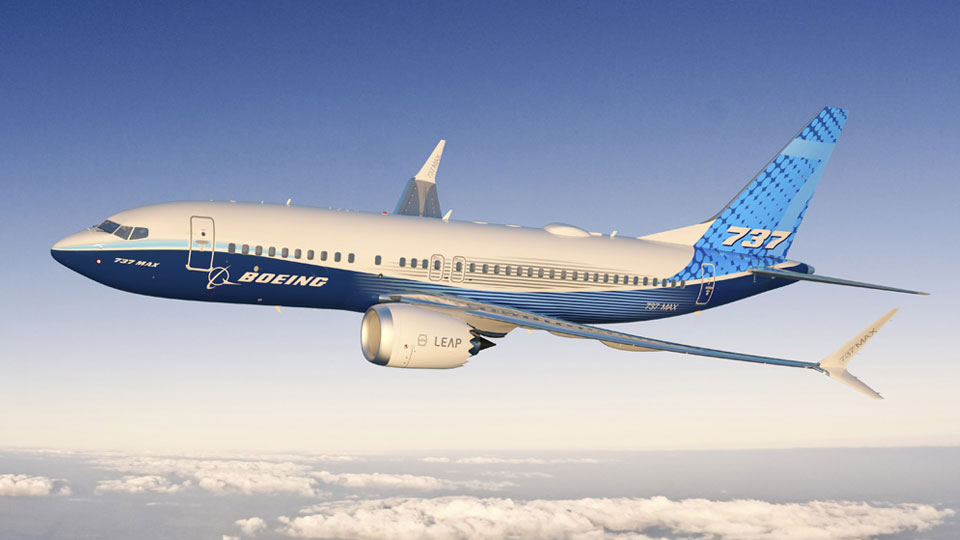
Neoliberalism is a contested term, so it needs a clear definition. Geographer David Harvey describes it as a theory of political economy built on one core belief. Human wellbeing, in this view, is best advanced by freeing entrepreneurial activity within a framework of strong property rights, free markets and free trade (Harvey, 2005).
In this model, the state’s job is to create and protect markets. It is not supposed to direct economic outcomes. Where public goals remain, such as safety, the preferred tools are partnership, incentives and efficiency rather than close supervision.
For corporations, the most influential expression of this idea came from economist Milton Friedman. In 1970, he argued in The New York Times Magazine that the social responsibility of business is to increase its profits, within the rules of the game (Friedman, 1970). Managers, in this view, are agents of shareholders, and other goals are a distraction.
Over the following decades, that principle hardened into a governing ideology. Economists William Lazonick and Mary O’Sullivan describe it as the ideology of maximising shareholder value (Lazonick and O’Sullivan, 2000). They trace a shift in American corporate strategy away from retaining profits and reinvesting them. Instead, companies increasingly cut their workforces and distributed cash to shareholders.
Neoliberal thinking also changed how Americans viewed regulation. Economist George Stigler argued that regulation is often acquired by the industry it covers, and designed mainly for that industry’s benefit (Stigler, 1971). Critics of regulation used this insight to argue for lighter oversight. Yet lighter, leaner regulators can become even more dependent on the industries they watch.
Put together, these ideas produce a recognisable model. Companies optimise for their share price. Regulators stay lean and work with industry rather than against it. Market discipline is trusted to punish failure after the event. The 737 MAX shows what can happen when all three assumptions are tested at once.
Why Shareholder Value Rewards Short Term Thinking
Shareholder primacy sounds neutral, but it shapes behaviour in specific ways. When executive pay is tied to the share price, managers have strong reasons to lift that price quickly. Share buybacks offer one of the fastest ways to do it.
Lazonick and Sakinç argue that buybacks can work as a form of market manipulation. They inflate the share price and, with it, the value of executives’ stock based pay (Lazonick and Sakinç, 2019). Meanwhile, money that could fund new products or training leaves the company.
They also challenge the idea that shareholders built Boeing. Over its entire history, Boeing raised only about $911 million through public share issues, measured in 2018 dollars. In their account, the real foundations were taxpayer funded research, government support and the skills of Boeing’s own employees.
This matters because it undercuts the moral case for shareholder primacy. If public investors did not fund the company’s capabilities, it is hard to argue that they should capture most of its profits. Yet that is precisely what the shareholder value model encouraged.
Boards play a key role in this system. Journalist Clive Irving points to Dave Calhoun, a former General Electric executive who later became chief executive (Irving, 2021). Irving describes him as the most influential board supporter of Boeing’s buyback policy. The approach did not come from one executive. It reflected a governance culture.
How Boeing Changed From an Engineering Company to a Financial One
For most of the 20th century, Boeing was defined by engineering ambition. The 707 opened the jet age, and the 747 transformed long haul travel. The company was famous for betting itself on new aircraft.
That culture began to shift in 1997, when Boeing acquired McDonnell Douglas for about $14 billion (Quartz, n.d.). Although Boeing was the buyer, many observers argue that McDonnell Douglas’s leadership and financial philosophy took over the combined company.
Harry Stone-cipher, McDonnell Douglas’s chief executive, became Boeing’s chief operating officer and later its chief executive. He made his intentions plain. In 2004, he said Boeing should be “run like a business rather than a great engineering firm” (Quartz, n.d.).
Not everyone welcomed the change. One former Boeing executive later remarked that McDonnell Douglas had effectively bought Boeing with Boeing’s money. Some long serving engineers felt that a passion for great aircraft had given way to a focus on affordability.
Stone-cipher pushed relentless cost cutting and dismissed some senior managers as “hobbyists”, according to Irving (Irving, 2021). Irving links this approach to the management philosophy of Jack Welch at General Electric. That philosophy prized efficiency, cost reduction and returns to shareholders above almost everything else.
The symbolism soon followed. In 2001, Boeing moved its headquarters from Seattle to Chicago, physically separating senior leadership from the engineers who designed its aircraft (Quartz, n.d.). In 2005, it spun off its Wichita fuselage operations, which became Spirit AeroSystems (Flying, 2025).
Jim McNerney, another former GE executive shaped by the Welch era, then led Boeing for a decade from 2005. Irving reports that McNerney received a $52 million signing package. He also describes McNerney’s focus as turning Boeing into a reliable generator of cash for Wall Street. In short, the company that built the 747 had become a company managed for its share price.
A New Engine Instead of a New Aircraft
The decisive moment came in 2011. Airbus had launched the A320neo, a more efficient version of its best selling narrowbody, and airlines were ordering it in large numbers. Boeing faced a choice between designing a new single aisle aircraft and fitting new engines to the 737, a design that first flew in the 1960s.
Boeing chose the cheaper and faster route. Irving puts the cost of the updated 737 at about $2.5 billion, against perhaps $20 billion for a new design (Irving, 2021). Lazonick and Sakinç estimate the difference more conservatively, at about $7 billion (Lazonick and Sakinç, 2019). Either way, the saving was large.
Speed mattered as much as cost. The House Committee on Transportation and Infrastructure found that competition with the A320neo pushed Boeing to cut costs and hold the 737 MAX schedule. It also found pressure to keep the production line moving (House Committee on Transportation and Infrastructure, 2020).
The commercial logic depended on one promise. Pilots already flying the 737 should not need simulator training to fly the MAX. Simulator training costs airlines money and time, so avoiding it made the aircraft easier to sell.
That promise was written into contracts. Under its 2011 deal with Southwest Airlines, Boeing would have had to cut $1 million from the price of each aircraft if pilots needed simulator training (KOMO News, 2020).
That clause captures the problem in miniature. A safety question had been turned into a financial liability. As a result, Boeing had a direct commercial incentive to minimise anything that might trigger extra training.
Buybacks While the MAX Took Shape
While the MAX was being designed and certified, Boeing returned extraordinary sums to shareholders. Between 2013 and the first quarter of 2019, it spent $43.1 billion on share buybacks. That was about 104% of its profits over the period, and it paid a further $17.4 billion in dividends (Lazonick and Sakinç, 2019).
The share price responded. Boeing’s stock rose about 6.7 times between January 2013 and March 2019, according to Lazonick and Sakinç. It rose sharply after the 737 MAX was certified in March 2017.
The timing is striking. In December 2018, just weeks after the Lion Air crash, Boeing’s board approved a 20% dividend increase. It also approved a new $20 billion buyback authorisation. Buybacks were only suspended in April 2019, after the second crash.
Lazonick and Sakinç make the comparison directly. The extra cost of a new aircraft design was roughly what Boeing spent on buybacks in an average year after 2013. In other words, the money for a safer path existed, but it was flowing to shareholders.
Defenders of buybacks note that they are a legal and common way to return surplus cash. That is true, and it is precisely the point. Under shareholder primacy, distributing cash to investors became normal behaviour, even for a company facing a generational decision about its core product.
How Boeing Turned a Cost Saving Into a Catastrophe
The bigger, more efficient engines on the 737 MAX sat further forward and higher on the wing. That changed how the aircraft handled in some conditions, increasing the tendency of the nose to pitch up. Rather than redesign the airframe, Boeing added software.
MCAS was meant to push the nose down automatically in rare situations. However, it relied on data from a single angle of attack sensor, even though the aircraft had two. If that sensor failed, MCAS could activate repeatedly and wrongly (Gates, 2019).
Boeing’s analysis rated an MCAS failure as “major” in normal flight and “hazardous” in extreme manoeuvres, one level below catastrophic. Critics told The Seattle Times that a hazardous classification would normally call for two independent input channels. MCAS had one.
The Seattle Times found a striking gap in the paperwork. Boeing’s safety analysis for the FAA listed the maximum movement of the tail as 0.6 degrees. After the Lion Air crash, Boeing’s own bulletin gave a figure of 2.5 degrees (Gates, 2019).
Worse still, MCAS reset after each activation. That meant it could apply the same movement again and again. A system described as limited could, in practice, drive the nose down repeatedly.
Pilots were not told the system existed. MCAS did not appear in pilot manuals, and Boeing did not consider training on it necessary. That decision protected the promise of no simulator training. Yet it left crews unprepared for exactly the failure that occurred.
The House committee found that Boeing withheld critical information from the FAA, customers and pilots. In one test, a Boeing test pilot took more than 10 seconds to respond to an uncommanded MCAS activation. Federal guidelines assumed four seconds, and the pilot described the outcome as “catastrophic” (House Committee on Transportation and Infrastructure, 2020).
Even a basic warning was missing. An alert meant to tell pilots when the two angle of attack sensors disagreed was inoperative on most of the jets (KOMO News, 2020). The committee called the crashes “a horrific culmination of a series of faulty technical assumptions”.
How Boeing Ended Up Certifying Much of Its Own Aircraft
None of this should have passed a strong regulator. Yet the American system for certifying aircraft relies heavily on manufacturers themselves. Under the Organization Designation Authorization programme, Boeing employees carry out certification work on behalf of the FAA.
Delegation is not new. The FAA appointed its first individual designees in 1927 and its first designated engineering representatives in 1940 (FAA, n.d.). Notably, the FAA’s own history shows that each expansion was justified on efficiency grounds, with designees promising faster service at lower cost to government. However, the modern framework was established by regulation in 2005. It consolidated earlier programmes and expanded the functions that could be delegated (FAA, 2005).
The FAA’s stated reasoning was revealing. Demand for certification work had grown faster than the agency’s resources, it said, so delegation would let it focus on the most critical tasks. The FAA insisted that the programme did not introduce self certification. In practice, though, efficiency had become the central justification for handing more work to industry.
Congress pushed in the same direction. The FAA Reauthorization Act of 2018 directed the agency to streamline certification and make fuller use of its delegation authorities (Elias, 2021). Insurance Journal, reporting on the international Joint Authorities Technical Review, noted that Congress had ordered the FAA to expand such programmes (Insurance Journal, 2019).
The 2018 law also created a Regulatory Consistency Communications Board. According to the Congressional Research Service, it gives industry a forum to raise concerns about regulatory consistency anonymously and without fear of retaliation (Elias, 2021). Protection for industry complaints about regulators arrived before stronger protection for the delegated engineers inside companies.
The imbalance in resources was stark. Boeing’s delegated organisation had about 1,500 people, while the FAA team overseeing it had 45, of whom only 24 were engineers (Insurance Journal, 2019). The FAA’s Seattle office had only about 40 staff, primarily overseeing Boeing Commercial Airplanes (Elias, 2021).
Pressure flowed through that structure. FAA managers pushed safety engineers to delegate more assessments to Boeing and approve them quickly. One former FAA engineer said reviews were rushed to meet certification dates (Gates, 2019).
Inside Boeing, the same tension appeared. In a 2016 company survey, almost 40% of respondents in its delegated organisation reported perceived undue pressure (Elias, 2021). A quarter reported pressure from beyond their direct reporting line.
The House committee also found cases where FAA managers overruled their own technical experts at Boeing’s request. A draft FAA safety culture survey found that many employees believed senior leaders put helping industry meet its goals ahead of safety (House Committee on Transportation and Infrastructure, 2020).
This is where Stigler’s warning becomes relevant. Congress had removed the FAA’s duty to promote aviation in 1996, after the ValuJet crash, once critics argued that promotion conflicted with safety (Lunken, 2023). Yet a lean regulator, dependent on industry expertise and told to work efficiently, drifted back towards a partnership model in practice.
Why the MAX Kept Flying After Lion Air
The clearest test of the system came after the first crash. In late November 2018, the FAA completed its own risk analysis of the Lion Air accident. It found an expected fatality rate of 2.68 per million flight hours, far above its acceptable threshold of one fatality per 10 million flight hours (Elias, 2021).
The FAA concluded that Boeing needed to redesign MCAS. However, it did not ground the aircraft. Instead, it judged that procedural changes in an airworthiness directive would temporarily mitigate the risk, but only until July 2019.
In other words, the regulator allowed the fleet to keep flying while the manufacturer worked on a fix. Ethiopian Airlines flight 302 crashed in March 2019, inside that window.
Meanwhile, Boeing’s public messaging leaned towards reassurance. About a month after the Lion Air crash, it issued a press release that emphasised pilot error and poor maintenance as possible causes (SEC, 2022). It did not disclose that an internal review had already found MCAS posed an ongoing safety problem.
Weeks later, in December 2018, the board raised the dividend and approved a new $20 billion buyback programme. Confidence in the product, and in the stock, was being actively protected. A more precautionary model would have treated the first crash very differently.
Boeing’s Concealment and the Limits of Trust
Delegation works only when the delegated party is candid. The Department of Justice later found that Boeing was not. In January 2021, Boeing was charged with conspiracy to defraud the United States (US Department of Justice, 2021). It agreed to pay more than $2.5 billion under a deferred prosecution agreement.
According to the Justice Department, two Boeing technical pilots deceived the FAA group responsible for pilot training requirements. They concealed an important change to MCAS. As a result, key information about MCAS was left out of the FAA’s pilot training report and, in turn, out of airline manuals.
Acting Assistant Attorney General David Burns said Boeing employees “chose the path of profit over candor”. That phrase neatly summarises the central argument of this article.
The settlement itself reflected market priorities. Of the $2.5 billion, $1.77 billion went to airline customers as compensation. A further $500 million went to a fund for the families of the 346 victims, and $243.6 million was a criminal penalty (US Department of Justice, 2021).
Boeing’s communications with investors also came under scrutiny. In 2022, the Securities and Exchange Commission charged Boeing and former chief executive Dennis Muilenburg with making misleading public statements after the crashes. Boeing paid $200 million and Muilenburg paid $1 million, without admitting or denying the findings (SEC, 2022).
The SEC also found that, after the Ethiopian crash, Muilenburg told analysts and reporters there were no gaps in the certification of the MAX. He did so despite being aware of information that questioned parts of that process.
The Senate Commerce Committee added a further layer. It drew on disclosures from more than 50 whistleblowers (US Senate Committee on Commerce, Science, and Transportation, 2020). Among its findings, Boeing improperly influenced FAA simulator tests of pilot reaction times during the recertification of the MAX.
The committee also found that the FAA continued to retaliate against whistleblowers rather than welcome their disclosures. It said senior FAA leaders may have obstructed a review by the Department of Transportation’s inspector general. Weak accountability was not only a corporate problem.
The Door Plug Showed Boeing Had Not Changed
By late 2020, the 737 MAX was flying again, and Boeing promised a renewed commitment to safety. Then, on 5 January 2024, a door plug blew out of an Alaska Airlines Boeing 737-9 in flight.
The National Transportation Safety Board found that Boeing failed to provide adequate training, guidance and oversight to its factory workers (NTSB, 2025). The door plug had been opened for rivet repairs in September 2023. It was closed without the required documentation, so no quality inspection took place, and four bolts were missing.
The NTSB also criticised the FAA for ineffective oversight of repetitive and systemic problems in Boeing’s processes. Chair Jennifer Homendy warned that the same deficiencies “could just as easily have led to other manufacturing quality escapes”.
An FAA expert panel had reached similar conclusions in early 2024. It found a disconnect between Boeing’s senior management and other employees on safety culture (Axios, 2024). It also found “inadequate and confusing implementation” of key safety culture components, and noted that employees distrusted the anonymity of Boeing’s internal reporting programme.
The FAA responded by capping 737 MAX production at 38 aircraft a month (Fortune, 2025). For a company whose business model depended on rising output, that cap was a powerful signal.
The legal consequences were tangled. Prosecutors concluded that Boeing had breached its 2021 agreement, and Boeing agreed to plead guilty to conspiracy to defraud. In December 2024, Judge Reed O’Connor rejected that plea deal (NPR, 2024).
In 2025, the Justice Department moved instead to a non prosecution agreement. It included a further $444.5 million for crash victims’ families, a new $243.6 million fine and more than $455 million for compliance and safety programmes (Al Jazeera, 2025).
In November 2025, Judge O’Connor dismissed the case. He said the deal did not secure enough accountability, but that he lacked the authority to overrule the government. Two years earlier, the same judge had said Boeing’s crime may be the deadliest corporate crime in US history. Accountability, once again, was largely expressed in dollars.
Who Paid for the Crisis
Markets did respond, but slowly and expensively. Boeing itemised about $20 billion in direct costs from the grounding, including $8.6 billion in compensation to customers. Bank of America estimated costs above $25 billion, before counting lost orders and heavy discounts (KVIA, 2020).
Defenders of market discipline point to these losses as proof that the system works. Companies that cut corners eventually pay. However, that argument sits uneasily beside the human cost. Market discipline arrived only after 346 people had died.
The penalty also landed long after the decisions that caused it. The executives who chose the cheaper path and approved the buybacks were rewarded while the share price rose. Irving reports that McNerney retired with a $58.5 million package, and that Muilenburg left with an exit package of at least $62 million (Irving, 2021).
That timing gap is central to the critique of shareholder primacy. Rewards arrive in the short term, while risks surface years later. By then, the people who took the decisions have often moved on, and the costs fall on passengers, workers and later shareholders.
The Case Against Blaming Neoliberalism
The argument so far is strong, but it is not the only reasonable reading. Several serious objections deserve a fair hearing.
The first is historical. Delegation long predates the neoliberal era. The FAA used private designees in 1927 and designated engineering representatives in 1940, decades before Friedman’s essay (FAA, n.d.). If delegation is inherently neoliberal, its deep roots are hard to explain.
The second is comparative. Europe also relies on manufacturers. A 2022 Government Accountability Office report found that both the FAA and the European Union Aviation Safety Agency depend on manufacturers to support design certification (GAO, 2022). It also found that their standards are largely similar.
The third is the safety record. A special committee appointed by the US transportation secretary examined the certification system in 2020 (Special Committee to Review the FAA’s Aircraft Certification Process, 2020). It found that the US air carrier fatality rate fell from 80.9 to 0.6 per 100 million passengers between 1996 and 2019. It described delegation as an appropriate and effective tool, and warned against dismantling it. That improvement happened during the very period this article criticises.
The fourth concerns pilots. Journalist William Langewiesche argued that the crashes also reflected an industry that sends insufficiently trained pilots into cockpits (Langewiesche, 2019). The NTSB criticised Ethiopia’s final report for failing to address its comments, which focused mainly on human factors (NTSB, 2022).
The fifth is about management rather than ideology. Airbus operates in the same global market and answers to shareholders, yet it did not suffer an equivalent crisis. That suggests specific leadership choices may be the better explanation, rather than a whole economic philosophy.
The sixth is that this was a failure of government as much as markets. Congress sets the FAA’s budget and passed the laws that expanded delegation. On this reading, the problem was an underpowered state, and the remedy is better public administration rather than a critique of markets.
The seventh is that the system eventually corrected itself. Congress passed the Aircraft Certification, Safety, and Accountability Act in December 2020 (Elias, 2021). It requires manufacturers to adopt safety management systems and makes it unlawful to pressure delegated employees. It also repealed two streamlining provisions from 2018. In this view, democratic oversight worked as intended, if belatedly.
Weighing the Evidence on Boeing
Each objection has force, but none fully dissolves the central argument. Delegation may be old, yet its modern form was consolidated in 2005 and expanded in 2018 on explicitly efficiency based grounds. Meanwhile, FAA resources lagged behind. The issue is not delegation in principle, but delegation without adequate independent checking.
The European comparison actually supports this point. The GAO found that EASA engineers evaluate the technical basis of compliance findings (GAO, 2022). The FAA, by contrast, customarily did not independently check the technical basis of high risk determinations. The American system leaned further towards trusting the manufacturer.
The strong safety record is real, and it should make anyone cautious about sweeping claims. However, an excellent average can hide a deteriorating process. The House, the international review panel, the Senate and the NTSB all identified problems in how the FAA oversaw Boeing specifically.
Pilot training questions matter too. Yet the decision to keep MCAS out of manuals and avoid simulator training was a commercial one, reinforced by contracts such as the Southwest clause. Pilots cannot respond well to a system they have not been told exists.
The government failure argument is the most serious. Yet it does not sit outside the neoliberal frame. The FAA itself justified delegation by pointing to limited resources, and Congress chose streamlining over expanding the agency. A small, efficient, industry friendly regulator is not an accident of neoliberal policy. It is one of its stated aims.
Finally, the Airbus comparison cuts both ways. Airbus is also a listed company, but its history, shareholders and regulatory environment differ in important ways. Boeing’s leaders made choices, but they made them inside a governance culture that rewarded those choices.
What a Safer Model Would Look Like
If the diagnosis is right, the remedy is not to abandon markets. Instead, it is to rebalance the incentives that shaped the MAX, both inside companies and inside the regulator.
The first step is independent technical checking. The GAO found that European engineers evaluate the technical basis of a manufacturer’s compliance findings, rather than mainly reviewing whether the paperwork is complete (GAO, 2022). The FAA is already examining changes, including wider use of technical advisory boards. A regulator that can challenge the engineering, not just the process, is far harder to capture.
The second is resources. An oversight team of 45 people cannot meaningfully supervise a delegated organisation of about 1,500 (Insurance Journal, 2019). Funding the FAA properly is a political choice, and it is cheaper than another grounding.
The third is protection for the people doing delegated work. The 2020 reforms made it unlawful to interfere with delegated employees or put them under undue pressure (Elias, 2021). Those protections only matter if they are enforced, and if employees trust them.
The fourth is safety management inside manufacturers. The NTSB found that Boeing’s voluntary safety management system lacked formal FAA oversight in the two years before the door plug accident (NTSB, 2025). A mandatory, audited system turns safety culture from a slogan into something regulators can measure.
The fifth concerns corporate governance itself. Lazonick and Sakinç called for Boeing executives to be held accountable and for their pay to be clawed back (Lazonick and Sakinç, 2019). More broadly, boards could tie executive rewards to long term safety and quality measures, rather than to the share price alone.
None of these ideas is radical. Most already exist in some form, either in Europe or in the 2020 legislation. Together, though, they represent a shift away from the assumption that efficiency and partnership are enough to keep passengers safe.
What Recovery Looks Like for Boeing
There are signs of change. In December 2025, Boeing completed its acquisition of Spirit AeroSystems, bringing back about 15,000 employees and the sites that build 737 fuselages (Flying, 2025). That reverses one of the clearest outsourcing decisions of the shareholder value era, two decades after the original spin off.
The FAA has also loosened its grip carefully. It allowed Boeing to raise 737 MAX production from 38 to 42 aircraft a month in October 2025, after inspectors reviewed its production lines (Fortune, 2025). Chief executive Kelly Ortberg had told senators that production would only rise once the system was stable.
In October 2026, the FAA certified the 737 MAX 10, the final member of the family (Aerospace Global News, 2026). That approval came years late. The regulator had refused to sign off until Boeing resolved outstanding software concerns, which suggests a more assertive FAA, at least for now.
The deeper question is whether the incentives have changed. Boeing’s recovery will depend not only on fixing factories. It will also depend on whether its board and investors accept that engineering quality is the foundation of long term value, rather than a cost to be minimised.
The Bottom Line
The Boeing 737 MAX crisis was not caused by one faulty sensor alone. It grew from a company that had reorganised itself around its share price, and from a regulatory system that asked a lean FAA to rely on Boeing’s own employees. Shareholder primacy made the cheaper design attractive, buybacks absorbed the money for a better one, and delegation without adequate checks let critical flaws through.
There are fair objections. Delegation predates neoliberalism, Europe also relies on manufacturers, American aviation became far safer over the same decades, and pilot training played a part. Those points should temper any claim that one ideology explains everything.
Even so, the evidence from Congress, international regulators, the Justice Department, the SEC and the NTSB points in the same direction. When markets are trusted to discipline safety after the fact, passengers pay the price first. Boeing’s future, and that of American aviation regulation, depends on learning that lesson.
References
- Aerospace Global News (2026) ‘FAA certifies 737-10’. Available at: View source (Accessed: 27 November 2026).
- Al Jazeera (2025) ‘US judge approves DOJ decision to drop Boeing criminal case’, 6 November. Available at: View source (Accessed: 27 November 2026).
- Axios (2024) ‘Review finds “disconnect” between Boeing management and staff on safety’, 27 February. Available at: View source (Accessed: 27 November 2026).
- Elias, B. (2021) Legislative Reforms to Commercial Aircraft Certification. CRS Report R46904. Washington, DC: Congressional Research Service. Available at: View source (Accessed: 27 November 2026).
- FAA (n.d.) Delegation and Designees Background. Washington, DC: Federal Aviation Administration. Available at: View source (Accessed: 27 November 2026).
- FAA (2005) ‘Establishment of Organization Designation Authorization Program’, Federal Register, 70, p. 59932. Available at: View source (Accessed: 27 November 2026).
- Flying (2025) ‘Boeing completes Spirit AeroSystems acquisition’, 8 December. Available at: View source (Accessed: 27 November 2026).
- Fortune (2025) [Associated Press report on the FAA raising the 737 MAX production cap], 18 October. Available at: View source (Accessed: 27 November 2026).
- Friedman, M. (1970) ‘The social responsibility of business is to increase its profits’, The New York Times Magazine, 13 September. Reprinted in Zimmerli, W.C., Holzinger, M. and Richter, K. (eds) (2007) Corporate Ethics and Corporate Governance. Berlin: Springer. Available at: View source (Accessed: 27 November 2026).
- GAO (2022) Aircraft Certification: Comparison of U.S. and European Processes for Approving New Designs of Commercial Transport Airplanes. Washington, DC: Government Accountability Office. Available at: View source (Accessed: 27 November 2026).
- Gates, D. (2019) ‘Flawed analysis, failed oversight: How Boeing, FAA certified the suspect 737 MAX flight control system’, The Seattle Times, 17 March. Republished by Anchorage Daily News. Available at: View source (Accessed: 27 November 2026).
- Harvey, D. (2005) A Brief History of Neoliberalism. Oxford: Oxford University Press. Available at: View source (Accessed: 27 November 2026).
- House Committee on Transportation and Infrastructure (2020) Final Committee Report: The Design, Development and Certification of the Boeing 737 MAX. Washington, DC: US House of Representatives. Available at: View source (Accessed: 27 November 2026).
- Insurance Journal (2019) ‘Global safety regulators fault U.S., “undue pressure” from Boeing for 737 Max approval’, 11 October. Available at: View source (Accessed: 27 November 2026).
- Irving, C. (2021) ‘How Boeing was set on the path to disaster by the cult of Jack Welch’, The Daily Beast, 29 November. Available at: View source (Accessed: 27 November 2026).
- KOMO News (2020) ‘Panel’s report blasts Boeing, FAA for crashes, seeks reforms’, 16 September. Available at: View source (Accessed: 27 November 2026).
- KVIA (2020) ‘Boeing’s 737 Max debacle could be the most expensive corporate blunder ever’, 17 November. Available at: View source (Accessed: 27 November 2026).
- Langewiesche, W. (2019) ‘What really brought down the Boeing 737 Max?’, The New York Times Magazine, 18 September. Available at: View source (Accessed: 27 November 2026).
- Lazonick, W. and O’Sullivan, M. (2000) ‘Maximizing shareholder value: a new ideology for corporate governance’, Economy and Society, 29(1), pp. 13 to 35. Available at: View source (Accessed: 27 November 2026).
- Lazonick, W. and Sakinç, M.E. (2019) ‘Make passengers safer? Boeing just made shareholders richer’, The American Prospect, 31 May. Available at: View source (Accessed: 27 November 2026).
- Lunken, M. (2023) ‘What prompted Congress to change the FAA’s original “dual mandate”?’, Flying, 15 November. Available at: View source (Accessed: 27 November 2026).
- NPR (2024) ‘Court rejects Boeing plea deal stemming from 737 Max crashes’, 5 December. Available at: View source (Accessed: 27 November 2026).
- NTSB (2022) ‘NTSB releases comments on Ethiopia’s investigation of the Boeing 737-8 MAX accident’, 27 December. Available at: View source (Accessed: 27 November 2026).
- NTSB (2025) [Press release on the final report into Alaska Airlines flight 1282], 24 June. Washington, DC: National Transportation Safety Board. Available at: View source (Accessed: 27 November 2026).
- Quartz (n.d.) ‘How the McDonnell Douglas Boeing merger led to the 737 Max crisis’. Available at: View source (Accessed: 27 November 2026).
- SEC (2022) ‘Boeing to pay $200 million to settle SEC charges that it misled investors about the 737 MAX’, 22 September. Washington, DC: Securities and Exchange Commission. Available at: View source (Accessed: 27 November 2026).
- Special Committee to Review the FAA’s Aircraft Certification Process (2020) Official Report of the Special Committee to Review the Federal Aviation Administration’s Aircraft Certification Process. Washington, DC: US Department of Transportation. Available at: View source (Accessed: 27 November 2026).
- Stigler, G.J. (1971) ‘The theory of economic regulation’, The Bell Journal of Economics and Management Science, 2(1), pp. 3 to 21. Available at: View source (Accessed: 27 November 2026).
- US Department of Justice (2021) ‘Boeing charged with 737 Max fraud conspiracy and agrees to pay over $2.5 billion’, 7 January. Available at: View source (Accessed: 27 November 2026).
- US Senate Committee on Commerce, Science, and Transportation (2020) ‘Wicker releases committee’s FAA investigation report’, 18 December. Available at: View source (Accessed: 27 November 2026).
Continue to follow The Aviation Hub for more analysis and insight.
Advertise with us Your brand, in front of an aviation audience Home page and in-article placements, sold directly, one advertiser per slot. From £250 a year. See the rates