The most arresting figure in this year's transatlantic routes announcement season is not the tally of 29 new routes but the environment into which those routes are being released. According to OAG, US international capacity in summer 2026 was 2% lower year-on-year, a contraction of 4.6 million seats relative to summer 2025. The collective direction of travel for the industry is inward, even as individual carriers trumpet record-breaking growth. That contradiction runs through every new city-pair on the 2027 schedule.
The 29 new and returning transatlantic routes for summer 2027 are spread across a handful of carriers, but the ambition is not evenly distributed. United Airlines announced 10 new international destinations for the season, calling it the biggest expansion in its history. That claim alone demands scrutiny.
United's Thin-Market Gamble
United's expanded European network, as reported by Ovago and TravelMole, takes in Newark–Luxembourg, Newark–Ljubljana, Newark–Ibiza, Newark–Valencia, Newark–Marseille, Newark–Olbia, Newark–Catania, Newark–Terceira and Washington Dulles–Toulouse. TravelMole also reports that Washington Dulles–Milan will operate three times weekly from 28 May, alongside a daily Denver–Paris CDG service from 27 May.
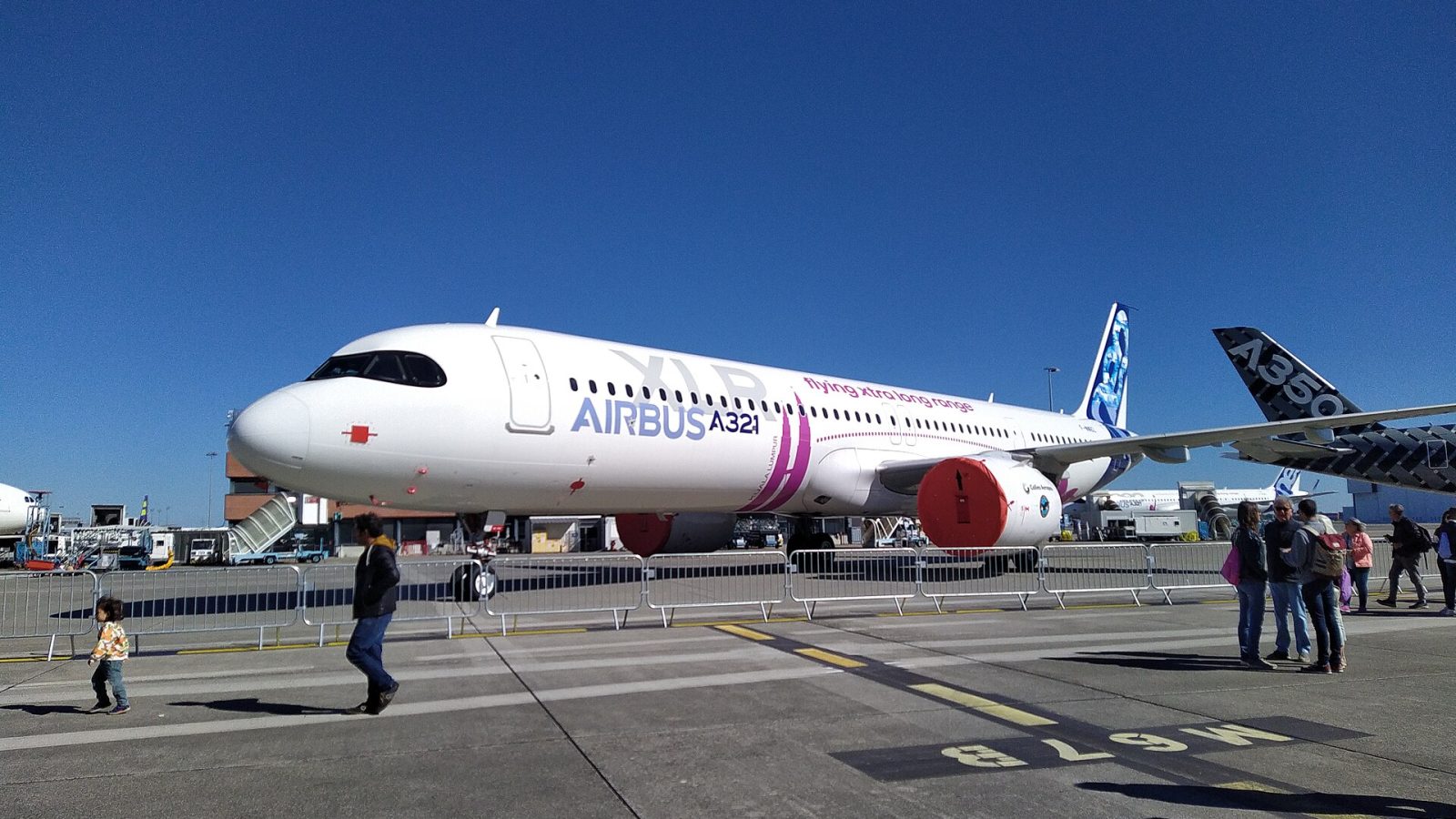
A number of those city-pairs are slender propositions by any standard. Ljubljana, Olbia, Catania and Terceira have virtually no history of nonstop US service, and their presence on the schedule reflects a deliberate strategic decision: use narrowbody unit economics to serve markets where widebody costs would render the route unworkable. The aircraft at the centre of that logic is the Airbus A321XLR. As Simple Flying reports, the XLR is fitted with a permanently integrated Rear Center Tank that contributes approximately 12,900 litres of additional fuel capacity, lifting the manufacturer's quoted range to 4,700 nautical miles and enabling a maximum flight time of approximately 11 hours.
Those figures matter because they set the outer edge of what is physically possible. A route that sits inside the XLR's range envelope but outside a widebody's profitable load factor is precisely the gap the aircraft is designed to fill. Whether the demand exists to fill those seats is a separate question entirely.
American's XLR Deployment and What It Tells Us
American Airlines is committing more heavily to the XLR than any other carrier in this round of announcements. Aviation Week reports the Philadelphia–Vienna route will use a 155-seat A321XLR, with Vienna representing American's first-ever service to Austria, as Ovago and Aviation Week both note. Philadelphia–Porto launches on 28 March 2027 using an A321XLR, per Ovago and TravelMole, and JFK–Amsterdam begins daily year-round service on the same date, also with an A321XLR, according to Ovago and TravelMole.
JFK–Amsterdam is not a thin market: it is one of the most competed transatlantic corridors in existence. American's decision to serve it with a 155-seat narrowbody rather than a widebody is therefore a seat-count play, targeting yield over volume. Porto, by contrast, is a thinner proposition, and Vienna thinner still from Philadelphia. The logic is consistent: use a lower-capacity aircraft with lower trip cost to serve markets that cannot justify a widebody at the frequencies needed to maintain schedule integrity.
American will also launch daily JFK–Nice from 6 May 2027 using an A321XLR, per Aviation Week and Ovago, and Philadelphia–Reykjavik daily from 27 May, though Aviation Week reports that route will use an A321neo rather than the XLR. American last served Reykjavik in 2019, from Dallas-Fort Worth, Aviation Week notes. The return to Iceland, via a different hub and with a different aircraft type, reflects the city's enduring appeal as both an origin market and a connecting hub, a dynamic we examined in the context of Icelandair's own network when TravelMole reported the carrier is adding St. Louis as a new US gateway from 14 May 2027, three times weekly using Boeing 737 MAX 8.
The Widebody Counterpoint
Not every new route in 2027 is a narrowbody experiment. Delta is launching Austin–Paris CDG daily from 27 March using an A330-900neo, according to Ovago and TravelMole, and Boston–Venice four times weekly from 7 May using an A330-300, per Ovago. Detroit–Athens follows on 8 June, three times weekly with an A330-200, Ovago reports. Air France is adding Paris CDG–Nashville from 14 May and Paris CDG–San Diego from 17 May, both three times weekly using an A350-900, as Ovago and TravelMole report.
Alaska Airlines, whose Seattle long-haul build-out we have been tracking in our own analysis of the route numbers, is adding Seattle–Athens three times weekly from 12 May and Seattle–Paris five times weekly from 25 May, both using 787-9 aircraft, per Ovago and TravelMole. These are sizeable aircraft on routes that require genuine demand to justify the seat count. Athens from Seattle in particular is a long hop with no obvious feeder logic unless Alaska's Pacific Northwest leisure market is deeper than its network history suggests.
Charlotte–Barcelona from 27 May, daily and seasonal on a Boeing 777-200ER, according to Aviation Week and TravelMole, is American's widebody contribution to the expansion. La Compagnie, meanwhile, TravelMole reports, will operate a daily Düsseldorf–Newark service from April 2027, adding a business-class focused product on a city-pair that sees limited nonstop competition. You can explore the aircraft involved in these routes further using our Aircraft Search tool.
What the Demand Data Actually Says on Transatlantic Routes
The broader picture is an uneven one. IATA reported global passenger demand growth of 2.1% year-on-year in March 2026, which reads well on the surface. Beneath that headline, however, the same IATA dataset records a year-on-year demand decline of 60.8% among Middle Eastern carriers in March 2026. Meanwhile, OAG notes that the Africa region recorded the strongest capacity growth within the US international market during summer 2026, up 6% year-on-year, a performance shaped partly by OAG's finding that EgyptAir added two new US services in summer 2026, Cairo–Los Angeles and Cairo–Chicago.
In summer 2026, Simple Flying reports, around 37 new transatlantic routes came to market across some 14 airlines. The 2027 wave is therefore a continuation of an established expansion impulse rather than any kind of break from the recent past. What has shifted is the increasingly central operational role of the XLR. As we set out in our piece on long-haul low-cost on the Atlantic, the economics of thin transatlantic markets hinge entirely on whether trip cost falls faster than yield. On routes within 4,700 nautical miles, the XLR's integrated fuel tank and narrower cabin alter that equation in a way no narrowbody before it has managed.
The Bottom Line
The 29 new transatlantic routes for 2027 split into two distinct groups. The widebody additions, Delta to Venice and Athens, Air France to Nashville and San Diego, Alaska to Paris and Athens, are bets on established or near-established demand in markets large enough to fill 250-plus seats. The XLR routes, particularly United's Terceira, Olbia and Ljubljana, are something different: a structural experiment in whether lower trip cost can create viable nonstop service where none existed before.
OAG's figure of 4.6 million fewer US international seats in summer 2026 than in summer 2025 is the number to hold alongside every one of these announcements. The industry is not in unconstrained growth mode. The carriers expanding most aggressively in 2027 are making deliberate choices about where thinner capacity, on thinner routes, with thinner break-even loads, can outperform the alternatives. In our view, the XLR routes into secondary European cities are the ones worth watching most closely over the next two northern summers.
This article draws on information from IATA and reporting by OAG, Aviation Week, Ovago, Simple Flying and TravelMole.
Continue to follow The Aviation Hub for more analysis and insight.
Advertise with us Your brand, in front of an aviation audience Home page and in-article placements, sold directly, one advertiser per slot. From £250 a year. See the rates