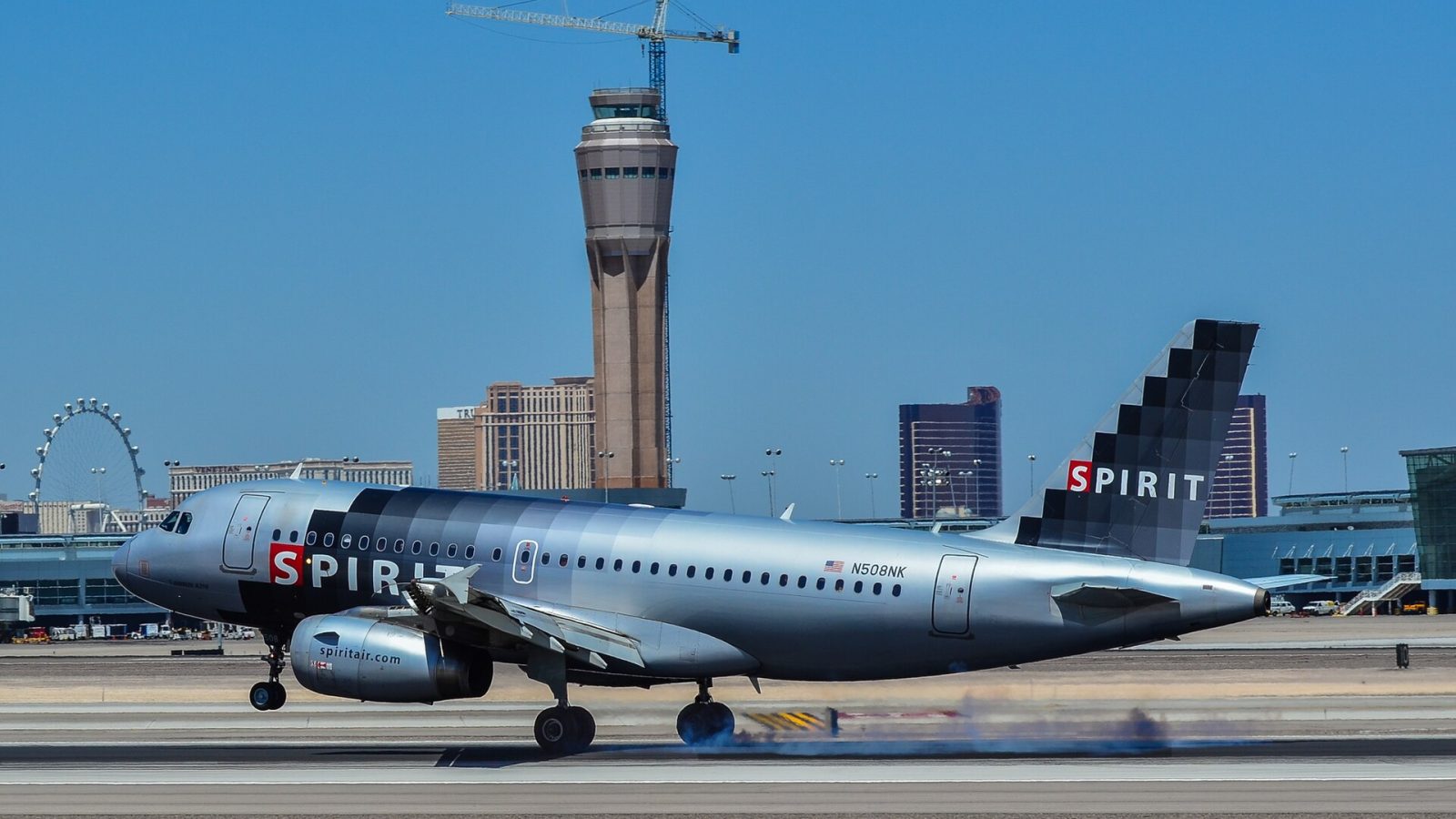
A straightforward logic underpinned the ultra-low-cost carrier model: pare the product to its bare minimum, maximise seat density, undercut every legacy rival on fares, and rely on volume to turn razor-thin margins into profit. Whether that logic ever truly worked is answered bluntly by Spirit Airlines, which racked up net losses totalling roughly $3.1 billion across 2020 to 2024, according to DWU Consulting, before ceasing all operations on 2 May 2026. No industry verdict on the proposition has been more damning.
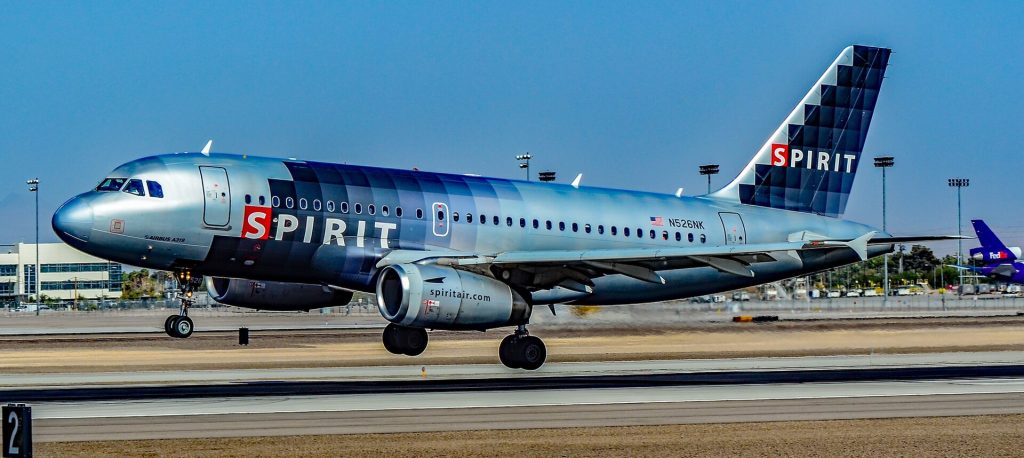
"It is with great disappointment that on May 2, 2026, Spirit Airlines started an orderly wind-down of our operations, effective immediately," the airline said. It was, by that point, America's eighth-largest carrier, according to Simple Flying, and its closure put more than 2,000 ALPA pilots out of work, Simple Flying reports.
A Collapse Years in the Making
Spirit's end did not arrive suddenly. The airline filed for Chapter 11 bankruptcy on 18 November 2024, a date confirmed by DWU Consulting, Simple Flying and Truth on the Market (International Center for Law & Economics). DWU Consulting reports that Spirit emerged from that first reorganisation on 12 March 2025, only to file a second Chapter 11 on 29 August 2025. A $500 million federal rescue attempt then collapsed when creditors rejected the terms, Simple Flying reports, and the carrier never found a path back.
The damage went well beyond what the balance sheet alone revealed. When Frontier and Spirit put forward their merger in February 2022, the two carriers billed it as creating "America's most competitive ultra-low fare airline," according to Truth on the Market (International Center for Law & Economics). Spirit walked away from that arrangement on 27 July 2022, signing a new deal with JetBlue the very next day, Truth on the Market (International Center for Law & Economics) reports. The JetBlue tie-up was then blocked by a federal court in January 2024 after a Department of Justice antitrust challenge, a finding confirmed by DWU Consulting, Simple Flying and Truth on the Market (International Center for Law & Economics). With one partner abandoned and a second denied by the courts, Spirit was left to confront its mounting cost pressures without support.
DWU Consulting reports that Spirit's 2024 operating revenue came to $4.9 billion, down 8.4 per cent from 2023. Falling revenue and rising costs in the same year is a combination that leaves no room for recovery.
The Industry Backdrop Is Just as Uncomfortable
The broader industry environment offered Spirit no shelter. According to IATA, global airline net profit is projected to drop to $23 billion in 2026, down from $45 billion in 2025, with the net margin contracting from 4.2 per cent to 2.0 per cent. Net profit per passenger is expected to amount to just $4.50 in 2026, approximately half what airlines earned the year before. Compounding that pressure, jet fuel prices climbed by around 70 per cent, as noted in IATA's 2026 outlook.
Those numbers reframe Spirit's collapse. Overall industry revenues were expected to grow 9.4 per cent to $1.165 trillion in 2026, IATA projects, yet operating expenses were forecast to grow even faster, at 13 per cent to $1.117 trillion. When costs grow faster than revenue across the whole industry, the carriers with the thinnest buffers are hit first. Ultra-low-cost carriers, whose entire model depends on keeping unit costs below a floor that legacy airlines cannot match, have almost no buffer at all.
You can track the airlines navigating this environment using our Airline Search tool.
What the Ultra-Low-Cost Carrier Model Actually Required
The ultra-low-cost model demands that almost everything go right at once. Fuel must stay cheap enough for rock-bottom fares to cover it. Aircraft must be kept flying as many hours as possible. Ancillary fees must compensate for base fares that sometimes cover little more than the cost of the seat. And the airline must fill those seats consistently, because a thin margin per passenger evaporates the moment load factors slip.
Fuel at a 70 per cent premium to prior levels, as IATA documents, breaks the first condition. Legacy carriers absorbing that cost through scale and corporate-travel revenues can manage. A carrier whose revenue per passenger is already compressed cannot absorb the same shock without raising fares, and raising fares undermines the only reason a ULCC passenger chose them in the first place.
The merger and partnership moves by surviving carriers illustrate the direction the industry is travelling. Truth on the Market (International Center for Law & Economics) reports that JetBlue launched a Blue Sky partnership with United Airlines in May 2025, taking effect in October 2025. A carrier once considered a ULCC neighbour is now aligning itself with a global network airline for the reach and yield that standalone low-cost flying cannot reliably deliver.
Who Carries the Cost
The passengers most exposed are those who relied on Spirit's fares for routes with no obvious alternative at a similar price point. More than 2,000 pilots lost work immediately, Simple Flying reports, and the wider supply chain effects on airports that had built Spirit as a significant traffic source will take time to measure.
Senator Elizabeth Warren put the political framing plainly: "Spiking fuel prices from Trump's war was the nail in the coffin for twice-bankrupted Spirit airline," she said. Whether or not that framing captures the full picture, it points to the macro conditions that matter: when external cost shocks arrive, airlines with structural vulnerabilities feel them first.
For the airports that hosted Spirit as a primary low-fare option, the question is which carrier, if any, fills the gap. The evidence from the industry's direction suggests that gap is more likely to be filled by a hybrid carrier with a basic-economy product than by a new pure ULCC.
What to Watch Next
The facts point to a shift already in motion rather than one still hypothetical. Legacy basic-economy products have captured a significant portion of the price-sensitive market that ULCCs once owned, while fuel costs and post-pandemic operational pressures have hollowed out the unit-cost advantage that made the model viable. Frontier continues to operate but has reported heavy losses. JetBlue has moved toward network alignment.
What remains genuinely uncertain is whether any carrier will attempt to rebuild the pure ULCC proposition, or whether the model quietly exits American aviation alongside Spirit. IATA's forecast of a net margin of just 2.0 per cent industry-wide in 2026 suggests the space for experimentation is narrow. The structural conditions that made Spirit's losses so large and so persistent have not gone away.
This article draws on information from IATA and reporting by DWU Consulting, Simple Flying and Truth on the Market (International Center for Law & Economics).
Continue to follow The Aviation Hub for more analysis and insight.
Advertise with us Your brand, in front of an aviation audience Home page and in-article placements, sold directly, one advertiser per slot. From £250 a year. See the rates