Three weeks after its first passengers, Sydney’s new airport runs around the clock but still waits for most of its airlines. Western Sydney Airport’s next test is a hot summer, a missing rail line and the arrival of its first long haul carrier.
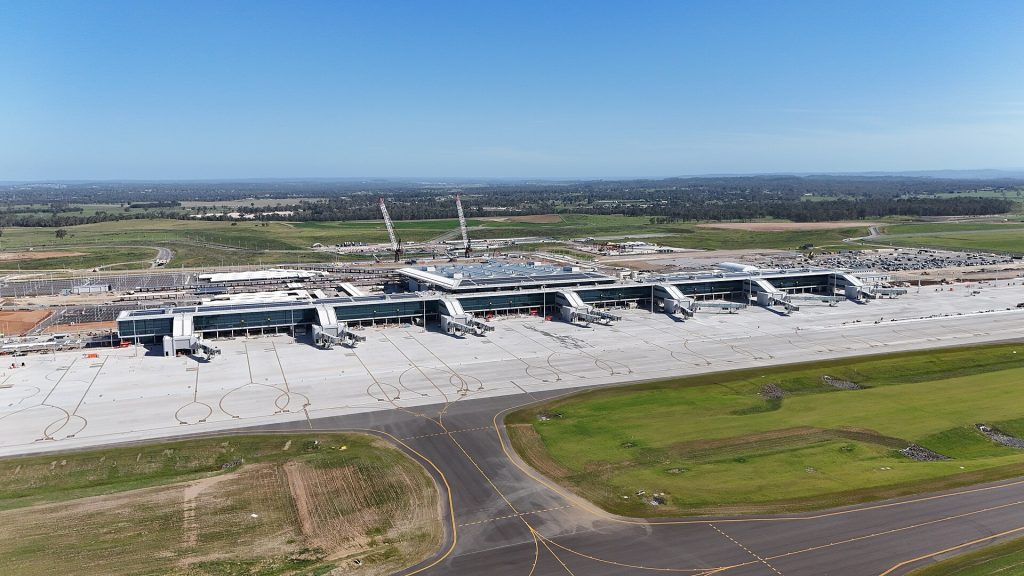
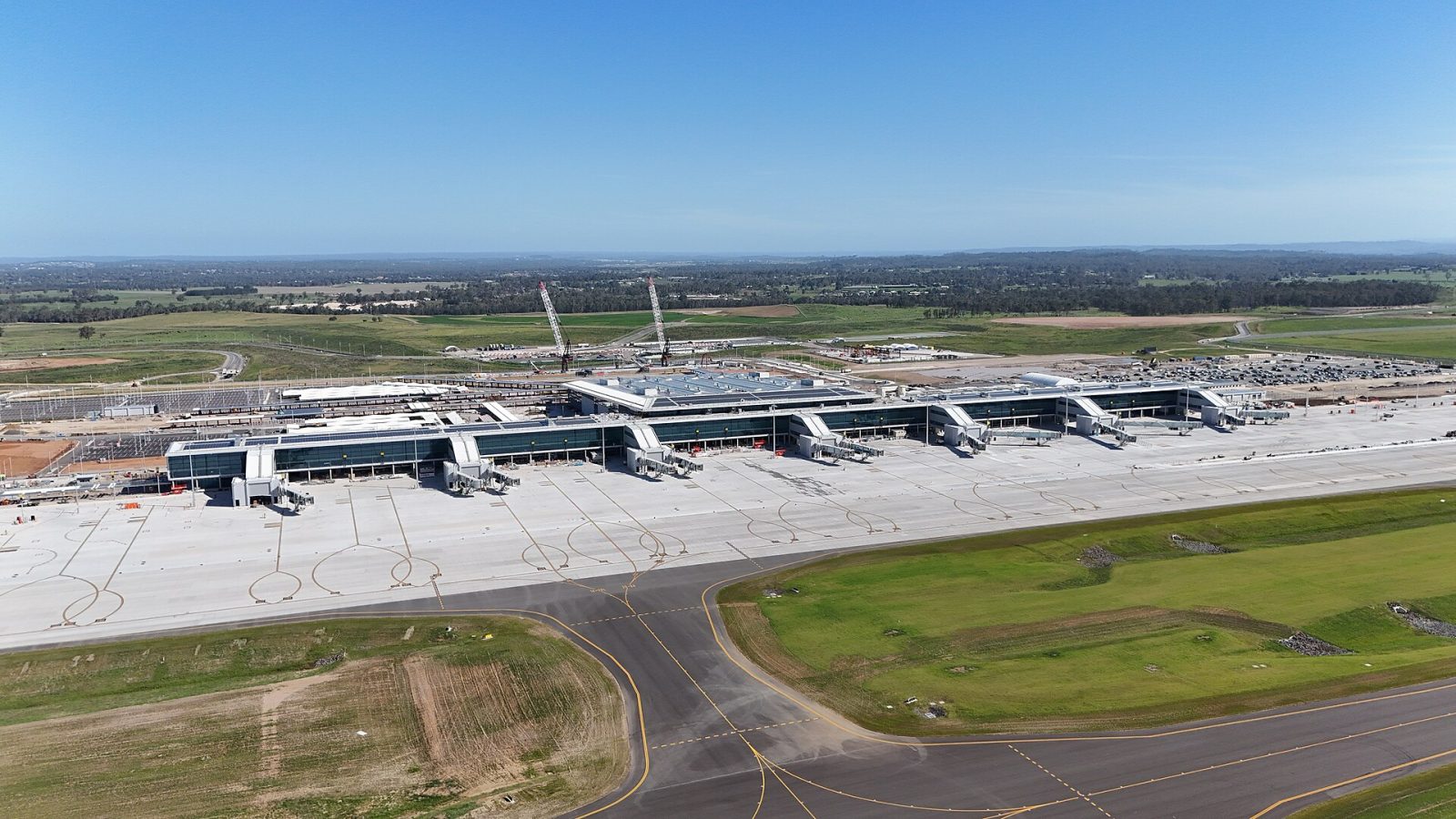
Sydney has a second airport at last. Western Sydney International Airport opened to passengers on 25 October, when Jetstar flight JQ362 left for the Gold Coast just before 11:30. It was a sold out flight and, according to the ABC, the first service from a major new Australian airport in more than 50 years.
Australians are still curious. Searches for “western sydney airport” rose by 400% to more than 20,000 this week, according to Google Trends.
Prime Minister Anthony Albanese called opening day “an absolutely extraordinary day”. The harder work now is turning a new terminal into a busy one.
A Quiet Start by Design
The early timetable is thin. Jetstar flies to Brisbane, the Gold Coast and Melbourne, and Air New Zealand operates the only international route, to Auckland, according to its current schedule.
That was always the plan. Chief executive Simon Hickey said the terminal is about the size of Adelaide’s, which handles around 10 million passengers a year. He told the ABC that WSI will not start at that level but should get close by the early to mid 2030s.
The bigger names come later. Singapore Airlines starts daily flights on 23 November, VietJet follows to Ho Chi Minh City in January and Fiji Airways to Nadi in March. Qantas and QantasLink arrive on 28 March 2027, and Qatar Airways is due from Doha in December 2027.
The Night Shift Begins
The most important change may be the one passengers notice least. On 1 November, WSI was cleared for night movements, giving it unrestricted 24 hour operations.
Sydney Kingsford Smith cannot match that. Its curfew bars scheduled operations from 23:00 to 06:00, and it is capped at 80 movements an hour. From the same date, exemptions that let some cargo, propeller and business jet flights use Sydney Airport during the curfew no longer apply.
That makes WSI the city’s only option for scheduled flying at night. Freighters already use it. Regular cargo flights began in July, and the cargo precinct is designed for up to 1.8 million tonnes a year. For airlines, a curfew free gateway means long haul schedules can be built around the best departure times at the other end, rather than around Sydney’s night ban.
To limit noise, Airservices Australia prioritises reciprocal runway operations between 23:00 and 05:30, with aircraft taking off and landing in the same direction to avoid the most populated areas. Nine permanent and four mobile noise monitors are in place.
The Summer Problem
WSI sits on one of the hottest patches of land in Sydney. Badgerys Creek has recorded peaks of 50.1°C, and the ABC’s meteorologist puts the airport’s average midsummer high at about 30°C, against 26.7°C at Sydney Airport.
Heat matters for aircraft. Hot air is less dense, which reduces lift and engine thrust. Professor Jason Middleton of UNSW’s School of Aviation told the ABC that an A380 at maximum take off weight would need more runway than is available above 35°C with light winds, and would have to reduce payload. He does not expect smaller types such as the A320 or Dash 8 to be affected.
WSI’s runway is 3,700 m long and built to handle the largest aircraft. But on the hottest days, the airlines that most want a curfew free long haul gateway could also face weight limits.
There is a neighbourhood side too. Professor Sebastian Pfautsch of Western Sydney University warned that the airport’s unshaded tarmac could act as a “heat sink” for nearby suburbs. WSI said it had “mitigated every high and severe risk” from climate change scenarios to 2090.
Growing Pains
Several gaps remain. The Sydney Metro line to the airport will not open until at least 2027, so passengers rely on a free shuttle bus to St Marys station. Critics say public transport options are limited.
The airport also opened without a fuel pipeline, so jet fuel arrives by road in an estimated 50 to 60 tankers a day. A permanent fire station is not expected until June 2027. In August, the Sydney Morning Herald reported that poor camera quality at the remote tower stopped the Civil Aviation Safety Authority from certifying visual separation, forcing aircraft to be spaced 15 nautical miles apart.
None of these is unusual for a new airport, and most matter little at today’s traffic levels. They will matter far more once international carriers arrive.
What to Watch
The arrival of Singapore Airlines next week is the first real test. A daily long haul service will bring a widebody, a full international turnaround and the first transfer passengers onto Singapore’s network.
The second milestone is March, when Qantas arrives and the airport moves from Jetstar’s outpost to a contested market. The third is the Metro. Until trains run, WSI competes with Sydney Airport on flights and fares while losing on access.
The Bottom Line
Western Sydney International has done the hardest thing first: it opened. Its 24 hour status already makes it unique in Australia’s biggest city.
But a new airport is judged on how many people choose to use it. That depends on airlines, trains and, this summer, the weather. The next six months will show whether WSI becomes Sydney’s second gateway or remains, for now, its overflow.
Continue to follow The Aviation Hub for more analysis and insight.
Advertise with us Your brand, in front of an aviation audience Home page and in-article placements, sold directly, one advertiser per slot. From £250 a year. See the rates