
Every year, aviation watchers ask the same difficult question: Which plane crash has claimed the most lives?
It is a sombre way to measure a year, yet it matters a great deal.
Fatal accidents shape how regulators act, how airlines train their crews, and how the travelling public feels about boarding a flight.
So far, 2026 has produced a clear and tragic answer.
The deadliest event was not a packed passenger jet on a busy international route.
Instead, it was a military transport aircraft that went down in a remote corner of South America.
In fact, two of the three worst crashes this year share that same theme. Ageing military Hercules airframes have dominated the fatality figures.
This article ranks the deadliest crashes of 2026 to date, based on the number of fatalities recorded.
We will then ask whether the year has been a safe one overall so far.
Finally, we compare the current picture with 2025, using published industry data so that every figure can be checked. All figures here run up to 16 June 2026.
The Deadliest Plane Crash in 2026 So Far
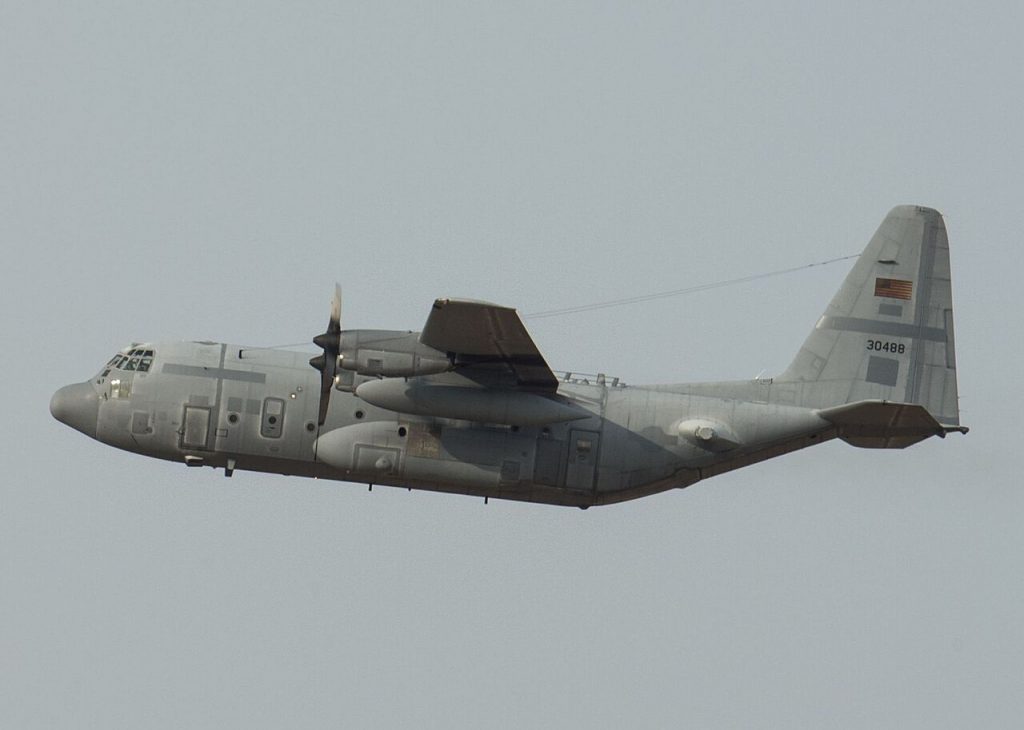
The deadliest plane crash of 2026 happened on 23 March.
A Colombian Aerospace Force Lockheed C-130H Hercules, registered FAC1016, crashed moments after taking off from Puerto Leguízamo in the Putumayo region.
The aircraft was carrying 126 people on a troop transport flight bound for Puerto Asís.
It came down roughly 1.5 kilometres from the runway and was consumed by fire. That fire then triggered the detonation of ammunition stored on board.
In total, 69 people died and 57 survived with injuries.
This makes it the deadliest aviation crash of the year so far.
It also ranks as the second deadliest accident in the history of the Colombian air force.
The aircraft was built in 1984 and had been donated by the United States in 2020.
Investigators later confirmed that it was uninsured at the time of the crash.
President Gustavo Petro publicly described the aircraft as a worthless gift, while critics urged restraint until the investigation concludes.
Another Plane Crash To Note…
The second deadliest crash struck Bolivia on 27 February.
A Bolivian Air Force C-130H Hercules, loaded with freshly printed banknotes, overran the runway while landing at El Alto International Airport near La Paz.
El Alto sits at more than 4,000 metres, making it one of the highest commercial airports on Earth.
During a hailstorm, the aircraft ploughed through the perimeter fence and struck vehicles on a busy road.
Around 24 people died, and 23 of them were on the ground.
A later technical report concluded that the heavily loaded aircraft simply could not have stopped safely in those conditions.
The two pilots were subsequently arrested.
Has It Been A Safe Year for Aviation in 2026 So Far?

Despite those grim headlines, the wider picture is far more reassuring.
The data set behind this article logs 73 separate occurrences through 16 June, and 50 of them caused no fatalities at all.
The total death toll across every listed event sits at roughly 170.
Many major airlines recorded events with no loss of life whatsoever, including Air India Express, United Airlines, JetBlue and Ryanair.
It helps to set this against a full year of data.
According to the Flight Safety Foundation, 2025 saw 101 airliner accidents worldwide.
Twelve of those were fatal, and they claimed 420 lives on board plus 33 more on the ground.
The IATA 2025 Safety Report counted matters slightly differently, recording 51 accidents, eight of them fatal, with 394 deaths on board. Either way, 2025 produced the highest annual fatality total since 2018.
Crucially, 2025 was skewed by two enormous disasters.
Air India Flight 171 crashed at Ahmedabad on 12 June 2025, killing 241 of the 242 people on board and at least 19 more on the ground, according to Britannica.
In addition, a midair collision near Washington in January 2025 killed a further 67 people. Together, those two events accounted for most of the year’s losses.
By contrast, 2026 has so far avoided a catastrophe on that scale.
No single mainline passenger jet has suffered a loss anywhere near 241 deaths.
The deadliest events have instead involved military transports and smaller regional aircraft.
With more than half of the year still to run, the running total of around 170 deaths remains significant.
Even so, it currently sits well below the pace that 2025 eventually set.
Despite Deadly Plane Crash This Year, The Industry Has Never Been Safer…

To answer the question directly, the deadliest crash of 2026 so far is the Colombian C-130 Hercules disaster of 23 March, in which 69 lives were lost.
The Bolivian Hercules tragedy and the SATENA Beechcraft crash complete a deeply sobering top three.
There is, however, a clear and uncomfortable pattern running through these events.
Ageing military transport aircraft, often operated in demanding conditions, account for the worst losses of the year.
Commercial airline travel, by contrast, has stayed remarkably safe throughout.
It is worth holding on to the wider truth as well.
Flying remains the safest form of long distance travel, and most accidents this year caused no deaths at all.
Ultimately, the second half of 2026 will decide how the year is finally judged.
Continue to follow The Aviation Hub for more analysis and insight!
Advertise with us Your brand, in front of an aviation audience Home page and in-article placements, sold directly, one advertiser per slot. From £250 a year. See the rates