Commercial flights still require wheelchair users to leave their own chairs behind before boarding, even though 2026 has already seen a person fly seated in their personal wheelchair on a test aircraft, peer-reviewed crash-test findings have entered the public record, and full-scale cabin mockups have been exhibited at the interiors industry's flagship expo. The distance between that proof of concept and an actual boarding pass remains significant, and the stakes are high: US DOT data show that airlines mishandled over 11,000 wheelchairs and scooters in 2024, stripping many travellers of equipment that is, for some, not a convenience but a medical essential.
What the Test Flight Actually Showed
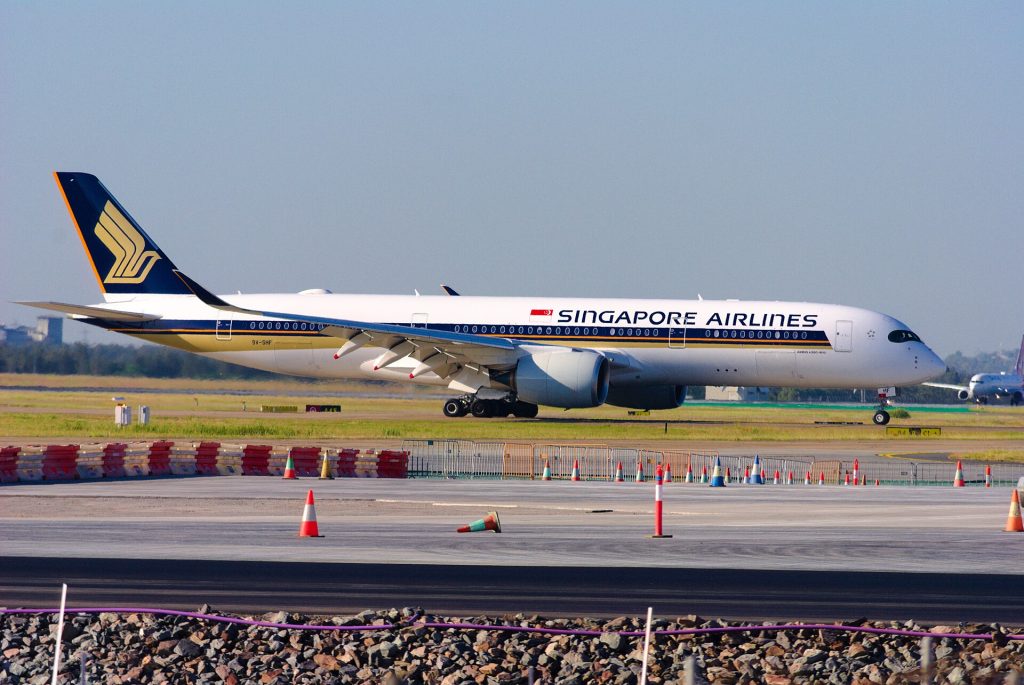
Wheelchair Travel reports that in early March 2026, Airbus employee and wheelchair user Dirk Thalheim flew seated in his own chair aboard the A350-900 'Airspace Explorer'. The precise circumstances, however, merit close attention: the occupancy occurred during cruise only. Wheelchair Travel also notes that the chair and its securement system remained unoccupied through taxi, takeoff and landing, the three flight phases that place the greatest dynamic demands on any seating arrangement. What the demonstration established is that the concept functions under normal cruise conditions; it did not show that a passenger could stay seated for the entirety of a commercial flight.
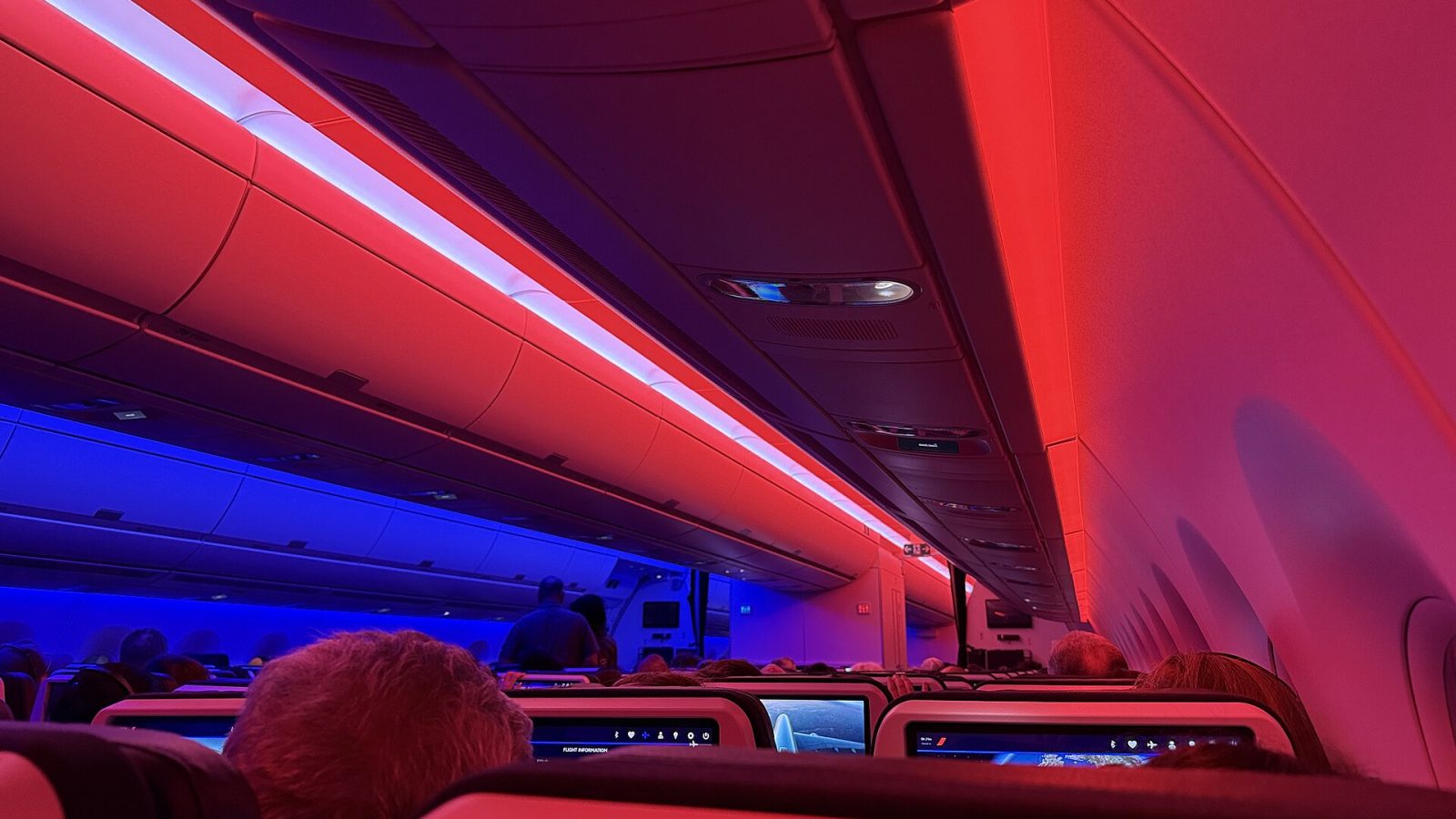
The securement system Thalheim used was the Airbus Airspace U Suite. Wheelchair Travel reports that it relies on floor tracks paired with a restraint system developed in collaboration with AMF Bruns. Hamburg's 2026 Aircraft Interiors Expo hosted a full-scale physical mockup of the U Suite, and the product reached the finalist stage in the Accessibility category at the 2026 Crystal Cabin Awards. That category itself only came into existence for the 2025 awards cycle, which speaks to how recently the industry has come to regard this as a mainstream cabin design challenge.
You can explore Airbus's broader product range using our Manufacturer Search.
The Science Behind Crash-Worthiness
The specific engineering hurdle is this: any seating position occupied during takeoff and landing must satisfy FAA dynamic crash-test requirements. All Wheels Up (AWU) published peer-reviewed research in October 2026 showing that a powered wheelchair can be made to withstand those conditions. Carried in Aerospace Medicine and Human Performance, the study was produced jointly with the National Institute for Aviation Research (NIAR) at Wichita State University. Funding was drawn partly from a Muscular Dystrophy Association Advocacy Collaboration Grant, with in-kind contributions from industry partners.
Researchers subjected a 426-pound Quantum Edge 3 power wheelchair secured with a Q'STRAINT One restraint system and an anthropomorphic test device to the two loading conditions set out in 14 CFR §25.562: a 16G forward-impact and a 14G downward-impact. In both tests, neither the wheelchair nor the restraint system suffered structural failure, and AWU states the testing demonstrated compliance with the crash conditions evaluated. NIAR co-author Luis Manuel Gomez, Manager of the Advanced Virtual Engineering and Testing Laboratories, said: "The testing demonstrated that the wheelchair seating system successfully met the crash conditions evaluated, providing evidence that can help inform future research and decision-making."
That is significant, but it is a single data point covering one wheelchair model and one restraint system. Full certification would require regulators to establish a framework that could cover the enormous variety of powered and manual chairs in use, each with its own mass, geometry and structural properties.
What US Regulations Now Require, and What They Do Not
On a narrower but still consequential front, the US has already acted while securement certification continues to progress. Under Cornell Legal Information Institute (14 CFR § 382.65), every new single-aisle aircraft configured with 125 or more seats and delivered from 2 October 2026 onwards must be equipped with an improved on-board wheelchair. The applicable rules require seat-height alignment with aircraft seats, locking wheels, padded seating, and lavatory manoeuvrability, representing a genuine upgrade to the loaner chairs airlines make available within the cabin.
The limits of that rule are equally important to note. Cornell Legal Information Institute (14 CFR § 382.65) also makes clear that airlines are not required to expand existing stowage space or modify lavatories to comply. In other words, the rule improves a tool that passengers still have to transfer into, and it does not oblige airlines to change the physical environment around it. For wheelchair users who cannot safely transfer at all, the regulation does not close the gap.
The point was put plainly by Dr. Sheyna Gifford, rehabilitation physician and co-author of the AWU study: "For some individuals, however, remaining in their prescribed wheelchair seating system is fundamentally a health and safety issue."
What Was on Show at AIX 2026, and What Was Missing
The Aircraft Interiors Expo in Hamburg offered a snapshot of where the industry stands commercially. The Airbus U Suite mockup was present and prominent. The Upfront Media reported that Boeing displayed a ramp designed to bridge the gap between jetway and aircraft door for wheelchair users, and also showed an upgraded high-value cargo container sized specifically for the 737 hold, designed to protect wheelchairs in the hold. These are practical, infrastructure-level interventions rather than in-cabin securement, and they address a different part of the problem.
Notably, The Upfront Media also reported that the Air4All wheelchair securement system from Delta Flight Products was absent from AIX 2026. Air4All had been one of the more visible programmes in this space. Its absence from the expo floor does not mean the programme has ended, but it does mean that at the industry's main annual showcase, the field of active exhibitors narrowed.
The Gap Between Demonstration and a Boarding Pass for Wheelchair Users
The honest position is this: the technical case for in-cabin wheelchair securement is stronger in late 2026 than it has ever been. Crash-test data exists. A human being has flown in their chair, albeit not through the critical phases of flight. Full-scale hardware has been shown publicly.
What does not yet exist is a certification pathway that regulators have agreed to and that covers the range of wheelchairs passengers actually use. Nor does a commercial commitment from an airline to retrofit or order aircraft with a certified securement position. Closing those two gaps, one regulatory and one commercial, is what stands between today's demonstrations and a wheelchair user buying a ticket, boarding with their own chair and remaining in it from pushback to gate.
The DOT's mishandling figures remind us what the status quo costs. For the passengers most affected, this is not an abstract design question. It is a question of whether aviation is accessible to them at all.
What to Watch Next
The AWU research points to what must come next on the technical side: further testing across a wider range of chair types and restraint systems, and engagement with the FAA on what a certification standard would look like. On the regulatory side, the 2026 on-board wheelchair rules are a floor, not a ceiling, and advocacy groups will be watching whether the DOT moves toward a rulemaking on in-cabin securement. On the commercial side, the question is which airline, if any, moves from expo interest to a firm order for a certified system.
Those are the three threads to follow: the FAA's response to the emerging body of crash-test evidence, further development of systems like the U Suite toward airworthiness certification, and the first airline willing to put this on its fleet plan.
This article draws on information from All Wheels Up (AWU) via EIN Presswire and reporting by Cornell Legal Information Institute (14 CFR § 382.65), Wheelchair Travel and The Upfront Media.
Continue to follow The Aviation Hub for more analysis and insight.
Advertise with us Your brand, in front of an aviation audience Home page and in-article placements, sold directly, one advertiser per slot. From £250 a year. See the rates