On Monday, Stephanie Pope told Boeing Commercial Airplanes staff that the division would shrink by about 5%. The cuts will come through attrition and involuntary layoffs, with notices starting in December. The division employed 50,494 people at the end of 2025, so the reduction works out at roughly 2,500 jobs.
The timing looks strange. Five days earlier, Avolon finalised an order for 140 737 MAX 10s, the largest 737 MAX order any lessor has ever placed. Boeing booked 300 net orders in the third quarter alone. Its commercial backlog stands at a record $612bn, covering more than 6,300 aircraft.
So why would a manufacturer with years of work on its books cut staff? Pope’s memo answered that in one line: “Adjusting our production schedules and reducing aircraft output puts us in an overstaffed position.”
Boeing is not short of customers. It is short of output.
The Factory Is the Constraint
The 737 line explains almost everything. The FAA capped production at 38 a month after the Alaska Airlines door plug blowout in January 2024, raised the cap to 42 in October 2025, and cleared 47 a month on 27 May. Kelly Ortberg said at the time that the line would need “a few months of stabilization”.
It has needed more than that. Boeing had expected a stable 47 by the summer. That is now an early 2027 target, with the next step to 52 pushed into the second half of 2027. The bottleneck is the Renton wing shop, which Ortberg admitted in September was not building wings fast enough. Fuselage output from Wichita is also lagging final assembly.
The delivery numbers show the gap. Boeing handed over 367 737s in the first nine months of the year. Reaching its target of 500 would have meant delivering about 133 in the fourth quarter, and Boeing has already said it will miss. The 787 is stuck at eight a month against a plan for ten.
A production system can only move as fast as its slowest shop. Boeing staffed the rest of its system for a ramp that the wing shop cannot yet feed. Those workers are now waiting on parts rather than building aircraft.
Why Overstaffed Means Overspent
That waiting is expensive. Airlines pay the bulk of an aircraft’s price on delivery, so every month the line runs below plan, Boeing carries the full cost of its workforce without the matching cash coming in.
The third quarter results made the problem visible. Commercial Airplanes lost $697m on revenue of $10.7bn, an operating margin of minus 6.5%. Free cash flow across the whole company was still negative over nine months, at minus $359m.
What really moved the market was the outlook. Boeing now expects free cash flow of about $3bn in 2027, against analyst expectations of around $5.5bn. Its milestone of $10bn a year has slipped from 2028 to 2029. The shares fell close to 10% on 27 October, which Reuters described as their worst day in more than 18 months.
Viewed in that light, the job cuts are a predictable next step. Pope said Boeing needs to “reset the pace” of its rate increases to give factories and suppliers “additional time to achieve stability”. Slower rates need fewer people. Investors barely reacted on Monday, and the shares closed down less than 1%. The market had already priced in the slower ramp a fortnight earlier.
A Lesson Boeing Has Learned Before
The risk lies in what comes next. Boeing has cut through a downturn and then tried to ramp up before, and it did not go well.
In 2020, the pandemic pushed Boeing to shed around 30,000 jobs, taking its workforce to about 130,000. When demand returned, it had to rebuild production with many less experienced people on the line. In January 2024, a door plug blew out of an Alaska Airlines 737 MAX 9 shortly after takeoff from Portland. The NTSB later put the probable cause down to Boeing’s failure to provide adequate training, guidance and oversight to its factory workers.
In late 2024, with its machinists on strike, Boeing announced it would cut about 10% of its workforce, roughly 17,000 jobs. The latest cut is smaller and more targeted. Even so, it lands while Boeing is still trying to prove it can hold a higher rate with consistent quality.
Where the cuts fall matters more than how many there are. IAM District 751 has said it was notified but does not know how many of its members, or which ones, will be affected. SPEEA, which represents engineers and technicians, is still seeking details. Cuts that fall mainly on overhead would be manageable. Losing experienced mechanics or inspectors would leave Boeing worse placed for the ramp to 52 it is promising for late 2027.
Boeing has said in the past that it tries to keep suppliers working at a steady rate during slowdowns, so they avoid layoffs of their own. If the extra time Pope describes is spent building inventory and steadying the supply chain, the cuts could leave Boeing better prepared. If attrition removes the wrong people, the company could be rehiring within a year.
Airlines Pay for the Delay
Airlines feel the consequences first. Ryanair expects its first 737 MAX 10 in late January, and its order for 150 makes it one of the type’s largest customers alongside United. Lessors placed firm orders for more than 230 MAX 10s this year, compared with fewer than 50 in their backlogs at the end of 2025. All of those aircraft depend on the same Renton line hitting its numbers.
Airbus cannot fill the gap. It delivered 621 aircraft between January and October, an average of about 62 a month. To reach its target of around 870 for the year, it needs 249 more in November and December, about double its monthly pace so far. Both halves of the duopoly are limited by their factories and suppliers, not by sales.
High fuel prices make the shortage costlier. Ortberg said in October that expensive fuel has boosted demand for efficient new jets. Every delayed MAX means an older, thirstier aircraft stays in service for longer, at the point when fuel is hurting airline margins most.
What to Watch Next
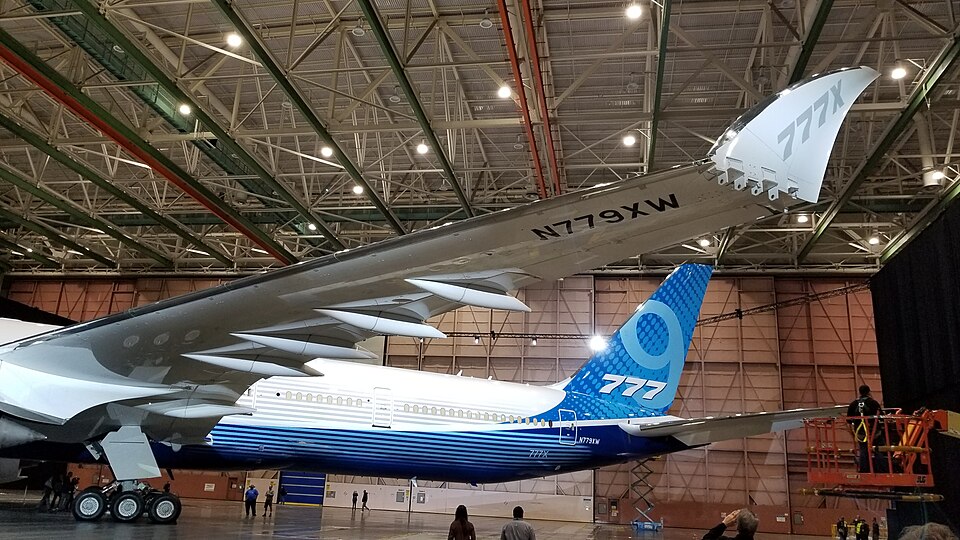
2027 is the year Boeing’s plan gets tested. The line has to hold 47 a month early in the year and then climb to 52 in the second half. MAX 7 and MAX 10 aircraft built before certification are due to start delivering from early 2027. The 777-9 is also due to make its first delivery during the year. Each of those milestones needs skilled people in the right places.
The December notices will show which roles Boeing considers surplus. That is the first real indication of whether the company is trimming overhead or cutting into the capability it will need in 2027.
The Bottom Line
On a spreadsheet, the cut makes sense. A manufacturer building fewer aircraft than planned needs fewer people, and Boeing cannot afford to carry the difference while its cash targets slip.
The difficulty is that Boeing’s problem has never been demand. Its problem has been turning orders into aircraft safely and consistently. Shrinking the workforce while a $612bn backlog waits is a bet that discipline will beat speed. Ortberg’s Boeing has earned some credit for that approach. The ramp to 52 next year will show whether this round of cuts was the disciplined move it is meant to be, or the same mistake Boeing made in 2020 on a smaller scale.
Continue to follow The Aviation Hub for more analysis and insight.
Advertise with us Your brand, in front of an aviation audience Home page and in-article placements, sold directly, one advertiser per slot. From £250 a year. See the rates