Why Midway Atoll Airport Is Important to Qantas
 By The Aviation Hub
5 min read
Updated September 29, 2026
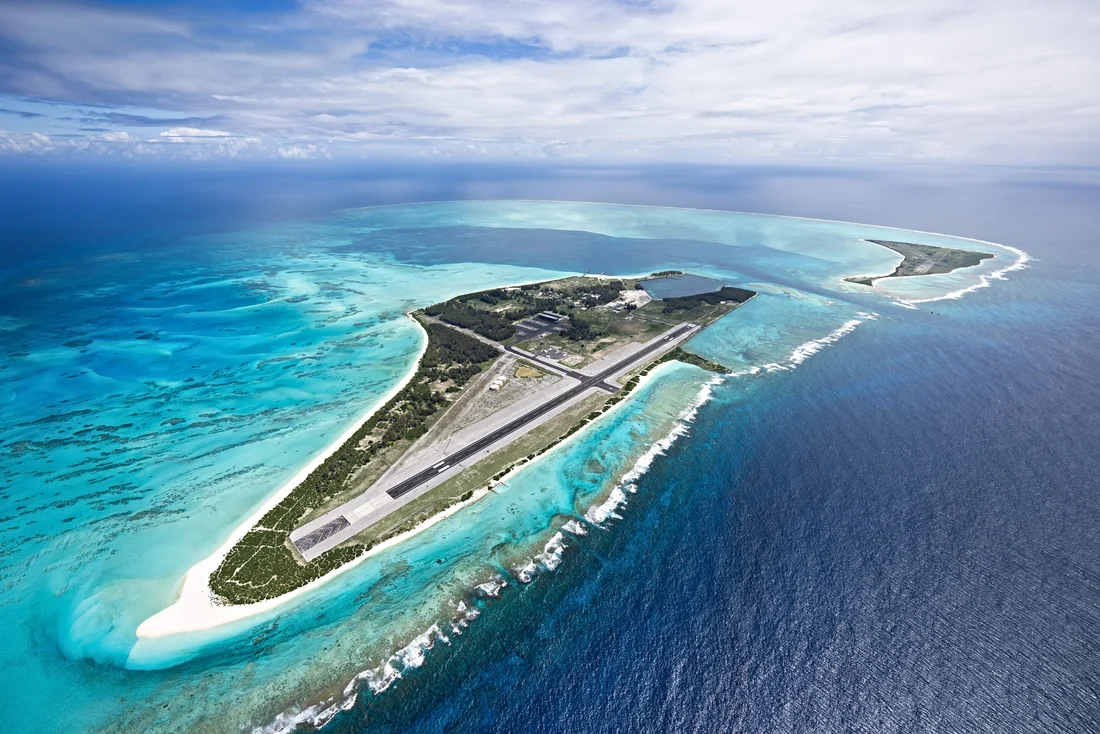
Midway Atoll sits in the middle of the North Pacific, thousands of miles from any major city.
Yet this tiny coral outpost has become central to the future of Qantas Project Sunrise.
In a new submission to the Federal Aviation Administration, the Australian flag carrier makes a clear case.
Losing the Midway Atoll airfield would cost fuel, time, money and seats on the longest commercial flight in the world.
The submission, filed on 22 September 2026 under FAA docket FAA-2026-8185, responds to an FAA request for comments on Midway Atoll Airport, also known as Henderson Airfield (MDY/PMDY).
Qantas supports continued federal investment in the airfield and urges the FAA to fund the work needed to keep it certified.
What Is Midway Atoll Airport?
Midway Atoll is a small United States territory roughly halfway between North America and Asia.
Its runway at Henderson Airfield takes its name from a Marine Corps aviator killed during the Battle of Midway in 1942.
Today, the airfield handles no scheduled passenger traffic.
Instead, its value lies in its location. For twin engine aircraft crossing the Pacific, it offers one of very few places to land in an emergency.
In fact, Qantas describes the airfield as performing a unique and irreplaceable safety function for its future operations.
Midway Atoll and Project Sunrise
Under its current flying programme, Qantas does not need Midway Atoll to meet its diversion requirements.
However, that changes in October 2027.
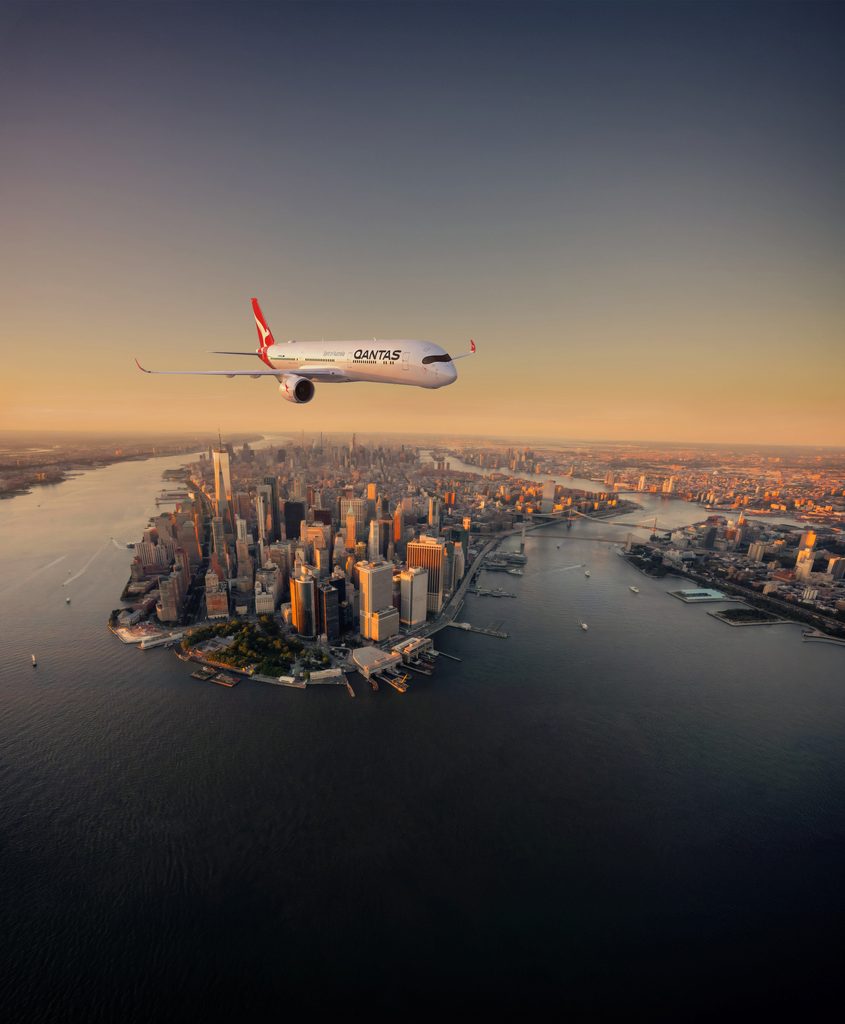
From that date, Qantas will launch Project Sunrise, linking Sydney and London nonstop for the first time.
The daily service will use the Airbus A350-1000ULR, a variant built specifically for this mission.
Airbus has fitted an additional rear centre fuel tank that supports flight times of up to 22 hours.
Qantas expects the aircraft to gain 240 minute EDTO approval before services begin.
EDTO, or Extended Diversion Time Operations, governs how far a twin engine jet may fly from a suitable diversion airport.
Qantas uses the term interchangeably with ETOPS.
As a result, the preferred northern routing via Alaska depends on Midway Atoll.
The airline states that the airfield must be available to keep an optimal track within its planned 240 minute area of operation.
The Single Point of Failure Problem
The central argument is simple.
Without Midway Atoll, Wake Island Airfield (PWAK) would become a single point of failure for the Sunrise routing.
Airlines design their operations to avoid relying on any one airport.
Weather, runway condition or infrastructure limits can close a remote airfield without warning.
Therefore, removing Midway from the Pacific alternate network would concentrate risk on a smaller number of distant airports.
Longer diversion distances also increase exposure time during an emergency.
In addition, they can require extra contingency fuel, tighter payload planning, delays or even cancellations.
Midway Atoll by the Numbers
Qantas ran flight planning assessments for the A350-1000 operating Sydney to London with Midway Atoll unavailable.
In that scenario, the aircraft must shift its track to the northwest to stay compliant with EDTO rules and cargo fire suppression limits.
The airline included a diagram showing a red gap in coverage within the 240 minute area.
Notably, the optimal track passes straight through the centre of that gap.
The compliant alternative comes at a price.
Qantas estimates the detour adds around 20 minutes of flight time per sector. It also requires about 2,200 kg of additional planned fuel.
Consequently, the zero fuel weight falls by roughly the same amount.
The incremental operating cost is approximately USD 2,804 per sector.
On a daily service, those figures add up quickly.
By our own calculation, a single daily sector would burn around 800 tonnes of extra fuel and cost more than USD 1 million each year.
Up to 22 Passengers Left Behind
The most striking figure concerns passengers rather than fuel.
Qantas warns that the payload reduction could force it to offload up to 22 passengers, depending on sector conditions.
Moreover, this could happen on a daily basis.
That matters because Project Sunrise aircraft carry a deliberately small number of seats.
Put simply, a Midway Atoll closure would hit Qantas where ultra long range flying is most fragile.
A Decade of Investment at Stake
Qantas frames Midway Atoll as protection for a very large capital commitment.
The A350-1000ULR is the product of more than a decade of work between Qantas and Airbus, and the group has 12 on order.
Project Sunrise is also expected to create more than 275 jobs.
Meanwhile, geopolitical airspace restrictions already force longer routings on many long haul flights.
Qantas argues that an extra penalty on top of those constraints increases the risk to the long term viability of the project.
Why Not Simply Extend EDTO?
The airline acknowledges that the A350-1000ULR is technically capable of EDTO approvals beyond 240 minutes.
However, higher thresholds may demand more EDTO fuel.
On a 22 hour sector, that extra weight again comes at the expense of payload.
For this reason, Qantas is already progressing Midway Atoll for EDTO alternate approval on the Boeing 787-9, Airbus A350-1000 and Airbus A380.
What Qantas Wants From the FAA
Qantas urges the FAA to preserve the operational capability of Midway Atoll.
It also asks the regulator to fund the rehabilitation needed to maintain the airfield to Part 139 certification standards, so it remains available as an EDTO and ETOPS alternate.
According to Qantas, continued investment will support safety, network resilience, and fuel and emissions efficiency across the Pacific.
Overall…
Midway Atoll may never appear on a Qantas departure board. Even so, it could quietly shape every Project Sunrise flight between Sydney and London.
A remote runway can decide the fuel load, the passenger count and the profit margin of a flagship service.
With Sunrise due to launch in October 2027, the FAA decision on Midway Atoll will carry weight far beyond the atoll itself.
For the wider industry, it is a reminder that ultra long range flying still depends on small airfields in unlikely places.
For more on the route itself, read our full Qantas Project Sunrise route analysis.
Advertise with us Your brand, in front of an aviation audience Home page and in-article placements, sold directly, one advertiser per slot. From £250 a year. See the rates