
For much of the last decade, conversations about Airbus in North Wales with the Broughton plant tended to focus on what was ending.
The A380 programme was winding down, Brexit had cast a shadow over cross border supply chains, and the pandemic had flattened aircraft demand almost overnight.
That narrative has now changed completely.
On 21 September 2026, Airbus confirmed a £150 million investment to convert its former A380 wing facility at Broughton into a dedicated A321 wing line.
The building that once produced the largest wings ever fitted to a commercial airliner is being rebuilt around the aircraft that matters most to Airbus today.
Broughton: A Superjumbo Factory Finds A New Purpose
The West Factory at Broughton opened in 2003 at a cost of around £350 million, built specifically to assemble wings for the A380.
At roughly 83,500 square metres, it is one of the largest manufacturing buildings in the UK.
For almost two decades, it turned out enormous wing sets that were shipped along the River Dee and onwards to Toulouse.
When the final A380 wings left Broughton in September 2020, the future of that space was an open question. Airbus has now answered it decisively.
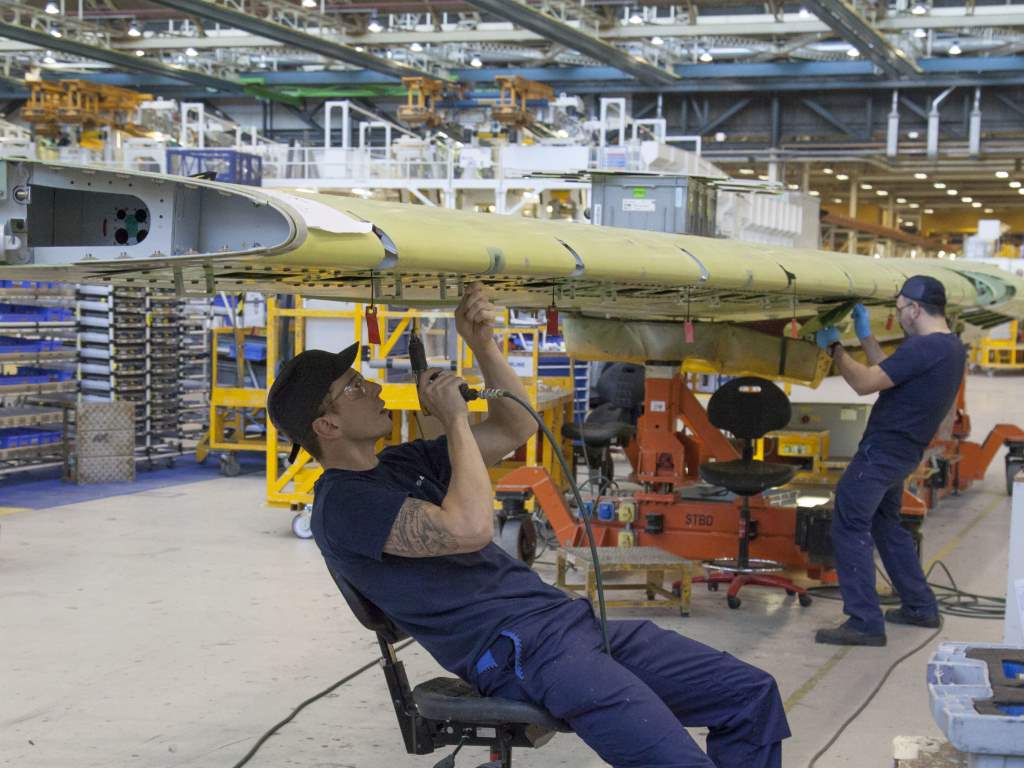
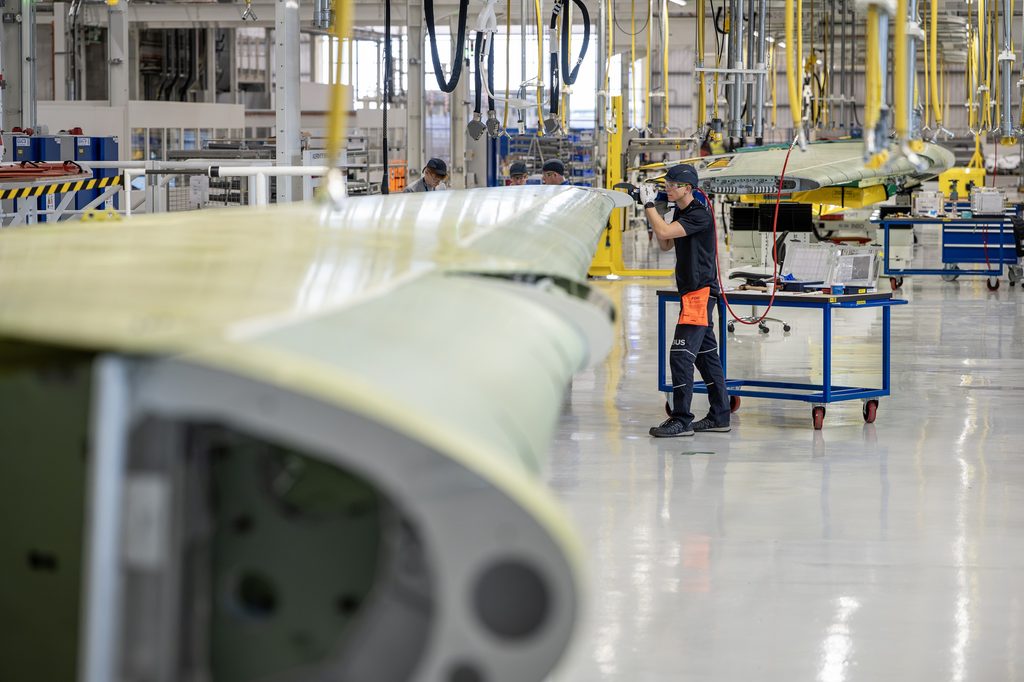
Once completed, the refurbished facility will host six wing production jigs, an equipping line and a dedicated paint shop.
The first A321 wing is already in production, and Airbus expects every jig to be operational by the end of this year.
The symbolism is striking.
The A380 represented a bet on giant hub to hub aircraft that never fully paid off.
The A321 represents the opposite philosophy, and it is the aircraft that airlines cannot get enough of.
The A321 Is Now The Heart Of Airbus
Airbus says the A320 Family backlog stands at around 7,500 aircraft, with roughly 75% of those being A321s.
Figures compiled by Air Data News show 7,917 A321neo orders to the end of August 2026 against just 2,226 deliveries, leaving a backlog of more than 5,600 aircraft for that variant alone.
That demand is driven by the aircraft’s versatility.
The A321neo can operate dense short haul routes, while the A321LR and A321XLR have opened up transatlantic and long, thin routes that were once the preserve of widebodies.
Airlines see it as the most flexible narrowbody on the market.
Every one of those aircraft needs a pair of wings, and Broughton builds them all. Wings from North Wales feed final assembly lines in Toulouse, Hamburg, Tianjin and Mobile.
Jerome Blandin, Head of Airbus Wing, put it simply when he noted that an A320 Family aircraft takes off or lands somewhere in the world every two seconds, with wings designed and built in the UK.
Rate 75 Depends On Wings As Much As Engines
The investment is directly linked to Airbus’s ambition to build 75 A320 Family aircraft per month.
That target has proved stubborn.
It was originally pencilled in for the middle of this decade, then pushed to 2027, and Airbus has since warned that full stabilisation at rate 75 will come later still.
Engines have dominated the headlines.
In April 2026, Airbus chief executive Guillaume Faury publicly criticised Pratt & Whitney for failing to commit to the number of engines Airbus had ordered, warning that it would weigh on the company’s target of around 870 commercial deliveries this year.
However, engines are only one part of the puzzle.
Wings are the largest and most complex structures on the aircraft, and they cannot be produced quickly without the right floor space, tooling and trained workforce.
By creating a line built specifically for the A321, Airbus is removing a potential bottleneck before it appears.
When engine supply eventually recovers, the wings need to be ready.
Blandin made the point directly, saying Airbus is not just talking about a ramp up but putting the infrastructure in place to support it.
According to Leeham News, Airbus is already sold out at rate 75 through 2032 and has studied going as high as 83 aircraft per month.
If that ever becomes reality, Broughton’s added capacity will be essential.
Jobs, Skills And A Welsh Success Story
The announcement also carries significant weight for the regional economy.
Airbus is creating around 480 new roles across Broughton in 2026, including 250 in the refurbished factory.
These will join a workforce of roughly 6,000 people, making the site one of the largest private employers in Wales.
Notably, Airbus says operators across the site were directly involved in designing the new manufacturing environment, feeding into ergonomics and technology integration.
That approach should help the line reach maturity faster, which matters when every month of delay feeds into delivery slots.
The contrast with the Brexit years is sharp. Airbus openly questioned its long term UK footprint during those negotiations.
A £150 million commitment of this scale suggests those concerns have given way to confidence in Broughton’s skills base and its place at the centre of the supply chain.
Broughton is Part Of A Wider UK Wing Strategy
Broughton does not sit in isolation.
In August 2026, Airbus began a major extension of its Belfast wing facility, which is now the sole global producer of A220 wings following the takeover of the former Spirit AeroSystems operation.
That project will add a third autoclave and specialist tooling to support the A220 ramp up to 13 aircraft per month by 2028.
Meanwhile, at Filton, the Wing of Tomorrow programme entered a three year flight test campaign in July 2026.
Airbus will assemble full scale wing extensions at its Wing Technology Development Centre and fly them on an A321neo to evaluate longer, more efficient wing designs for its next generation single aisle aircraft.
The programme has received £227 million in Aerospace Technology Institute funding since 2014.
Taken together, these three sites confirm the UK as Airbus’s centre of excellence for wings.
Filton designs them, Belfast builds them for the A220, and Broughton builds them at industrial scale for almost everything else.
The Verdict on Broughton
Broughton has always been important, but its role has never been more central than it is now.
The A321 is the commercial engine of Airbus, and the production ramp cannot succeed without a reliable flow of wings from North Wales.
There is also a longer term angle.
Airbus has not yet decided where wings for its next generation single aisle aircraft will be built.
By investing heavily in modern, purpose built capacity now, Broughton is strengthening its case to be at the front of the queue when that decision comes.
For a site that many feared was facing decline only a few years ago, that is a remarkable turnaround.
Continue to follow The Aviation Hub for more analysis and insight!
Advertise with us Your brand, in front of an aviation audience Home page and in-article placements, sold directly, one advertiser per slot. From £250 a year. See the rates