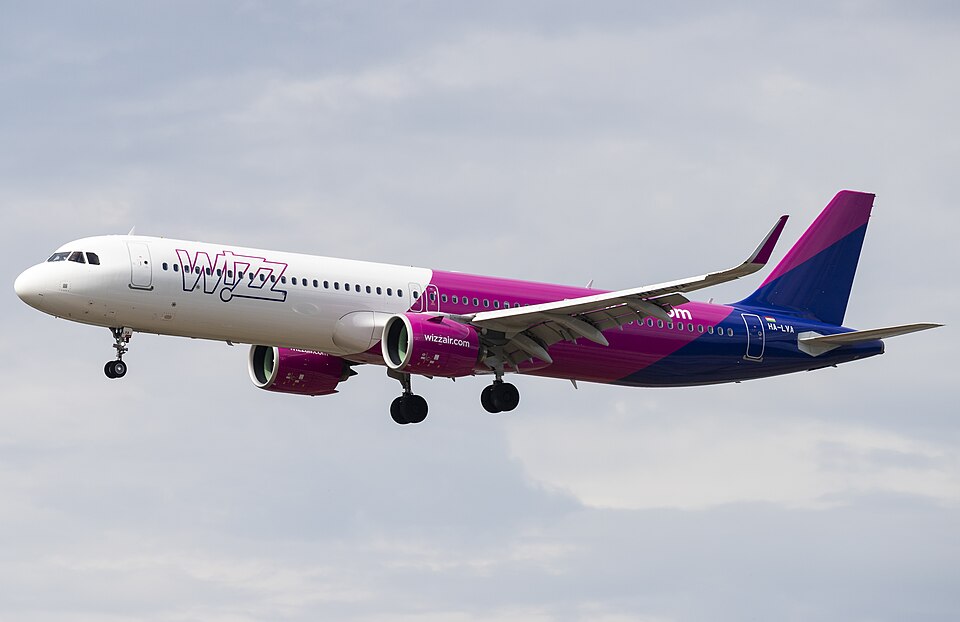
A Wizz Air Airbus A321neo flying from Madrid to Sofia diverted to Barcelona after its left engine emitted a loud bang and severe vibrations at 33,000 feet. Passengers reported seeing flames. Here is what we know about the Barcelona diversion, the aircraft and the engine involved.
A Wizz Air flight from Madrid to Sofia made an unplanned landing in Barcelona on Monday 23 November after a problem with one of its engines. Flight W6 4402 was an Airbus A321neo registered HA-LZP. It was climbing through 33,000 feet when the left engine emitted a loud noise and severe vibrations, The Aviation Herald reports.
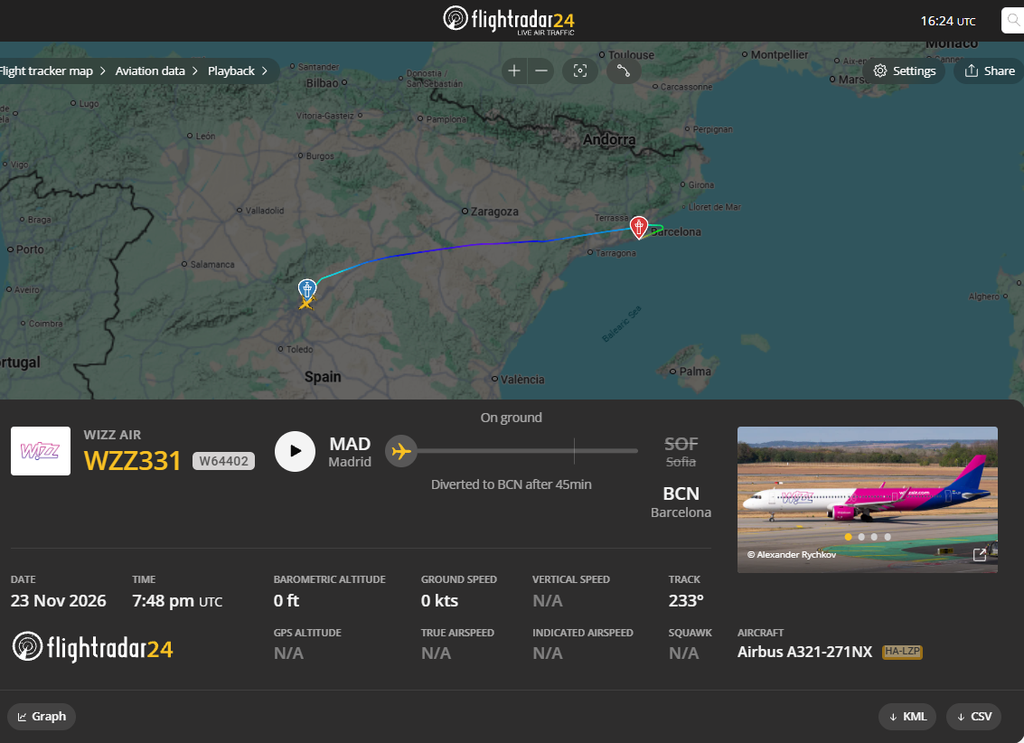
As a result, the crew decided to divert to Barcelona. The aircraft then landed safely on runway 24L about 25 minutes later.
What Passengers Saw Before Barcelona
Passengers reported a loud noise from the left engine and visible flames, followed by severe vibrations, according to The Aviation Herald. Bulgarian news agency Novinite also reported that passengers saw flames from the engine.
Similarly, passengers told Bulgarian broadcaster bTV they heard a bang, saw a flash and noticed a smell. There are no reports of injuries.
Why the Crew Chose Barcelona
Barcelona was the logical choice. The aircraft was climbing out of Madrid towards the Mediterranean. Barcelona was a large, well equipped airport close to its route.
In addition, the A321neo can fly safely on one engine. Even so, crews divert to the nearest suitable airport after a serious engine problem, rather than continue a long flight with reduced power. The flight path is available on Flightradar24.
A Long Wait in Barcelona
Passengers faced a long night. Instead of reaching Sofia that evening, they waited in Barcelona for a replacement aircraft.
Wizz Air Malta then sent another A321neo, registered 9H-WNX, which continued the flight the next morning. As a result, passengers reached Sofia about 13.5 hours late, The Aviation Herald reports.
Meanwhile, the original aircraft remained on the ground in Barcelona about 19 hours after landing.
The Engine Behind the Barcelona Diversion
Two Pratt & Whitney PW1133G engines power HA-LZP. These geared turbofans burn less fuel than older engines.
However, the engine family has caused major problems for airlines. A manufacturing issue involving powder metal parts forced airlines worldwide to ground hundreds of aircraft for inspections from 2023 onwards.
Wizz Air has been one of the hardest hit. It had 27 aircraft grounded for engine inspections at the end of June 2026. That figure has since fallen to 22, according to CAPA. Nobody has confirmed the cause of this week’s engine problem yet. There is also nothing so far to link it to that issue.
The Aircraft Involved
HA-LZP is a 4 year old Airbus A321neo built in Hamburg, according to Planespotters. It flew from Hamburg to Budapest on delivery on 8 July 2022. It then entered service three days later, with 239 economy seats.
The jet then spent about 20 months parked at Bydgoszcz in Poland, from January 2024 to September 2025. That period matches the time when Wizz Air had dozens of aircraft on the ground because of engine inspections. After a short stay in Katowice, the aircraft returned to service on 5 October 2025.
What Happens Next
Engineers in Barcelona will inspect the left engine before the aircraft flies again. If the engine needs replacing, the jet could stay on the ground for some time.
Spain’s accident investigation body may also look at the event, depending on what engineers find.
The Bottom Line
A Wizz Air A321neo from Madrid to Sofia diverted safely to Barcelona after a loud bang, reported flames and severe vibrations from its left engine. Passengers continued on a replacement aircraft the next morning, about 13.5 hours late.
Above all, the crew followed standard procedure by landing at the nearest suitable airport. We will update this story if more details emerge about the engine and the aircraft in Barcelona.
Continue to follow The Aviation Hub for more analysis and insight.
Advertise with us Your brand, in front of an aviation audience Home page and in-article placements, sold directly, one advertiser per slot. From £250 a year. See the rates