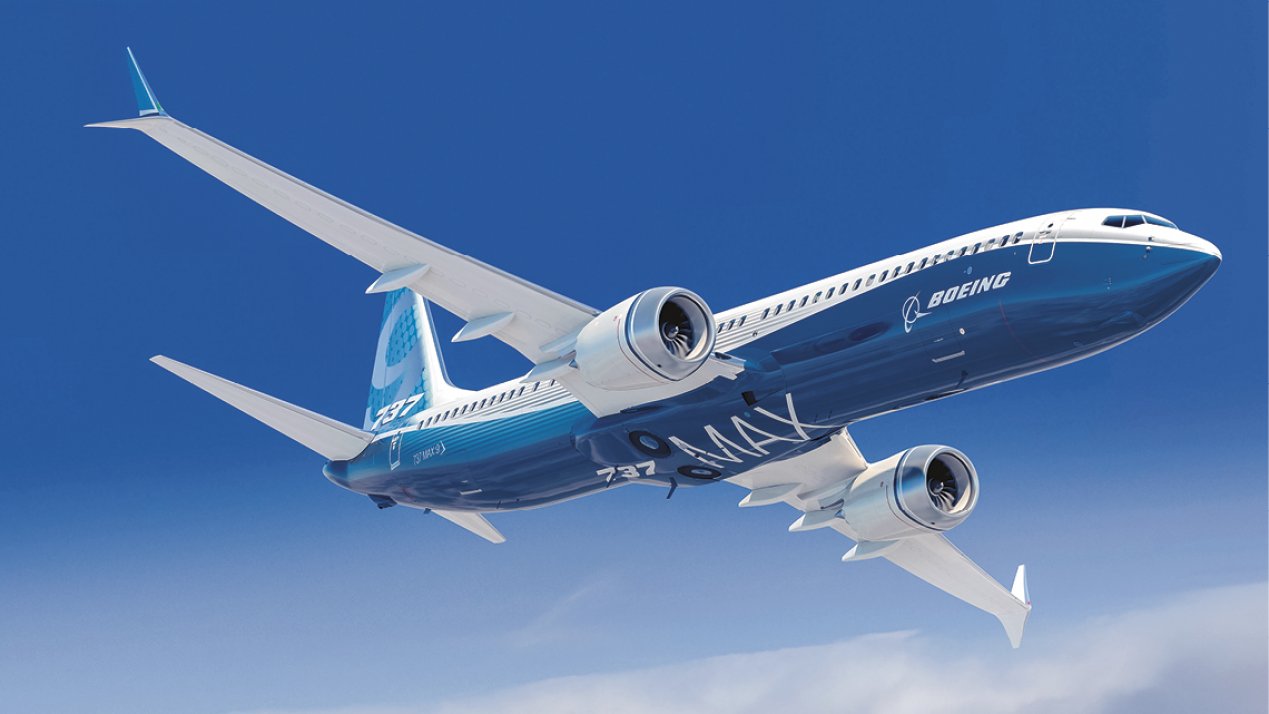
A major new airworthiness directive (AD) issued by the Federal Aviation Administration (FAA) is set to impact more than 5,100 Boeing 737 aircraft worldwide, marking one of the most extensive safety‑related actions applied to the 737 fleet in recent years.
Published as AD 2025‑25‑04, the directive supersedes a 2023 rule and significantly expands the number of aircraft subject to mandatory inspection and corrective action related to potentially faulty escape slide assemblies.
The FAA’s move underscores growing regulatory scrutiny of legacy and next‑generation 737 models, as well as the newer 737 MAX family, as safety agencies continue to tighten oversight of evacuation systems, structural components, and manufacturing quality.
A Broader Problem Than Initially Understood
The original 2023 directive (AD 2023‑09‑04) required operators to inspect escape slide assemblies on certain 737 Next Generation (NG) and 737 MAX aircraft after reports indicated that some slides contained affected components that could fail during deployment.
The issue centred on specific assemblies that may not function correctly in an emergency, potentially compromising evacuation capability.
However, subsequent investigation revealed that additional aircraft—beyond those included in the 2023 directive—were also equipped with the suspect slide assemblies.
As a result, the FAA determined that the unsafe condition was more widespread than initially believed, prompting the expanded 2025 directive.
According to the Federal Register summary, the new AD applies to:
- 737‑600, 737‑700, 737‑700C, 737‑800, 737‑900, and 737‑900ER
- 737‑8 and 737‑9 (MAX)
- 737‑8200 (MAX 8200)
This expansion brings the total number of affected U.S.‑registered aircraft to approximately 2,666, with global totals exceeding 5,100 aircraft across all operators.
The FAA explicitly states that the directive was prompted by the determination that “additional airplanes might be affected by the unsafe condition”.
What the Unsafe Condition Involves
Escape slides are classified as critical emergency equipment, and any failure can have catastrophic consequences during an evacuation.
The FAA notes that the affected slide assemblies may contain components that:
- Were manufactured outside specification
- Could fail to deploy
- Might not inflate properly
- Could detach or malfunction under load
While the directive does not cite any in‑service evacuation failures, the potential risk is considered severe enough to warrant immediate regulatory action.
The FAA’s summary emphasizes that the directive is necessary to “address the unsafe condition on these products” and ensure that all affected assemblies are identified and replaced where required.
What Operators of the Boeing 737 Must Do

The new AD retains all requirements from the 2023 directive and adds new inspection requirements for the expanded set of aircraft.
Required Actions Include:
- Inspection or review of maintenance records to identify affected escape slide assemblies
- Replacement of any affected assemblies with compliant units
- Verification that all slide systems meet updated specifications
The FAA estimates the inspection workload as follows:
| Action | Labor Hours | Cost Per Aircraft | U.S Fleet Cost |
| Retained Inspection from 2023 AD | 2 hours | $170 | $425,340 (2,502 aircraft). |
| New Inspection for Additional Aircraft | 2 hours | $170 | $27,880 (164 aircraft). |
While the cost per aircraft is relatively low, the operational impact—requiring aircraft to be temporarily removed from service for inspection—may be more significant for high‑utilization carriers.
Impact on Airlines and the Global Fleet
With more than 5,100 aircraft affected globally, this directive touches nearly every major operator of the 737 NG and MAX families.
For U.S. airlines, the Boeing 737 remains the backbone of domestic fleets, meaning compliance will require careful scheduling to avoid operational disruption.
Major U.S. operators affected include:
- Southwest Airlines
- United Airlines
- American Airlines
- Alaska Airlines
- Delta Air Lines (for 737‑900ER)
Internationally, the directive affects dozens of carriers across Europe, Asia, the Middle East, and Latin America.
Given the relatively short inspection time, airlines are expected to incorporate the work into routine maintenance cycles.
However, the replacement of slide assemblies—if required—could introduce supply chain challenges depending on the availability of compliant units.
Why This Matters for the Boeing 737 Program
The Boeing 737 program has faced intense scrutiny over the past decade, particularly following the MAX grounding and subsequent quality‑control concerns.
While this directive is unrelated to flight‑control systems or structural issues, it adds to a growing list of regulatory actions aimed at ensuring the long‑term safety and reliability of the world’s most widely operated commercial aircraft.
The FAA’s decision to supersede the earlier directive highlights a broader trend: regulators are increasingly willing to revisit and expand previous safety actions when new data emerges.
For Boeing, the expanded AD on the 737 reinforces the importance of supplier oversight, particularly for safety‑critical components such as evacuation systems.
For operators, it serves as a reminder that even seemingly minor equipment issues can have fleet‑wide implications.
A Manageable but Significant Safety Action
While the FAA’s new directive does not suggest an imminent danger to passengers, it reflects a proactive approach to risk mitigation.
Escape slide reliability is non‑negotiable, and the agency’s decision to broaden the scope of inspections demonstrates a commitment to ensuring that all aircraft meet the highest safety standards.
For airlines, the directive represents a manageable maintenance requirement—but one that must be executed promptly and accurately.
For passengers, it is a reassurance that regulators continue to monitor and address even low‑probability safety concerns.
With more than 5,100 aircraft affected worldwide, AD 2025‑25‑04 stands as one of the most extensive evacuation‑system‑related directives ever issued for the Boeing 737 family.
Its implementation will help ensure that the global fleet remains safe, compliant, and ready to respond in the unlikely event of an emergency evacuation.
Continue to follow The Aviation Hub for more analysis and insight!