
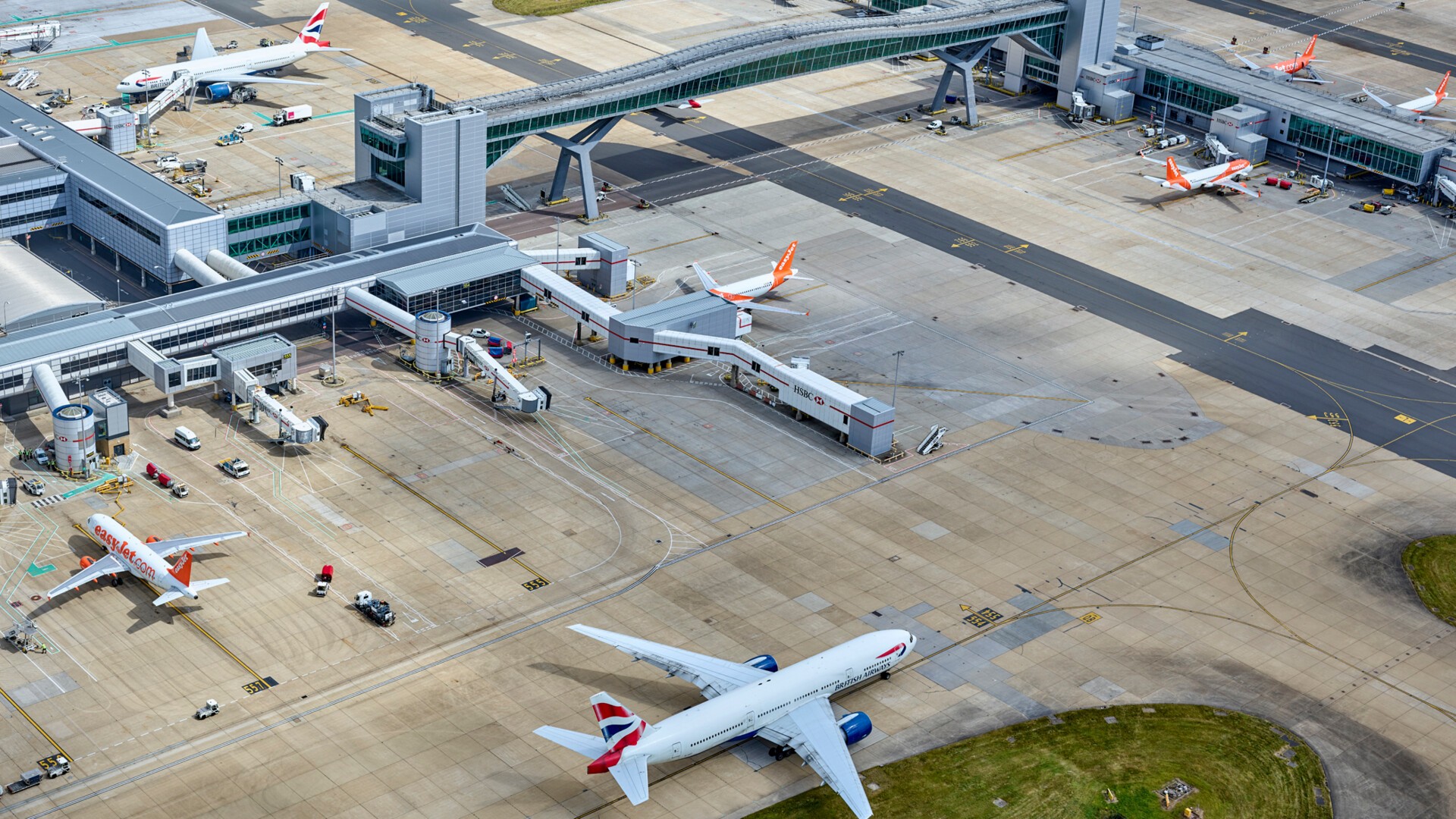
London Gatwick Airport’s £2.2bn plan to bring its Northern Runway into routine use is heading for a decisive legal battle this week, as environmental campaigners seek to overturn the government’s approval for the project.
The High Court hearing, which begins on Tuesday, marks the most significant challenge yet to the airport’s long‑term expansion strategy — and could have far‑reaching implications for UK aviation policy.
A Project Years in the Making
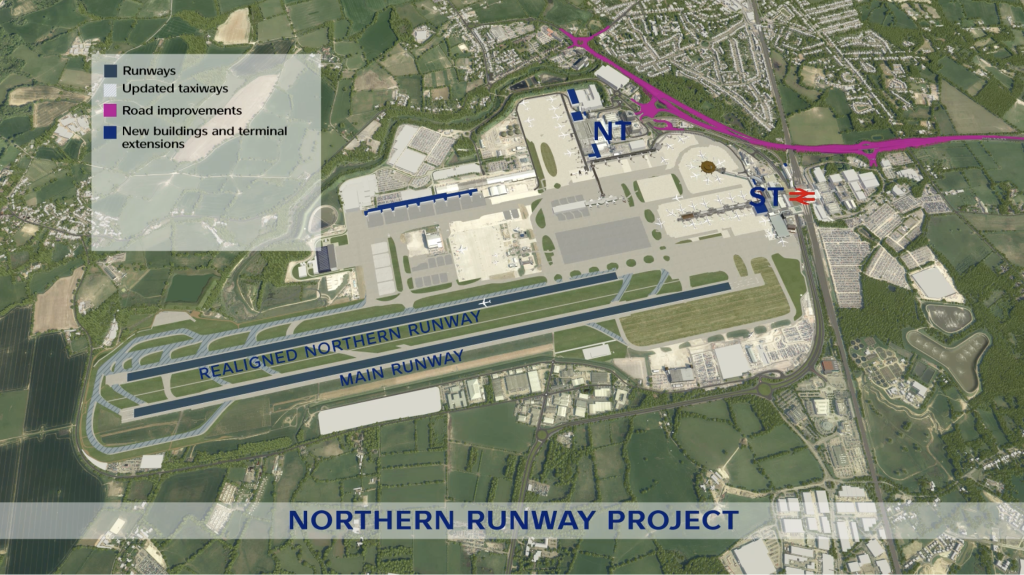
The Northern Runway has existed since the late 1970s, but a historic planning agreement prevented it from being used for regular operations.
Gatwick’s proposal — approved by Transport Secretary Heidi Alexander in September — would shift the runway 12 metres north, allowing it to operate alongside the main runway for departures by narrow‑body aircraft.
The airport argues that the scheme is essential to unlocking future growth, improving operational resilience, and supporting the South East’s economy.
With capacity for up to 100,000 additional flights per year, Gatwick sees the project as a strategic counterweight to Heathrow’s dominance and a catalyst for new airline opportunities.
Government ministers have echoed that view.
Chancellor Rachel Reeves described the approval as a “major boost” for jobs, investment, and regional development, positioning the project as part of a broader push to modernise national infrastructure.
The Legal Challenge for London Gatwick Airport…
Communities Against Gatwick Noise Emissions (CAGNE), a long‑standing opponent of the airport’s expansion, has launched a judicial review arguing that the government’s approval process was fundamentally flawed.
Represented by law firm Leigh Day, the group claims the Department for Transport failed to properly assess the project’s environmental impact, particularly its contribution to greenhouse gas emissions and its alignment with the UK’s climate commitments.
CAGNE maintains that gaps in the environmental impact assessment — including what it describes as insufficient analysis of climate effects and mitigation measures — should have prevented development consent from being granted.
The High Court will hear arguments from both sides over four days, with a judgment expected later this year.
Climate Commitments Under Scrutiny
The case lands at a pivotal moment for UK climate policy.
Aviation remains one of the most challenging sectors to decarbonise, and while the industry is investing in sustainable aviation fuel, fleet renewal, and operational efficiencies, critics argue that expanding runway capacity is incompatible with the UK’s legally binding net‑zero targets.
For campaigners, Gatwick’s plan represents a step in the wrong direction — a project that would enable tens of thousands of additional flights annually at a time when emissions need to fall sharply.
The government and the airport counter that technological progress, efficiency gains, and the gradual adoption of cleaner fuels will mitigate the environmental impact, and that the economic benefits justify the expansion.
This tension — between climate ambition and aviation growth — sits at the heart of the legal challenge.
Case for Expansion at London Gatwick Airport…
Gatwick insists the Northern Runway project is a pragmatic, proportionate way to increase capacity without the scale or disruption associated with Heathrow’s previously proposed third runway.
The airport argues that dual‑runway operations would reduce delays, improve reliability, and strengthen the UK’s overall aviation network.
It also emphasises the economic upside: thousands of jobs, enhanced connectivity, and greater resilience for airlines operating in the South East.
For Gatwick’s leadership, the project is not simply about growth, but about future‑proofing the airport in a competitive global market.
What Happens Next
The High Court’s decision will determine whether Gatwick can proceed with construction or whether the government must revisit its environmental assessments.
A ruling against the project could delay or even derail the airport’s expansion timeline, while a victory for the government would clear the way for one of the UK’s most significant aviation infrastructure upgrades in decades.
Either way, the outcome will resonate far beyond West Sussex.
The case is likely to influence how future airport expansions are evaluated, how environmental obligations are interpreted, and how the UK balances its climate commitments with its economic ambitions.
Gatwick’s second‑runway plan has been debated for years, but the legal challenge now brings the issue to a decisive juncture.
The High Court’s ruling will shape not only the airport’s future, but also the broader trajectory of British aviation — a sector navigating the complex intersection of growth, sustainability, and public scrutiny.
Continue to follow The Aviation Hub for more analysis and insight!
Advertise with us Your brand, in front of an aviation audience Home page and in-article placements, sold directly, one advertiser per slot. From £250 a year. See the rates